
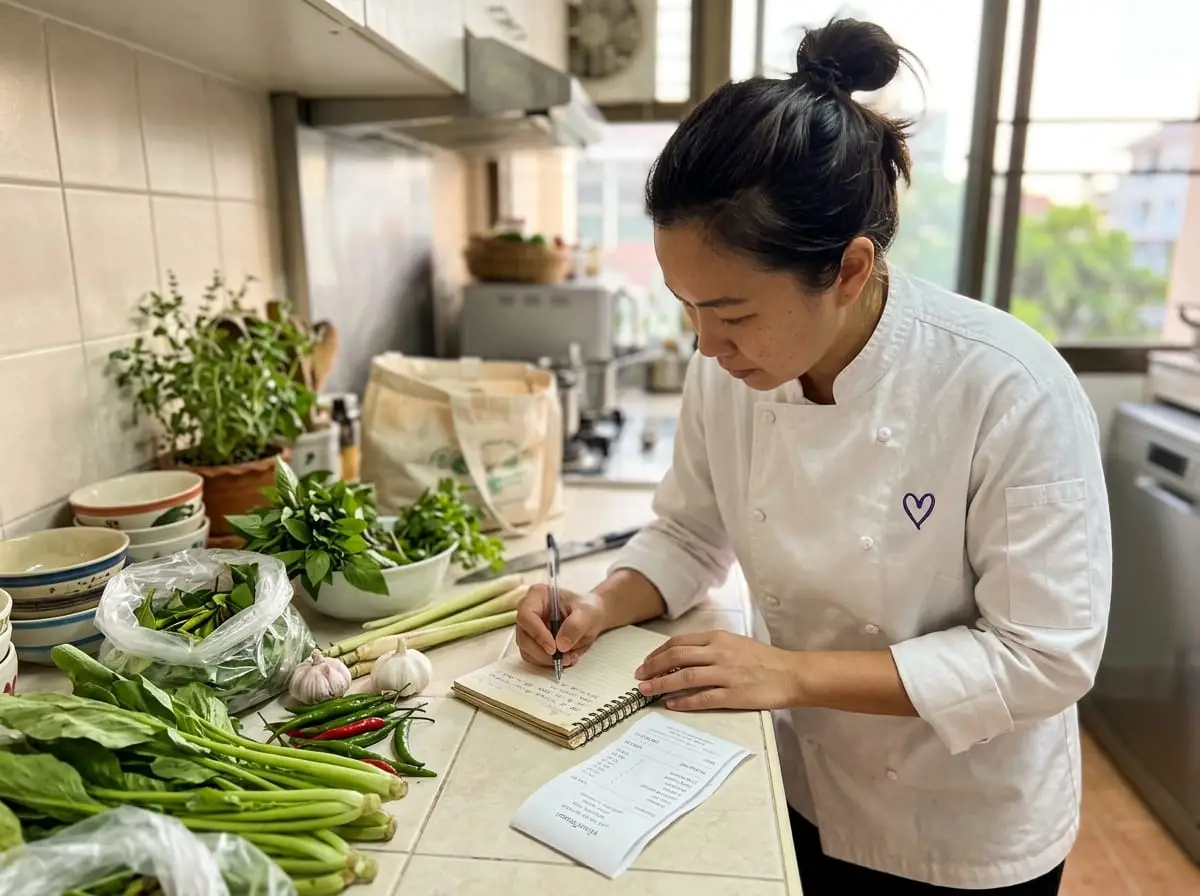
Most families who ask us for a Thai private chef in Bangkok already eat Thai food several times a week. What they want is better Thai food than the delivery app sends: less sugar, less oil, a curry the children will eat, and dishes from beyond the same six restaurant favourites. A good Thai private chef in Bangkok can do all of that, and it costs less than most people expect.
This guide covers what each of Thailand's four regional kitchens looks like at a family dinner table, how to control chilli, salt and sugar for children without cooking two meals, which traditional dishes should never be made at home, and how to brief and trial a cook so the first month goes well.
What a Thai private chef does that a restaurant can't
A restaurant cooks for the average customer. A private chef cooks for your table, and that changes three things.
The first is seasoning. Restaurant Thai food is built to taste vivid after a 30-minute ride in a delivery box, which means more sugar, more salt and more oil than anyone would put in at home. A home cook seasons for food eaten five minutes after it leaves the wok, so the same green curry needs a fraction of the palm sugar.
The second is range. Delivery menus in Sukhumvit flatten Thai food into pad thai, green curry, tom yum and pad kra pao. Thai home cooking is much wider: clear soups with tofu and minced pork, stir-fried morning glory, steamed fish with lime and garlic, northern chilli dips with crisp vegetables, southern turmeric curries. These are the dishes Thai families actually eat on a Tuesday, and they are some of the healthiest things on any table in the city.
The third is control. A chef in your kitchen knows that one child is allergic to peanuts, that the other will only eat chicken, and that your partner is trying to cut carbohydrate after 7 pm. That knowledge lives in the weekly menu, not in a note to the restaurant that may or may not be read.
What a chef does not replace is the occasional night out or the 11 pm craving. Most families who book a Thai cook still order in once a week. They just stop ordering in five times.
The four regional menus, explained for families
Thai cooking divides roughly into four regional kitchens, and a cook who can move between them gives you a far more interesting month. Most Bangkok home cooks grew up in one region, often Isaan, and cook it best. Ask where your cook is from; it tells you what their strongest dishes will be.
| Region | Family favourites | Heat and flavour | Child-friendly version | Watch out for |
|---|---|---|---|---|
| Central | Gaeng jued tofu soup, kai palo, pad pak bung, steamed fish with lime, green curry | Balanced sweet, salty, sour; heat moderate | Kai palo (five-spice egg and pork stew) and clear soups need no chilli at all | Restaurant-style sugar levels in curries and stir-fries |
| Isaan (northeast) | Som tam, gai yang, larb, nam tok, tom saep, sticky rice | Sharp, sour, very hot; fermented fish | Grilled chicken, sticky rice and cucumber with larb made mild | Raw fish and raw meat versions; unboiled pla ra |
| Northern | Khao soi, nam prik ong, gaeng hang lay, sai ua sausage, steamed vegetables | Herbal, milder, slow-cooked | Khao soi with the curry broth thinned and chilli oil served on the side | Raw pork dishes and naem sausage |
| Southern | Gaeng som, gaeng tai pla, kua kling, khao yam rice salad, moo hong | Fiercely hot, turmeric-yellow, sour | Khao yam with the budu dressing on the side; moo hong braised pork | Very high chilli loads; budu and shrimp paste for shellfish allergies |
Central Thai
This is the Bangkok home kitchen and the backbone of any week. Gaeng jued, a clear broth with soft tofu, glass noodles and minced pork, is the dish Thai mothers give children when they are unwell. Kai palo is a slow-braised egg and pork stew with five-spice that most farang children love at first taste. Central cooking also covers steamed sea bass with lime and garlic, which is about as light as dinner gets.
Isaan
Isaan food is bright, sour and lean. Grilled chicken, larb and nam tok salads are mostly protein, herbs and lime, with very little oil, which makes them a good fit for families trying to eat lighter. The flavour comes from toasted rice powder, lime, fish sauce and pla ra, the fermented fish sauce that defines the region. The chilli can be dialled right down without losing the dish.
Northern
Northern cooking is the gentlest of the four and the easiest introduction for children. Khao soi, the coconut curry noodle soup of Chiang Mai, is an obvious starting point. Nam prik ong, a tomato and pork chilli dip served with raw and blanched vegetables, gets children eating cucumber, long beans and cabbage without a fight. Gaeng hang lay, a Burmese-influenced pork belly curry with ginger and tamarind, is slow-cooked and has no coconut milk.
Southern
Southern Thai food is the hottest in the country and the one to approach with care at a mixed table. Gaeng som (sour yellow curry) and kua kling (dry-fried minced meat with curry paste) can be ferocious. Khao yam, a rice salad with herbs, toasted coconut and a fermented fish dressing, is the exception: it is fresh, crunchy and easy to make child-safe by serving the dressing separately. Moo hong, a Phuket-style braised pork with black pepper and garlic, has no chilli at all.
Sample weekly menu and what it costs
A weekly menu should rotate the regions and always include one dish everyone can eat without negotiation. Here is a realistic four-dinner week for a family of four with two children aged six and nine, cooked by a part-time chef.
| Evening | Shared main | Children's adjustment | Vegetables and sides |
|---|---|---|---|
| Monday (Central) | Gaeng jued with tofu and minced pork; kai palo | Both dishes served as is, no chilli | Stir-fried morning glory with garlic, jasmine rice |
| Tuesday (Isaan) | Gai yang grilled chicken, larb moo (cooked), sticky rice | Larb made without chilli; chilli and lime dip for adults | Cucumber, long beans, cabbage wedges |
| Thursday (Northern) | Khao soi gai | Broth thinned with stock; pickled mustard greens and chilli oil on the side | Shallots, lime, blanched greens |
| Friday (Southern) | Moo hong braised pork; gaeng som with fish for adults | Moo hong and plain rice; a mild clear soup | Khao yam rice salad, dressing on the side |
That week usually costs ฿3,500–6,000 in groceries if most of the produce comes from a market and the chicken and pork from a supermarket. Imported salmon, prawns and premium beef push it towards ฿7,000–8,000. The chef's time is separate.
| Format | What it covers | CareRova guide rate |
|---|---|---|
| Hourly, four-hour minimum | A single dinner or a one-off cooking lesson | ฿900 an hour |
| Daily, eight hours | A trial day, a party or a big batch cook | ฿4,900 |
| Part-time, three days a week | Four to five dinners a week plus next-day lunches | ฿19,900 a month |
| Full-time live-out, five to six days | All meals, shopping and kitchen management | ฿34,900 a month |
| Live-in, six days | As full-time, with a room and meals provided | ฿31,900 a month |
For comparison, a Thai home cook hired directly costs ฿18,000–35,000 a month, and a trained chef with restaurant experience ฿30,000–60,000. The all-in rate covers vetting, payroll, sick cover and a 90-day free replacement on long-term placements. Our private chef cost guide breaks down each format in more detail, and the full table is on the pricing page.
Sodium, sugar, chilli and MSG: making Thai food healthy for children
Thai home food is fundamentally healthy: lots of vegetables, herbs, lean protein and rice. The problems are in the seasoning bottles, and a good cook manages them by method, not by making separate meals.
Chilli
The simplest rule is that chilli goes in last. The cook makes the dish, takes the children's portion out, then adds fresh chilli, chilli paste or dried chilli to the rest. For dishes where chilli is built into the paste, such as green curry, the chef can make a mild paste for the family and keep a jar of hot paste for adult top-ups. Prik nam pla, sliced chillies in fish sauce, should sit on the table rather than in the food. Children who grow up with that bowl in front of them usually start adding a drop of it themselves by age eight or nine.
Salt and fish sauce
Fish sauce, light soy, seasoning sauce, oyster sauce and stock cubes all carry heavy sodium, and Thai recipes often use three of them in one dish. NHS weaning and feeding guidance is clear that babies should have no added salt, and UK guidance caps children aged one to three at about 2 g of salt a day. The practical fix is to season the children's portion with lime, herbs and a few drops of fish sauce, and to drop the stock cube altogether when the chef is making a proper broth from bones. Harvard's Nutrition Source has a clear summary of why sodium matters for blood pressure even in people who feel fine.
Sugar
Palm sugar goes into som tam, curries, stir-fry sauces and dipping sauces. Restaurants use a lot; home cooks can halve it without anyone noticing. The bigger source in most Bangkok homes is drinks: Thai iced tea, sweetened soy milk and bottled green tea. The American Academy of Pediatrics' nutrition advice for families recommends water and plain milk as the default drinks for children, and that is a rule a cook can support by keeping cold water and fresh fruit in the fridge instead of syrup.
MSG
Some families ask for no MSG, and a cook should respect that. Controlled studies have struggled to reproduce the headaches and flushing that people attribute to it, but MSG adds sodium and is often a sign that a stock is weak. A chef making broth from chicken bones and pork ribs rarely needs it. Bouillon powder is the bigger concern: it often contains both MSG and a large dose of salt.
Oil and frying
Deep-fried dishes such as tod mun fish cakes and fried chicken are treats, not weeknight food. Ask the cook to keep frying to once a week, to use fresh oil rather than a reused pot, and to favour steaming, grilling and clear soups. Isaan and Northern dishes make that easy.
Food safety in a Thai home kitchen (raw and fermented dishes, 5–60 °C, markets vs supermarkets)
Thai home cooking happens in heat. A Bangkok kitchen with the aircon off sits at 30–34 °C most of the year, which is squarely inside the 5–60 °C range in which bacteria multiply fastest. The USDA danger zone guidance gives two hours as the maximum for perishable food at room temperature and one hour when it is above 32 °C, which in Bangkok is most afternoons.
The dishes that stay out of a family kitchen
Some of Thailand's most famous regional dishes are eaten raw, and a household chef should not make them for your family:
- Koi pla and other Isaan salads made with raw freshwater fish. Freshwater fish from the northeast can carry the liver fluke Opisthorchis viverrini, which research indexed on PubMed has linked for decades to bile duct cancer in the region.
- Larb dib and lu, raw pork or beef larb and raw blood dishes from the north and northeast. Raw pork is the main route for Streptococcus suis infection, which the Thai Department of Disease Control warns about repeatedly, particularly around festivals.
- Naem (fermented raw pork sausage) made at home. Commercially produced naem is a different matter, but it is still raw pork and not something to give children.
- Goong chae nam pla, raw prawns in fish sauce and lime. Adults may choose it at a restaurant; it should not be on a family menu, and never for pregnant women, young children or older relatives.
Fermented ingredients
Pla ra, the fermented fish that gives som tam Lao its depth, should be boiled before use. Most good Isaan cooks boil it as a matter of course; ask. Packaged pla ra, shrimp paste and fish sauce should carry a registration number from the Thai Food and Drug Administration on the label, which is a reasonable minimum when buying jars.
Temperatures that matter
Chicken should reach 74 °C in the centre, and minced pork for larb 71 °C, according to the USDA safe temperature chart. Gai yang is the most common failure: the skin chars on a hot grill long before the thigh is cooked. A cheap probe thermometer ends the guesswork. The fridge should sit at 5 °C or below; the US FDA's line is 4 °C, and its refrigerator thermometer guidance is worth a read if your fridge has no display.
Coconut milk, curry paste and rice
Freshly squeezed coconut milk from a market stall sours within hours in Bangkok heat. It should go straight into the fridge and be used the same day; boxed coconut milk, once opened, keeps two or three days chilled. Home-made curry paste keeps about a week in the fridge and freezes well in ice-cube trays. Cooked rice should be cooled and refrigerated within the hour, not left in the rice cooker on "warm" overnight. Our guide to weekly meal prep and fridge safety covers storage times in detail.
Markets vs supermarkets
Wet markets have better herbs, fresher fish and far better prices, but meat sits on ice, not in a fridge. The rule for a chef shopping at a market is to buy meat and seafood early, before about 9 am, carry it home in a cool bag with ice packs, and buy herbs and vegetables last. Chilled chicken and minced pork from a supermarket are the safer choice for children's meals. The WHO's five keys to safer food are a neat summary: keep clean, separate raw and cooked, cook thoroughly, keep food at safe temperatures, and use safe water and raw materials.
Smoke and air
Gai yang and moo ping taste best over charcoal, but a charcoal grill on a condo balcony is a bad idea between December and March, when Bangkok's PM2.5 levels are often already high. On bad-air days, check IQAir's Bangkok readings and grill in the oven or on a griddle pan instead, with the cooker hood on.
Shopping: wet markets, where the chef buys and how receipts work
A Thai cook who shops well saves you more than their fee in groceries over a year. Most of the best ingredients in Bangkok are in markets, not supermarkets.
Where chefs actually shop
- Khlong Toei market, the city's largest fresh market, for bulk vegetables, herbs, fish and pork at wholesale prices. It is busiest and freshest before dawn.
- Or Tor Kor market near Chatuchak, for premium produce, durian, good fish and very clean stalls. More expensive, and worth it for a dinner party.
- Neighbourhood markets in On Nut, Phra Khanong, Saphan Khwai and almost every district, for daily herbs, vegetables and fresh curry paste ground to order.
- Supermarkets such as Tops, Villa Market and Gourmet Market for chilled meat, dairy, imported goods and packaged sauces, and Makro for bulk rice, oil and cleaning supplies.
For families on Sukhumvit, Khlong Toei is close and a cook can fit a weekly market trip into the morning before coming to you.
How receipts work
Market stalls rarely give receipts, which is why families sometimes feel nervous about grocery money. The clean systems are simple:
- A float. You give the cook a fixed weekly amount, say ฿5,000, and they hand back the change and the record each week.
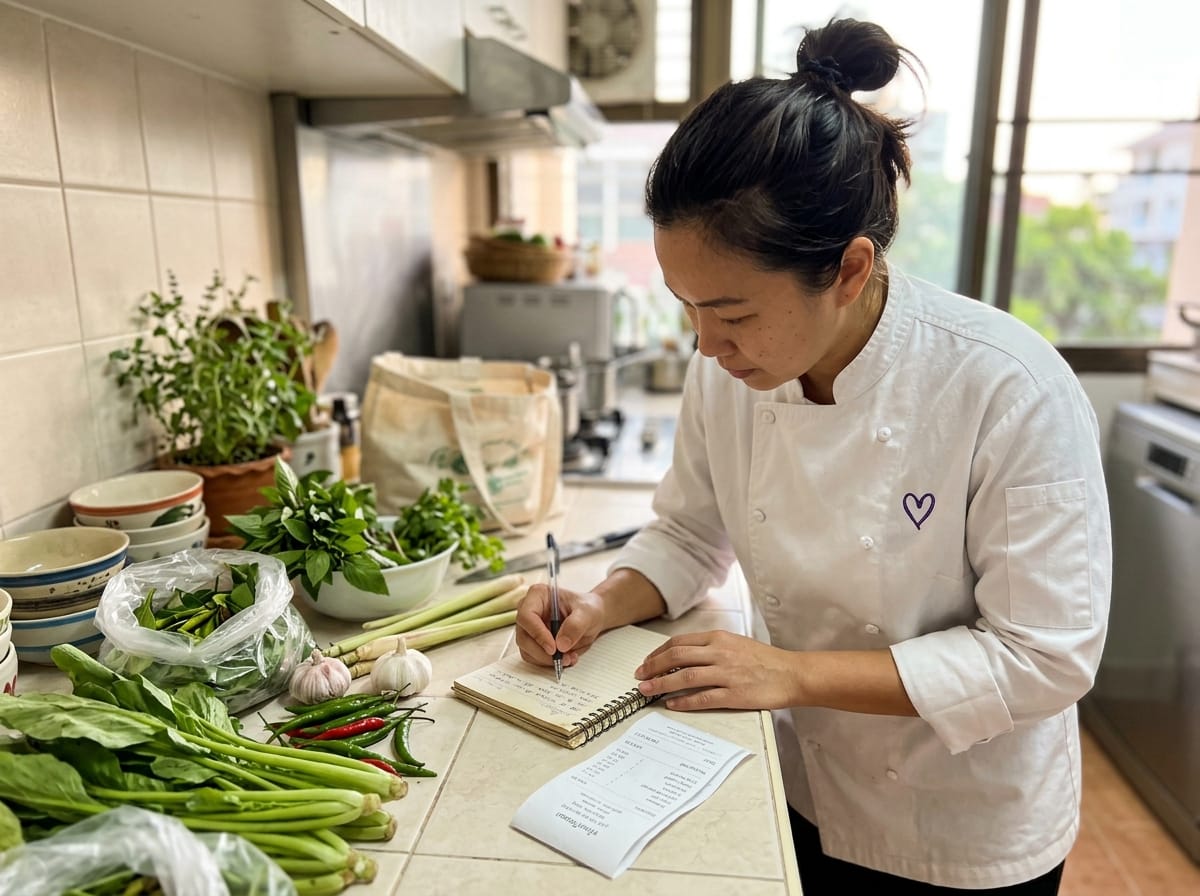
- The record. Supermarket receipts are photographed. Market purchases go into a notes app or a notebook with the item, quantity and price, plus a photo of the shopping laid out on the counter.
- The weekly check. Five minutes on Sunday to look at the total against the menu. Prices for herbs, vegetables and chicken are public enough that anything strange stands out quickly.
A good chef never marks up groceries and never takes commission from a stall. If the weekly total climbs without the menu changing, ask why. Usually the answer is imported salmon or a guest dinner, which is fine, but it should be visible.
How to brief and trial a Thai chef
The brief is where most placements succeed or fail. A cook who is told "Thai food, not too spicy" will guess. A cook given a written page will deliver.
The written brief
- Who eats what. Every person at the table, their age, and their honest likes and dislikes, including the child who hates coriander.
- A chilli scale. Zero to three for each person, with an example: zero is kai palo, one is a mild massaman, two is a restaurant green curry, three is Isaan as Isaan intends it.
- Allergies, in writing. Peanuts appear in satay sauce, massaman, som tam and many dipping sauces. Shellfish hides in shrimp paste, oyster sauce and dried shrimp. The UK Food Standards Agency's allergy guidance is a useful reference for how cross-contact happens in a shared kitchen.
- Twenty dishes you love. From restaurants, from holidays, from your mother-in-law. The cook can build a month from them.
- The kitchen. Many Bangkok condos have induction hobs and no gas. A good cook can manage with a flat-bottomed wok, but say so in advance, along with whether a stone mortar can be used without upsetting the neighbours.
- Health goals. Less sugar, more vegetables, a lower-carbohydrate evening, or food that suits an older parent.
The trial evening
Book one trial day at ฿4,900, or a four-hour session at ฿900 an hour. Ask for three dishes: one Central, one from the cook's home region, and one built for the children. Then watch, without hovering.
| What to watch | What good looks like |
|---|---|
| Hands | Washed on arrival, after raw meat, after touching phone or bin, before plating |
| Boards and knives | One board for raw meat and fish, a different one for vegetables and cooked food |
| Tasting | A clean spoon each time, never the cooking spoon back into the pot |
| Raw meat | Kept below cooked food and vegetables in the fridge, never left on the counter |
| Seasoning | Children's portion taken out before chilli and extra fish sauce go in |
| Clean-down | Hob, counters, sink and floor left clean; leftovers cooled and labelled |
Everyone CareRova places as a chef holds food-hygiene certification, has passed a police background check and has had at least two references phoned, but the trial is where you see how those habits look in your own kitchen. Our article on private chef kitchen hygiene standards goes deeper on what to check.
The first month
Expect the cook to adjust. The first menu will be cautious; by week three it should reflect what your family finishes and what comes back untouched. A short weekly note, three things that worked and one that did not, does more than any long conversation.
Book a Thai private chef in Bangkok
Send us a short message with the following and we will come back with a shortlist within 48 hours:
- Household size, children's ages and any older relatives at the table
- How many dinners a week, and whether you also want lunches or breakfast
- Which regions you enjoy most, and your chilli scale per person
- Allergies and dietary rules, in writing
- Your area and kitchen set-up (gas or induction, oven, space for a mortar)
- When you would like the trial evening
CareRova places Thai cooks and private chefs across every Bangkok BTS and MRT zone, from part-time evenings to live-in roles. Read more about the private chef service, then message us on WhatsApp at +66 97 120 3054 or use the contact form to book a trial evening.
Frequently asked questions
How much does a Thai private chef cost in Bangkok?
A Thai home cook hired directly costs ฿18,000–35,000 a month in 2026 and a trained chef ฿30,000–60,000. CareRova's all-in guide rates are ฿900 an hour (four-hour minimum), ฿4,900 a day, ฿19,900 a month part-time and ฿34,900 full-time. Groceries are always extra and reimbursed at cost.
Can a Thai chef cook mild food for children?
Yes, and a good one plans for it. The usual method is to cook the base without chilli, take the children's portion out, and then add chilli, extra fish sauce and herbs to the adult pot or serve them on the side as prik nam pla.
Is Isaan food safe to eat at home?
Most of it is, as long as the meat in larb and nam tok is cooked through and pla ra is boiled before it goes into som tam. The dishes to avoid are the raw ones: koi pla made with raw freshwater fish and raw pork larb.
Where does a Thai private chef buy ingredients?
Usually a mix of a wet market for herbs, vegetables and curry paste ingredients, and a supermarket for chilled chicken, pork and packaged goods. Market purchases are logged with photos because stalls rarely give receipts.
Should we hire a Thai cook full-time or part-time?
Most families start part-time, three or four dinners a week at ฿19,900 a month, because it covers the evenings that matter. Full-time at ฿34,900 makes sense when the cook also does breakfast, school lunches and the weekend.
Need someone properly vetted?
Get a written rate for your household in under 60 seconds.
Written by the CareRova team
We're Bangkok's vetted home-care agency — everything we write comes from real nanny, chef, housekeeper and senior-care placements across condos, houses and short-stay villas.
Get our Bangkok family-care guides straight in Google — add CareRova as a preferred source.