
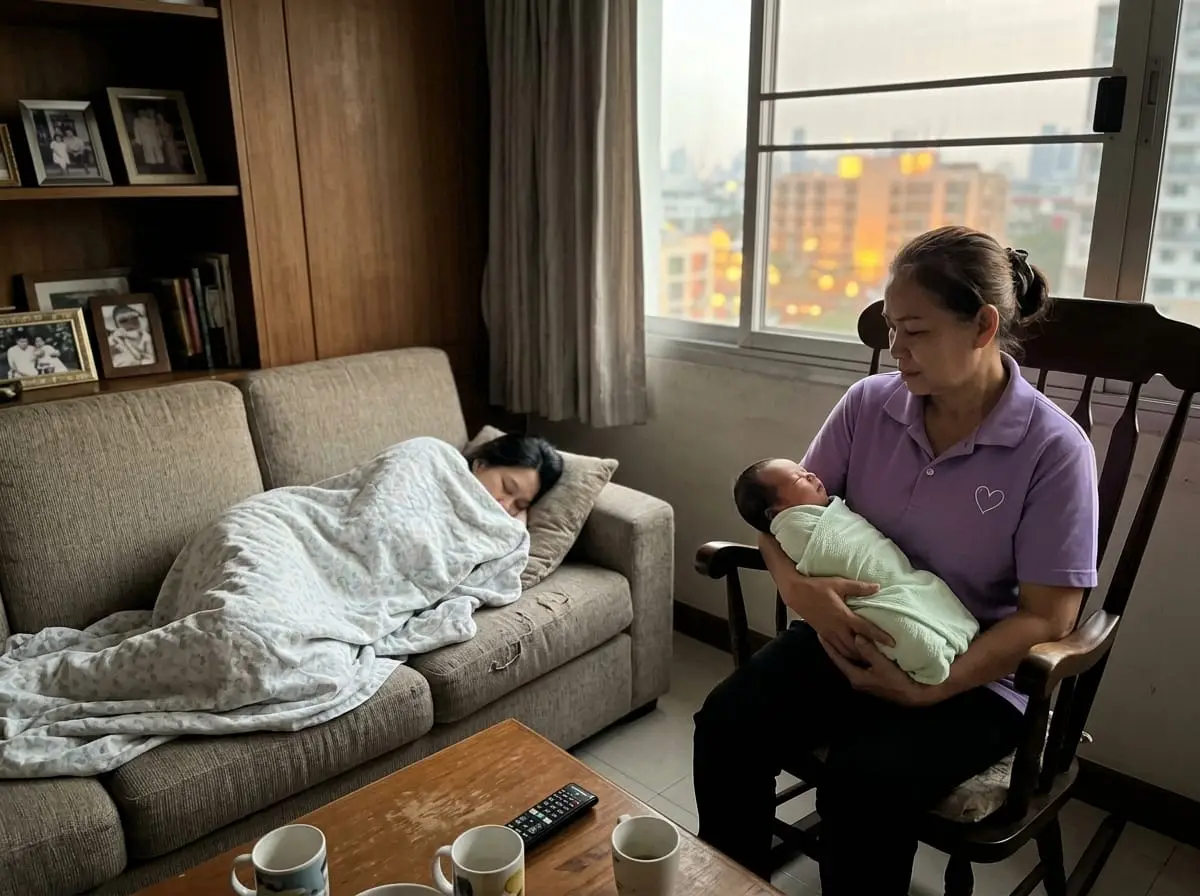
Private chef food hygiene is the question families most often forget to ask about and the one they care about most when something goes wrong. A family will taste-test three cooks, argue about whether the green curry was sweet enough and check that the chef can make the children's pasta. Very few ask how the chef washes their hands, what board the chicken goes on or what happens when the chef wakes up with a stomach bug.
In Bangkok it matters more than in most cities. Kitchens are warm, humidity sits at 70% to 80% for much of the year, fridges work hard and ants find sugar within minutes. A cook with good habits keeps a household healthy for years. A cook with careless ones can make everyone ill in a weekend.
This guide sets out what a family should expect from any private chef or home cook in Thailand, how to check it, and a kitchen checklist you can print and stick inside a cupboard door.
Why hygiene is the first thing to check about a private chef
Taste is easy to judge. You eat the food and you know. Hygiene is invisible until it fails, and when it fails the consequences land on the most vulnerable people in the house: babies, pregnant women, grandparents and anyone with a weak immune system.
The World Health Organization's food safety fact sheet is blunt about the scale: unsafe food causes hundreds of millions of illnesses a year worldwide, and children under five carry a large share of the burden. Most of that is preventable with the same small set of habits, applied every single time.
What goes wrong in home kitchens
In our experience, the problems in private kitchens are rarely exotic. They are the same five, over and over:
- Hands not washed after raw meat, the bin or a phone.
- One board and one knife used for raw chicken and then salad.
- Cooked food left to cool on the counter for hours.
- A fridge running at 8 °C or 9 °C because nobody has checked it.
- A cook who comes to work with a stomach bug because they did not want to lose a day's pay.
Every one of those is a habit, and habits can be seen. That is why the trial meal matters more than the CV.
Why the standard should be higher at home
Families sometimes assume a home kitchen needs a lower standard than a restaurant. We think the opposite. A restaurant cooks for adults who choose to eat there. A private chef cooks for a toddler, a grandmother with diabetes and a parent with a shellfish allergy, every day, in the same kitchen where the dog's bowl is washed.
Training and certificates a chef in Thailand should hold
There is no single national licence that every private chef in Thailand carries, so families need to know what the common credentials are and what each one actually tells you.
| Credential | What it shows | How to check it |
|---|---|---|
| Thai food-handler training | Basic hygiene, temperatures, cross-contamination, cleaning | Certificate with name, date and issuing body; many cooks did this for restaurant or hotel work |
| UK Level 2 Food Hygiene or similar | Same ground, international standard | Certificate with provider name; online versions are common |
| HACCP training from hotel or catering work | Understands hazards, critical control points and record-keeping | Ask what they monitored and recorded in that job |
| Culinary school diploma | Technique and usually a hygiene module | Diploma plus a reference from the school or a kitchen |
| Recent medical check | Fit to work with food | Clinic certificate dated within the last year |
| Hepatitis A vaccination | Lower risk of spreading hepatitis A through food | Vaccination record or clinic letter |
Thai food-handler training
Thailand's public health system runs short food-handler courses for people who work with food, and many cooks who have worked in restaurants, hotels or school canteens have one. The Thai Food and Drug Administration regulates food products and premises, and its materials cover the same basics as international courses: temperature, handwashing, separation and cleaning.
A certificate is a starting point. It tells you the chef has heard the rules at least once. It does not tell you they follow them at 18:30 with a crying toddler in the next room.
International training and hotel experience
Chefs who have worked in international hotels in Bangkok, Phuket or abroad have usually worked under HACCP, a system for identifying where food can go wrong and checking those points every time. The UK Food Standards Agency's Safer Food, Better Business pack is a good plain-English example of what that looks like in a small kitchen, and it is what we point chefs to when they want a refresher.
Hotel chefs bring habits that translate well to a home: temperature logs, labelling, stock rotation, cleaning schedules. The adjustment they need is scale. A home kitchen has one fridge, no blast chiller and no kitchen porter.
Health checks and hepatitis A
Hepatitis A spreads through food handled by someone who is infected, often before they feel ill. The WHO hepatitis A fact sheet notes that a safe and effective vaccine exists. We ask chefs about their vaccination status and a recent medical check, and families with infants or pregnant members often make vaccination a condition of the job.
Personal hygiene rules, including when a chef must not work
Most foodborne illness in homes travels on hands. A chef's personal habits are the core of private chef food hygiene, and they should be agreed out loud, not assumed.
Hands
The CDC's clean hands guidance sets the standard: wet, soap, scrub for 20 seconds including between fingers and under nails, rinse, dry on a clean towel. For a chef, the moments are:
- On arrival, before touching anything in the kitchen.
- Before handling ready-to-eat food, salads, fruit or anything for a baby.
- After raw meat, poultry, fish or eggs.
- After the bin, the toilet, a phone, money, a pet, a child's nose or a cigarette.
- After touching face, hair or an apron.
- Before putting on gloves, and after taking them off.
Hand gel is a supplement for clean-looking hands, not a replacement. It does not work well on greasy hands or against norovirus.
Nails, jewellery, hair and clothes
- Nails short and clean, no varnish, no false nails. Gel chips end up in food and long nails hold dirt.
- Jewellery off: rings, bracelets and watches trap bacteria and food. A plain band is the usual exception.
- Hair tied back, and covered for long hair. Beards trimmed.
- Clean apron for each visit, changed if it gets raw-meat juice on it.
- Phone away from the prep area. If a chef must use it, it counts as a reason to wash hands.
Cuts and tasting
Cuts on hands are covered with a waterproof, brightly coloured plaster, ideally blue so it is seen if it falls into food, and then a glove. Tasting is done with a clean spoon each time, never a finger and never the stirring spoon going back into the pot.
When a chef must not work
This is the rule we are strictest about. A chef who has had vomiting or diarrhoea should not handle food until 48 hours after the last symptom has stopped. That is the standard in the UK Food Standards Agency's guidance, and it exists because norovirus and similar bugs are still being shed after the person feels better. The CDC's norovirus page explains how few virus particles it takes to infect someone.
The same chef should also stay away, or at least call before coming in, with:
- Jaundice or yellowing of the eyes, until seen by a doctor.
- An infected cut, boil or skin rash on hands, arms or face.
- A fever with a sore throat.
- A household member with vomiting or diarrhoea, depending on the chef's own symptoms.
Domestic workers in Thailand are entitled to sick leave, so a chef should never feel they have to cook while ill to keep their income. CareRova makes that clear at placement, and families who want reliability should make it clear too.
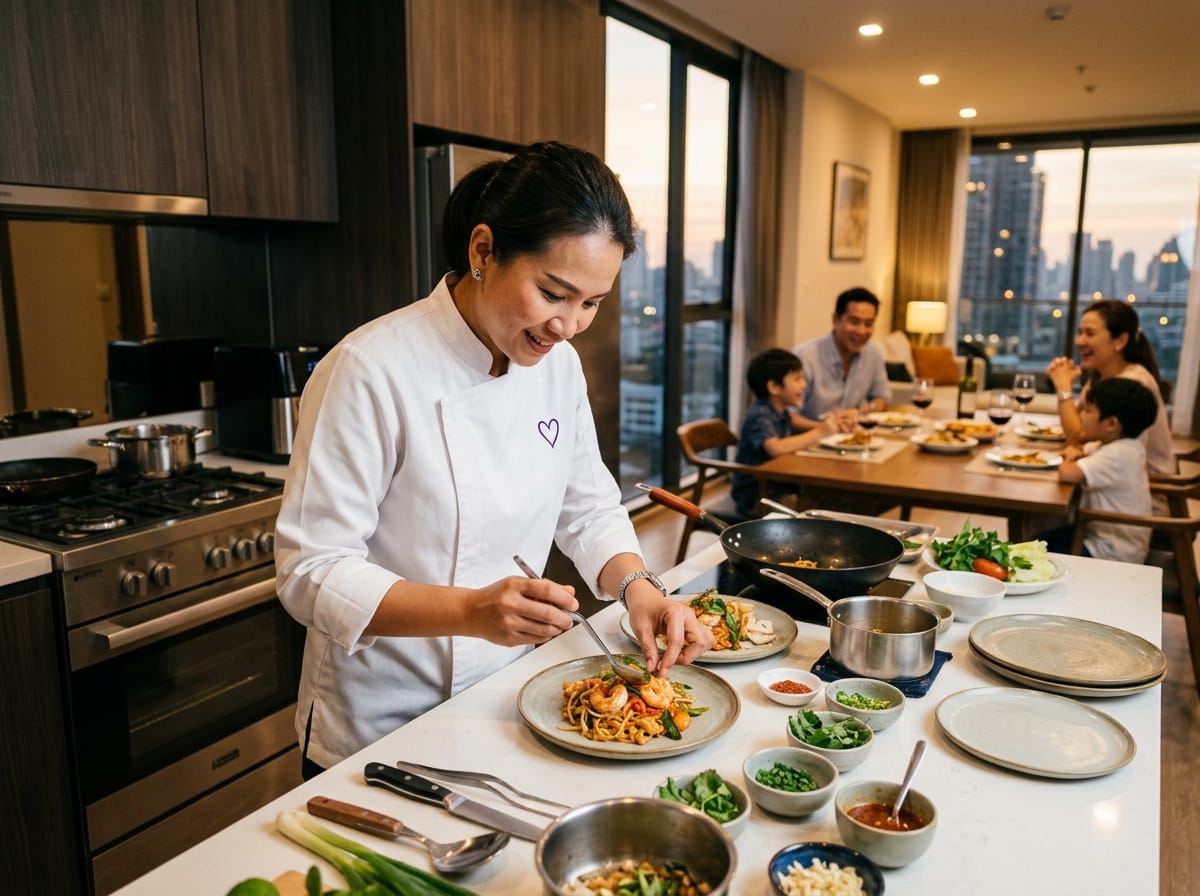
The home kitchen set-up: boards, thermometers, sanitiser, cloths
A chef can only be as hygienic as the kitchen lets them be. Most Bangkok condo kitchens need a small, one-off investment to work properly. It costs less than a single dinner party.
Colour-coded chopping boards
Separate boards stop the most common cross-contamination problem in home kitchens. A widely used colour code:
| Board colour | Used for | Why it matters at home |
|---|---|---|
| Red | Raw meat and poultry | Keeps Salmonella and Campylobacter off everything else |
| Blue | Raw fish and seafood | Separate from meat; strong smells and Vibrio risk |
| Yellow | Cooked meat | Cooked food never touches a raw-meat board |
| Green | Salad and fruit | Eaten raw, so the cleanest board in the kitchen |
| Brown | Root vegetables | Soil carries its own bacteria |
| White | Bread and dairy | Keeps crumbs and allergens contained |
| Purple | Allergen-free cooking | Only for the allergic family member's food |
Plastic boards go in the dishwasher or are scrubbed with hot soapy water. Wooden boards are fine for bread and vegetables but need drying upright in Bangkok humidity, or they grow mould along the grain.
Thermometers
Two thermometers belong in every kitchen with a private chef:
- A fridge thermometer, reading 5 °C or below on the middle shelf. The FDA's guidance on refrigerator thermometers explains why the built-in dial is not enough.
- A digital probe thermometer for cooked food. Chicken to 74 °C, minced meat to 71 °C, whole cuts and fish to 63 °C, per the safe minimum internal temperature chart.
The chef should check the probe now and then in iced water, where it should read close to 0 °C, and wipe it with a sanitising wipe between foods.
Sanitiser and the two-stage clean
Cleaning and disinfecting are two different jobs. The UK Food Standards Agency's cleaning guidance describes a two-stage clean: first remove grease and food with hot soapy water, then apply a food-safe sanitiser and leave it for the contact time on the label before wiping. Spraying sanitiser onto a greasy counter does very little.
Families should buy a food-safe surface sanitiser and keep household bleach separate, labelled and out of children's reach. After a stomach bug in the house, a diluted bleach solution is the right tool for surfaces; ordinary sanitiser sprays often do not kill norovirus.
Cloths and sponges
Cloths are where kitchen hygiene quietly fails. A damp cloth used all day in a 30 °C kitchen is a breeding ground. Our standard:
- Disposable paper towels for raw-meat spills and drying hands.
- Reusable cloths in two colours: one for counters, one for dishes. Never swapped.
- All reusable cloths washed hot, at 60 °C or above, at the end of every day.
- Sponges replaced weekly, or sooner if they smell.
- Tea towels for drying clean dishes only, never for hands after raw meat.
A daily and weekly kitchen cleaning schedule
A schedule turns good intentions into a routine and makes clear who does what between the chef and any housekeeper. If you also employ a housekeeper, agree the split in writing so the oven and the fridge do not become nobody's job.
| Task | How often | Usually done by |
|---|---|---|
| Counters, hob, sink: clean then sanitise | Every cooking session | Chef |
| Boards, knives, tongs, probe: wash and sanitise | After each use | Chef |
| Cloths washed at 60 °C | Daily | Chef or housekeeper |
| Bin emptied, liner replaced | Nightly | Chef or family |
| Floor swept and mopped | Daily | Housekeeper |
| Fridge: check temperature, discard out-of-date food | Every chef visit | Chef |
| Fridge shelves and seals wiped | Weekly | Chef |
| Microwave and kettle cleaned, kettle descaled | Weekly | Housekeeper |
| Extractor filter degreased | Every two weeks | Housekeeper |
| Oven deep-cleaned | Monthly | Housekeeper |
| Dry-goods cupboard emptied, wiped, stock rotated | Monthly | Chef |
| Freezer defrosted and sorted | Every three months | Chef |
Clean as you go
The single best habit to look for is a chef who cleans while they cook. Spills wiped immediately, boards washed between tasks, the sink never full. A chef who leaves an hour of washing-up at the end has usually been working in a mess all afternoon, and messy kitchens are where cross-contamination happens.
Leaving the kitchen at night
At the end of a session, nothing perishable should be left out, the bin should be tied and out, the sink should be empty and dry, and the dish rack should not be holding standing water. That last point matters more in Bangkok than people expect, as the next section explains.
Pests, mould and humidity in Bangkok kitchens
Bangkok's climate adds two problems most international food-hygiene courses barely mention: pests that find food within hours, and humidity that grows mould on almost any surface left damp.
Pests
Cockroaches, ants, rats in drains and geckos on the walls are part of life in the city, but they should not be part of the kitchen. Each carries bacteria, and gecko and cockroach droppings on a counter are a contamination risk.
- Dry goods (rice, flour, sugar, noodles, cereal) in sealed hard containers, not opened bags.
- Fruit in the fridge or a covered bowl, not loose on the counter overnight.
- The bin emptied every night, lid closed, and the area under it wiped.
- Floor drains kept topped up with water so the trap seals and drain smells and insects stay below.
- Pet food bowls picked up and washed after feeding.
- Gaps around pipes under the sink sealed.
If you see droppings, live cockroaches in daylight or chewed packaging, it is time for professional help. Our sister company PestsRova treats Bangkok homes for cockroaches, ants and rodents, and a good chef will flag the signs early.
Mould
Mould grows wherever moisture sits. In Bangkok kitchens that means fridge door seals, the underside of dish racks, rice bins, wooden boards, sink edges, the cupboard under the sink and the inside of the extractor hood. The US Environmental Protection Agency's mould guidance is clear that the answer is controlling moisture, not just wiping the stain.
- Dish racks emptied and dried daily, and scrubbed weekly.
- Fridge seals wiped with a mild solution weekly.
- Wooden boards and spoons dried upright, never stacked damp.
- Run the extractor while cooking and for ten minutes after.
- Keep the kitchen window open or the aircon on during heavy rainy-season weeks.
Mouldy food
Food with mould goes in the bin, especially nuts, dried chillies, grains and peanuts, which can carry mycotoxins that do not cook out. The FAO's food safety pages cover mycotoxins and why warm, humid storage makes them more likely. Buy dried goods in amounts you will use within a month or two, and store them sealed.
Heat and the danger zone
A Bangkok kitchen without aircon can sit at 32 °C in the afternoon. Any perishable food out of the fridge is in the temperature danger zone from the moment it leaves. Chefs who trained in cooler countries sometimes need a reminder that meat defrosting on the counter, or a bowl of cooked rice "cooling" for the afternoon, is not acceptable here. Our meal-prep chef guide covers cooling and storage times in detail.
How CareRova vets a chef before the trial meal
Every chef we place goes through the same checks before a family meets them. You can read more about how we work on our about page, and our guide to vetting a nanny in Thailand explains the background-check process, which is identical for chefs.
Before the shortlist
- Police background check and ID and work-eligibility check. Foreign chefs need a valid work permit for the role.
- At least two references phoned, asking specifically about cleanliness, reliability and illness reporting, not just the food.
- Food-hygiene certificate checked, with the name and date confirmed.
- A structured interview that includes hygiene scenarios: what do you do if you cut yourself, if the fridge reads 9 °C, if a child has a nut allergy, if you wake up with diarrhoea on a cooking day.
The trial meal
For any long-term role, the chef cooks one paid trial meal in your kitchen before a contract. This is where private chef food hygiene stops being a promise and becomes something you can see. Watch for:
- Handwashing on arrival and after raw meat, without being reminded.
- Separate boards and knives for raw and ready-to-eat food.
- A thermometer used on the chicken.
- Hair tied back, no rings or watch.
- Cleaning as they go, and a kitchen left clean and dry at the end.
- Leftovers cooled, covered, labelled and in the fridge before they leave.
If any of those are missing, say so. A good chef takes the feedback; one who argues about it is telling you something important.
After placement
Long-term placements get monthly check-ins and a 90-day free replacement if the match does not work. Hygiene problems are a legitimate reason to ask for a replacement, and we would rather hear about them early.
Your kitchen hygiene checklist and how to book
Print this and stick it inside a cupboard door. Tick it once a week for the first month with a new chef, then whenever something feels off.
Every visit
- Chef washes hands on arrival and after raw meat, bins and phones.
- Hair tied, no jewellery, clean apron.
- Fridge thermometer reads 5 °C or below.
- Separate boards in use for raw meat, fish and ready-to-eat food.
- Probe thermometer used on poultry and minced meat.
- Cooked food cooled and in the fridge within two hours.
- Every container labelled with dish, date and allergens.
- Counters, hob and sink cleaned then sanitised before the chef leaves.
- Bin out, sink empty, dish rack dry.
Every week
- Fridge shelves and door seals wiped, out-of-date food removed.
- Sponges replaced, cloths washed hot daily.
- No signs of pests: droppings, ants trails, chewed packets.
- No mould on dish rack, seals, boards or under the sink.
- Allergen-free food stored separately and labelled.
Any time
- Chef reports vomiting, diarrhoea, jaundice or infected cuts and stays away as agreed.
For more on running a safe kitchen day to day, the CDC's food safety pages are a reliable plain-language reference.
Booking a chef
CareRova places private chefs and home cooks across Bangkok by the hour (from ฿900, four-hour minimum), by the day (฿4,900), part-time (฿19,900 a month for three days a week) and full-time (฿34,900 live-out). Groceries are always extra. Tell us about your household, any allergies or medical diets, and the kitchen you have, and we will send a shortlist within 48 hours through our private chef service.
If you are hosting outdoors, our guide to villa pool parties with a BBQ chef covers the extra rules for cooking in the heat. To start, message us on WhatsApp or call +66 97 120 3054, email support@carerova.com, or use the contact form.
Frequently asked questions
What food hygiene certificate should a private chef in Thailand have?
At minimum, a food-handler course from a Thai public health or recognised training provider, or an international equivalent like a UK Level 2 food hygiene certificate or a HACCP course from hotel work. Ask to see the certificate and check the name and date.
When should a private chef not come to work?
When they have vomiting or diarrhoea, until 48 hours after the last symptom. Also with jaundice, an infected cut or skin infection on the hands or arms, or a fever with a sore throat. A good chef reschedules rather than cooking through it.
How do I know if my private chef is hygienic?
Watch the first meal. Look for handwashing at the right moments, separate boards for raw meat, a thermometer in use, cleaning as they go, tied-back hair, no rings or watches, and a kitchen left cleaner than they found it.
Should a private chef use gloves?
Gloves are useful over a covered cut and for handling ready-to-eat food, but they are not a substitute for handwashing. A glove that touched raw chicken is just as dirty as a hand, so gloves must be changed as often as hands would be washed.
Who cleans the kitchen, the chef or the housekeeper?
The chef cleans everything used during cooking, every visit, and leaves counters, hob and sink sanitised. Deeper weekly jobs such as the fridge, oven, extractor filter and floors are usually shared with a housekeeper, which is worth agreeing in writing.
Need someone properly vetted?
Get a written rate for your household in under 60 seconds.
Written by the CareRova team
We're Bangkok's vetted home-care agency — everything we write comes from real nanny, chef, housekeeper and senior-care placements across condos, houses and short-stay villas.
Get our Bangkok family-care guides straight in Google — add CareRova as a preferred source.