
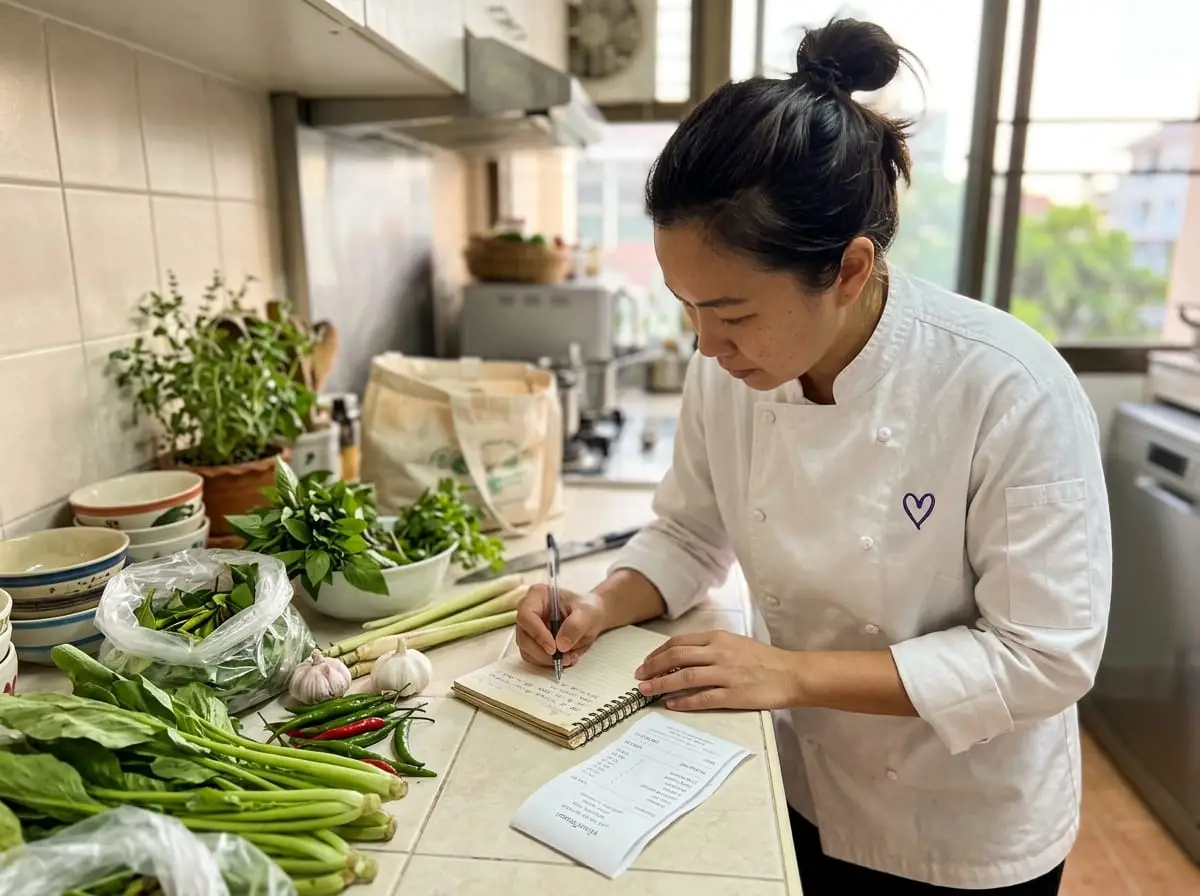
Many Bangkok families eat Chinese food at home without ever calling it that. Thai-Chinese households grew up on rice porridge, braised duck and clear soups, and mainland, Hong Kong and Singaporean families arrive wanting the same home table they left. A Chinese private chef in Bangkok cooks that table: not sweet-and-sour pork, but slow soups, steamed fish, quick greens and congee.
Cantonese home cooking is one of the lightest cuisines there is. It is also one of the easiest to get wrong on food safety in a warm flat, because so much of it is soup made in big pots and rice held for hours.
This guide covers what a Chinese home cook actually makes, the soups and steaming that form its healthy core, how to feed toddlers and grandparents from one meal, wok cooking in a condo, festival dinners, the real story on oil, salt and MSG, shopping in Yaowarat, and the rates.
What a Chinese private chef cooks in a Bangkok home
The Cantonese family table follows a simple rule: rice for everyone, one soup, and two or three dishes shared from the middle. On a weeknight that might be a steamed fish, a plate of stir-fried greens and a small meat dish. Nobody gets a plated main course.
| Part of the meal | Typical weeknight choice | Cooking method | Why it works for families |
|---|---|---|---|
| Soup | Pork rib and lotus root, or winter melon with dried scallop | Slow-simmered 2–3 hours | Made in batches; children drink it with rice |
| Steamed dish | Sea bass with ginger and spring onion, or steamed egg custard | Steamed 8–15 minutes | Very little oil; soft for babies and grandparents |
| Vegetable | Choy sum, kai lan or pak choi with garlic | Blanched or fast stir-fry | Ready in five minutes; keeps its colour |
| Meat | Soy chicken, steamed minced pork patty, beef with broccoli | Braised, steamed or stir-fried | One protein shared across the table |
| Staple | Jasmine rice, sometimes mixed with brown rice | Rice cooker | Cooled quickly if there are leftovers |
Which Chinese kitchen?
"Chinese" covers several distinct cuisines, and it is worth saying which you mean:
- Cantonese, from Guangdong and Hong Kong: soups, steaming, roast meats, dim sum. The most common request.
- Teochew, the heritage of many Thai-Chinese families: braised goose and duck, rice porridge with salty side dishes, cold crab, kway chap.
- Northern and Shanghainese: dumplings, noodles, red-braised pork, more wheat and less rice.
- Sichuan and Hunan: mala heat and chilli oil, popular with mainland families and for adult dinners.
A Thai-Chinese cook will usually be strongest in Teochew and Cantonese home dishes. Any foreign national cooking in your home, from mainland China, Hong Kong or elsewhere, needs a valid work permit for the role.
A part-time week
Most families book a part-time cook three days a week. A typical pattern: a big soup and two dishes on Monday, enough soup to last to Wednesday; fresh steamed fish and greens on Wednesday; a slow braise and dumplings for the freezer on Friday. Every chef CareRova places holds food-hygiene certification and has passed a police background check, with at least two references phoned.
Soups, steaming and congee: the healthy core of Cantonese cooking
If you hire a Cantonese cook for one thing, hire them for soup. Lou fo tong, "old fire soup", is simmered for hours from pork bones or chicken with vegetables, and many families drink a bowl with every dinner.
Slow soups and double-boiled soups
| Soup | Main ingredients | Who it suits | Fridge life at 5 °C or below |
|---|---|---|---|
| Pork rib and lotus root | Pork ribs, lotus root, peanuts, red dates | Everyone except peanut allergy | 3–4 days; freezes well |
| Winter melon | Winter melon, dried scallop, chicken or pork | A light summer soup | 3–4 days |
| ABC soup | Pork ribs, potato, carrot, tomato, onion | Children's favourite | 3–4 days; freezes well |
| Corn and carrot | Sweetcorn, carrot, pork bones | Toddlers and grandparents | 3–4 days |
| Double-boiled chicken | Chicken, sealed in a ceramic pot inside a steamer for 3–4 hours | A special-occasion tonic soup | 2–3 days |
Some families like Chinese medicinal herbs in their soups, such as dang gui or ginseng. Those are not neutral ingredients. If anyone at the table is pregnant or takes regular medication, check with their doctor before the chef adds them.
The soup-pot food safety problem
A 10-litre pot of soup is the hardest thing in a home kitchen to cool safely. Left on the hob with the lid on, the centre can sit in the 5–60 °C danger zone for many hours. The USDA's leftovers guidance is to divide large amounts into shallow containers so they cool quickly and to refrigerate within two hours.
How a good cook handles it:
- Hold soup at a steady simmer while it cooks; do not turn it off and on through the day.
- Strain, then divide what is not eaten tonight into shallow containers no deeper than about 5 cm.
- Stand the containers in a sink of iced water for 20 minutes, then into the fridge.
- Reheat only what will be eaten, to a rolling boil, and never put leftovers back into the main batch.
Steaming
Steamed whole fish is the Cantonese way to cook fish at home: ginger and spring onion, a few minutes over hard-boiling water, then hot oil and light soy poured over. Fish is done at 63 °C, when the flesh at the thickest point near the bone turns opaque and flakes, per the FoodSafety.gov temperature chart. Steamed egg custard and steamed minced pork patties are equally easy and need almost no oil.
Congee
Rice porridge is the Chinese answer to almost every question: breakfast, a sick day, a baby's first food, a grandparent's supper. Plain congee, then fish, minced pork, pumpkin or chicken stirred through, gives a soft meal that suits every age. Rice is the risk. Cooked rice left warm for hours can grow Bacillus cereus, whose toxins survive reheating, so congee should not sit in the rice cooker on "keep warm" overnight. Cool it, refrigerate it and eat it within a day.
Feeding three generations: toddlers, parents, grandparents
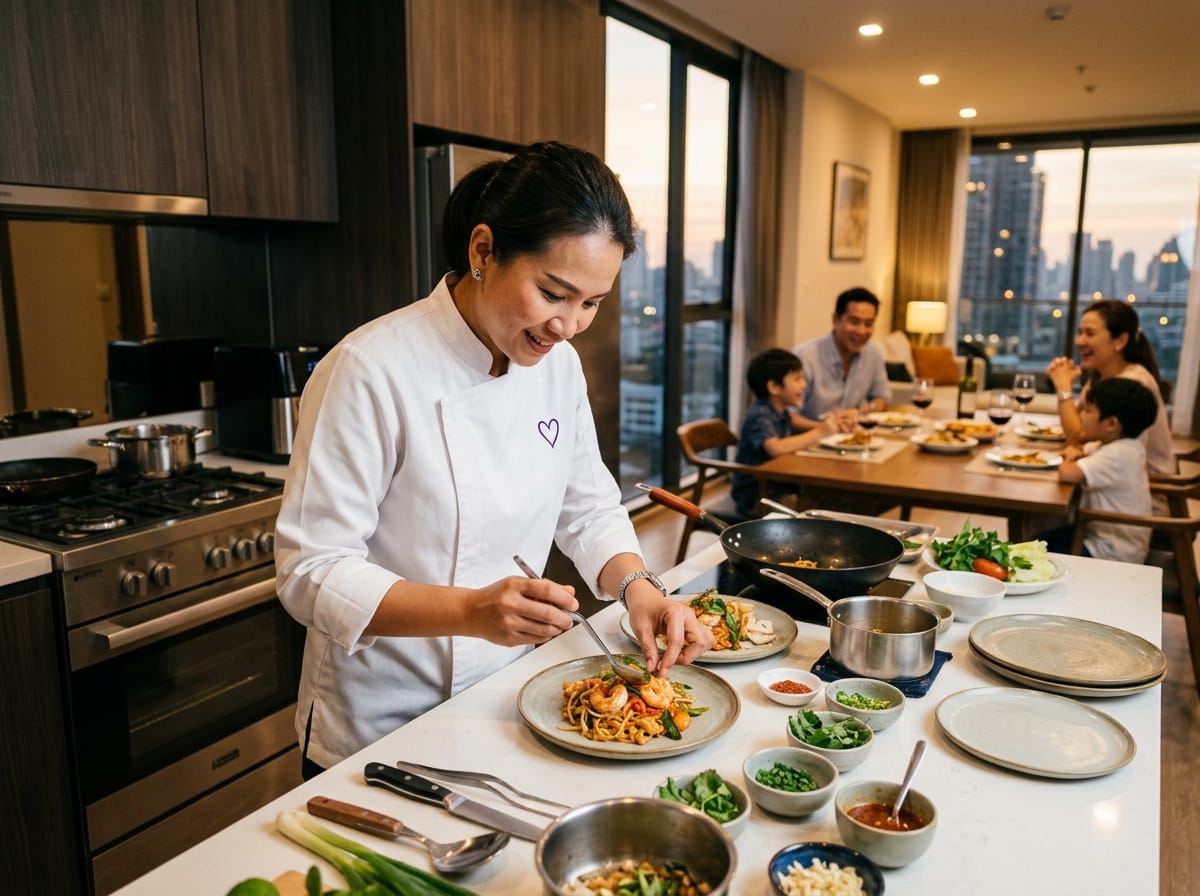
Many Chinese households in Bangkok have three generations at one table. A good cook does not make three dinners; they make one and adjust the plates.
| Dish | Baby or toddler | Parents | Grandparents |
|---|---|---|---|
| Steamed sea bass | Deboned flesh flaked into congee, no soy | Whole fish, soy and hot oil | Belly meat, carefully deboned, less soy |
| Pork rib and lotus soup | Broth and soft lotus with rice, no salt | Full bowl | Full bowl, broth skimmed of fat |
| Stir-fried kai lan | Soft leaves only, chopped | Stalks and leaves with garlic | Cooked a little longer, cut short |
| Steamed minced pork | Plain patty, mashed | With salted egg or preserved vegetable | Plain or with a little preserved vegetable |
| Congee | Plain, then with pumpkin or fish | With all the toppings | With fish or chicken, softer and lower in salt |
Babies and toddlers
The WHO's infant and young child feeding guidance recommends starting complementary foods at around six months alongside breastfeeding, and NHS weaning advice says babies should have no added salt, sugar or honey before one year. In a Chinese kitchen that means the baby's portion leaves the pot before soy, oyster sauce or stock powder goes in. Fish bones are the main hazard: every piece for a child under five should be checked by hand.
Grandparents
Older relatives often need softer textures, less salt and careful rice portions. If a grandparent coughs or clears their throat during meals, that can be a swallowing problem and is worth raising with their doctor, who may refer them for a swallowing assessment. Our guide to elderly care at home in Bangkok covers what changes as needs grow, and some families pair a cook with a carer from our senior care service.
One specific point: pomelo, a Mid-Autumn favourite, can interact with some medicines in a similar way to grapefruit. If a grandparent takes regular medication, ask their doctor or pharmacist before it becomes a daily fruit.
Wok cooking in a condo: heat, smoke and safety
Cantonese restaurants cook over gas burners far more powerful than anything in a home. Most Bangkok condos have induction hobs and no gas at all. That changes how the chef cooks, but not whether they can.
Getting good results on induction
- A flat-bottomed carbon steel wok. Round-bottomed woks do not sit on induction. A heavy flat base holds heat when the food goes in.
- Small batches. Half a pack of beef at a time, not the whole kilo. Overloading a wok drops the temperature and the meat stews.
- Dry ingredients. Greens washed and spun dry; meat patted dry before it is velveted in cornflour.
- Preheat fully. The oil should shimmer before anything goes in.
- Sauce around the edge. Soy goes down the hot side of the wok, not into the middle of the food.
The result will not have restaurant wok hei, the smoky char from a jet burner, but it will be crisp and properly cooked.
Smoke and air
High-heat cooking makes smoke and fine particles indoors. The US EPA's indoor air quality guidance treats cooking as a real indoor source. The cooker hood should be on before the wok goes on and stay on for ten minutes after. In Bangkok's PM2.5 season, roughly December to March, windows often stay shut, so check IQAir's Bangkok readings and favour steaming on the worst days.
Fire and burns
- Never water on an oil fire. Turn off the heat and cover the wok with a lid or a fire blanket.
- Pan handles turned inward, and children out of the kitchen while the wok is hot.
- Deep-frying at home is a once-in-a-while job, with a thermometer and a pan no more than a third full of oil.
Boards and the cleaver
Chinese cooks love a thick wooden block and one cleaver for everything. That is fine as long as raw meat and seafood never share a surface with vegetables or cooked food. The UK Food Standards Agency's cleaning guidance is the standard to follow: separate boards, hot soapy water between tasks, and a block stood on its edge to dry, replaced when deeply scored. Marinating and velveting happen in the fridge, not on the counter.
Festival dinners: Chinese New Year, Mid-Autumn and birthdays at home
Festival meals are where a Chinese cook earns their reputation, and where food safety slips because everyone is busy.
| Occasion | When | What the chef cooks | Food-safety point |
|---|---|---|---|
| Chinese New Year reunion dinner | Eve of the new year; 6 February in 2027 | Whole steamed fish, white-cut chicken, prawns, braised mushrooms with dried oysters, dumplings, longevity noodles | White-cut chicken must reach 74 °C at the bone |
| Ancestor offerings | The day before or of the new year | Boiled chicken, pork, duck, fruit and sweets for the altar | Food on the altar warms up; limit the time and reheat before eating |
| Mid-Autumn | 15 September in 2027 | Family dinner, roast duck, taro, pomelo; mooncakes usually bought | Mooncakes are very rich; slice thinly to share |
| Birthdays | Any time | Longevity noodles uncut, longevity buns, a whole fish | Allergens in buns and fillings labelled |
| Baby's full month | One month after the birth | Red-dyed eggs, ginger, sweet vinegar pork trotters | Eggs hard-boiled and refrigerated if made ahead |
White-cut chicken
Bai qie ji is poached gently and plunged into iced water, and in restaurants it is often slightly pink at the bone. At home, for children, pregnant guests and older relatives, it needs to reach 74 °C at the thickest part of the thigh. A probe thermometer settles it.
Offerings and the long afternoon
In Thai-Chinese households, the ancestor offering is a central part of the new year. Whole boiled chicken, pork belly and duck are placed on the altar, prayers are made, and the food is later eaten by the family. On a Bangkok afternoon that food can sit at 30 °C or more. The USDA's danger zone guidance gives one hour above 32 °C. A good cook keeps the offering time short, refrigerates the meat straight afterwards and reheats it until steaming hot before it becomes the evening meal.
Booking festival dates
Chinese-cuisine cooks are in demand in Chinese New Year week. Book a trial in December and the date itself by early January. A reunion dinner for up to six guests can be cooked on the daily rate; larger family gatherings are quoted on request. Our Christmas and New Year chef guide covers buffet safety and timings for long evenings that apply equally to a reunion dinner.
Oil, salt, MSG and sugar: the honest health picture
Home Cantonese food is light. Restaurant Chinese food is not, and that is where its reputation comes from: oil-blanched meat, thick cornflour gravies, deep-fried starters and sweet glazes.
| Restaurant habit | Home version |
|---|---|
| Meat passed through hot oil before stir-frying | Meat velveted and water-blanched |
| Thick brown sauce on every dish | A splash of soy and stock, lightly thickened or not at all |
| Sweet and sour pork, deep-fried | Steamed or pan-fried pork with a little sauce on the side |
| Char siu glazed heavily with sugar and maltose | Char siu roasted with less glaze, served in thin slices |
| Stock powder in everything | Real pork or chicken stock from the soup pot |
Salt
Soy sauce, oyster sauce, preserved vegetables, salted fish and salted egg are all salty, and a Cantonese meal can contain several. Harvard's Nutrition Source sets out why sodium matters for blood pressure, which is relevant at any table with grandparents on it. Salted fish deserves a special note: Chinese-style salted fish has been linked to nasopharyngeal cancer in studies you can find on PubMed, so treat it as an occasional flavouring, not a weekly staple.
MSG
Some families ask for no MSG, and a cook should respect that. Controlled studies have struggled to reproduce the headaches and flushing people attribute to it. MSG contains sodium, though about a third as much as the same weight of table salt. A cook making real stock rarely needs it, and stock powder, which usually contains MSG and a lot of salt, is the bigger issue.
Oil and sugar
Stir-frying itself uses little oil. The problems are oil blanching, deep-frying and reused frying oil, all of which a home cook can avoid. Peanut oil is common in Chinese cooking and must be declared to anyone with a peanut allergy; FARE's food allergy resources are a good starting point, and the simplest kitchen rule is no peanut oil at all when an allergic person eats. Sugar hides in char siu, braised pork belly with rock sugar and sweet dessert soups, all fine as occasional dishes. Families following a doctor's plan should see our guide to healthy meal chefs for weight loss and diabetes.
Sourcing at Yaowarat and keeping ingredients safe in the heat
Yaowarat, Bangkok's Chinatown, is the best place in the city for Chinese dry goods, and a reasonable MRT ride from most of town via Wat Mangkon station. A good cook goes once or twice a month and fills the pantry.
| What | Where the chef buys it | How it is stored |
|---|---|---|
| Dried shiitake, scallops, shrimp, red dates, goji, lotus seeds | Dry-goods shops on Yaowarat and Sampeng | Airtight jars, away from humidity; checked for mould |
| Roast duck, char siu, crispy pork | Roast-meat shops | Eaten within two hours or refrigerated; reheated until steaming |
| Fresh rice noodles (ho fun) | Fresh markets off Yaowarat Road, or local markets | Same day; refrigerated if not used within hours |
| Live or very fresh fish | Markets early in the morning | Iced, home within the hour, cooked that day |
| Chilled pork, chicken, tofu, greens | Supermarkets and neighbourhood markets | Fridge at 5 °C or below; raw meat on the bottom shelf |
| Soy, oyster sauce, vinegar, sesame oil | Supermarkets and Chinese grocers | Cool cupboard; oyster sauce refrigerated after opening |
Humidity and dried goods
Bangkok's humidity is hard on dried food. Mushrooms, dried seafood, nuts and red dates absorb moisture and can grow mould within weeks in an open bag. Anything with visible mould or a musty smell goes in the bin, not into the soup. Packaged goods should carry a Thai label with a registration number from the Thai Food and Drug Administration.
The cold chain
Raw meat and fish ride home in an insulated bag with ice packs, bought last on the trip. Roast meats bought hot either go straight to the table or into the fridge. The fridge itself should hold 5 °C or below; the US FDA's refrigerator thermometer guidance explains why a thermometer beats the dial.
Rates and how to book
CareRova's guide rates are all-in: vetting, payroll, sick cover and a 90-day free replacement on long-term placements.
| Format | What it covers | Guide rate |
|---|---|---|
| Hourly, four-hour minimum | A dim sum lesson or a one-off soup and congee batch | ฿900 an hour |
| Daily, eight hours | A trial day, a festival dinner for up to six | ฿4,900 |
| Part-time, three days a week | Soups, steamed dishes and greens for the week | ฿19,900 a month |
| Full-time live-out, five to six days | All meals, shopping and three-generation menus | ฿34,900 a month |
| Live-in, six days | As full-time, with a room and meals provided | ฿31,900 a month |
Groceries are never included; they go on your account or are reimbursed at cost. Dinners above six guests are quoted on request. A Chinese home cook hired directly costs ฿18,000–35,000 a month and a trained chef ฿30,000–60,000. The pricing page has the full table, and our Thai regional menus guide is useful if you want a cook who moves between Thai and Chinese dishes.
What to send us
- Who eats at your table, including babies and grandparents, with ages
- Cantonese, Teochew, Sichuan or a mix, and the five dishes you miss most
- Allergies in writing, especially peanut, shellfish, sesame, soy and wheat
- Health notes from a doctor for anyone on a low-salt or diabetic plan
- Your kitchen: induction or gas, steamer, oven and fridge space
- Your area, the cook days you want and any festival dates coming up
CareRova sends a shortlist within 48 hours. Read more about our private chef service, then message us on WhatsApp at +66 97 120 3054 or use the contact form to book a trial day.
Frequently asked questions
How much does a Chinese private chef cost in Bangkok?
CareRova's all-in guide rates are ฿900 an hour with a four-hour minimum, ฿4,900 a day, ฿19,900 a month part-time and ฿34,900 a month full-time live-out. A home cook hired directly costs ฿18,000–35,000 a month and a trained chef ฿30,000–60,000. Groceries are always extra.
Can a Chinese chef cook congee for a baby?
Yes. Plain rice congee, later with soft fish or minced pork and vegetables, is a common first food from around six months. The baby's portion is taken out before any salt, soy or stock cube goes in.
Can you cook proper stir-fries on an induction hob?
You can cook good ones. Use a flat-bottomed carbon steel wok, cook in small batches, preheat well and keep ingredients dry. You will not get restaurant wok hei from a domestic induction hob, but you will get crisp vegetables and tender meat.
Is MSG bad for you?
Controlled studies have not consistently reproduced the symptoms people blame on it. MSG does add sodium, though less than the same amount of salt, so the real question is total sodium from soy, oyster sauce and stock powder as well.
Can a chef cook our Chinese New Year reunion dinner at home?
Yes, and it is worth booking early because Chinese-cuisine cooks are in demand that week. A chef can cook for up to six guests at the daily rate; larger family dinners are quoted on request, with groceries extra.
Need someone properly vetted?
Get a written rate for your household in under 60 seconds.
Written by the CareRova team
We're Bangkok's vetted home-care agency — everything we write comes from real nanny, chef, housekeeper and senior-care placements across condos, houses and short-stay villas.
Get our Bangkok family-care guides straight in Google — add CareRova as a preferred source.