
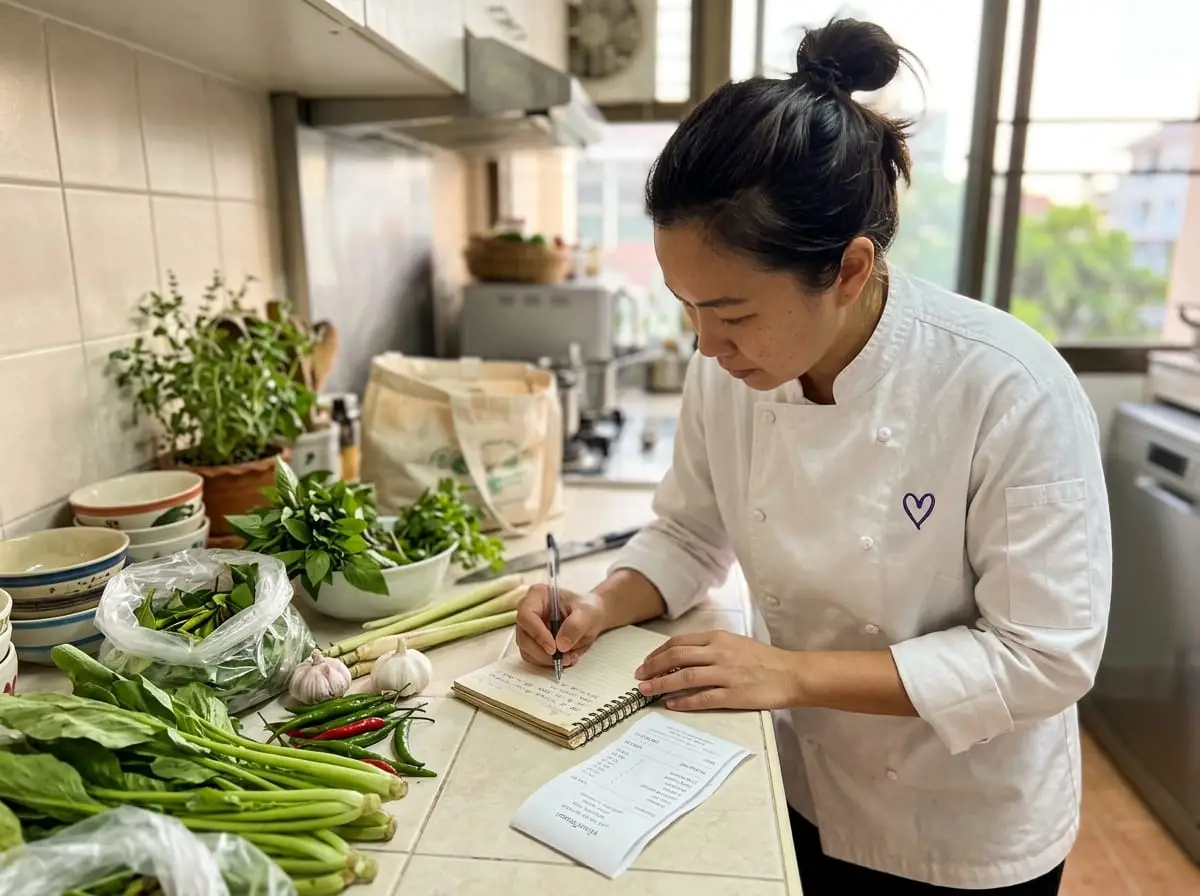
A vegan private chef in Bangkok usually gets one of three briefs. A household has gone plant-based, often with young children, and wants food that is complete rather than just meatless. An athlete or a busy professional wants high-protein meals in the fridge without living on protein bars. Or a host wants a dinner party where the vegan guests and the meat-eaters both leave impressed.
Bangkok is easy for vegans in some ways and quietly difficult in others. Tofu, mushrooms, tropical fruit and a centuries-old Buddhist vegetarian tradition are everywhere. So are fish sauce, shrimp paste and oyster sauce, which turn up in dishes that look entirely vegetable.
This guide covers what a plant-based chef cooks, the nutrients that need planning, children, local ingredients, a dinner party menu, meal-prep food safety and CareRova's rates.
What a vegan private chef in Bangkok actually cooks
Not salads. A trained chef cooks across cuisines: Thai curries made with homemade paste, massaman with chickpeas, pad kra pao with minced tofu and tempeh, Japanese donburi, Italian lentil ragù, Indian dhal and chana masala, Middle Eastern mezze. Breakfasts are tofu scramble, overnight oats with soy milk, congee with mushrooms and ginger, or banana pancakes made with flax "egg".
The work changes with the brief. These are the three we see most.
| Brief | What the chef focuses on | Usual format |
|---|---|---|
| Plant-based family with children | Complete nutrition, mild flavours, lunchboxes, iron and B12 planning | Part-time evenings or a weekly meal-prep day |
| Athlete or high-protein adult | Tofu, tempeh, seitan, lentils and edamame at every meal; portions weighed | Weekly meal prep, one or two visits |
| Host with mixed guests | Dishes that do not read as substitutes; allergen labels | One dinner, chef plus helper |
Weekly meal prep is the most popular format with plant-based households, because legumes, grains and sauces batch-cook well. Our guide to weekly meal prep and fridge food safety explains how that visit runs.
Nutrition first: protein, B12, iron, calcium and omega-3 on a plant-based menu
A vegan diet can be very healthy. Research summarised by the Harvard Nutrition Source links diets built on vegetables, whole grains, legumes and nuts with better heart health, and Harvard Health Publishing covers the same ground for general readers. But a vegan menu cooked without planning can also run short of a handful of nutrients, and the chef should know which ones.
| Nutrient | Why it matters | What the chef cooks with | Supplement? |
|---|---|---|---|
| Protein | Growth, muscle, feeling full | Tofu, tempeh, lentils, chickpeas, edamame, seitan, peanuts, soy milk | Rarely needed if every meal has a legume or soy |
| Vitamin B12 | Nerves and blood; no reliable plant source | Fortified soy milk, fortified nutritional yeast | Yes, almost always; ask your doctor |
| Iron | Energy, concentration, children's development | Lentils, tofu, pumpkin seeds, Chinese kale, morning glory, paired with lime, guava, tomato or chilli for vitamin C | Only if tests show a need |
| Calcium | Bones and teeth | Calcium-set tofu, fortified soy milk, Chinese kale, tahini, almonds | Sometimes, for children |
| Omega-3 fats | Heart and brain | Ground flaxseed, chia, walnuts | Algae oil is the plant source of the long-chain forms |
| Iodine | Thyroid, children's brain development | Iodised salt in cooking | Ask your doctor; seaweed varies too much to rely on |
| Vitamin D | Bones and immunity | Sunlight; fortified milks | Often advised, even in Bangkok, for people who live in air-conditioning |
Two cooking habits make a real difference. Iron from plants is absorbed far better with vitamin C in the same meal, so a squeeze of lime over the lentils is nutrition, not garnish. Tea and coffee reduce iron absorption, so the chef serves them after the meal rather than with it.
Protein does not need to be "combined" at every meal, as people once thought. It needs to be present across the day, and in quantity. A chef cooking for an adult who trains hard puts a palm-sized portion of tofu, tempeh or legumes on every plate, not a few cubes in a curry.
The chef plans food, not medicine. Supplements and doses are a conversation with your doctor, who may suggest a blood test if anyone in the family has been vegan for years without one.
Feeding vegan children safely
Children can grow well on a vegan diet, but they have less margin for error than adults. Small stomachs fill up on high-fibre food before they have taken in enough energy, and a missing nutrient shows up faster in a growing body.
The NHS guidance on weaning and feeding is clear on the basics: vegan babies and young children need careful planning and supplements, rice drinks are not suitable as a milk for under-fives, and unsweetened calcium-fortified soy drinks can be a main drink from age one. The WHO's infant and young child feeding fact sheet adds the wider rule: exclusive breastfeeding for six months, then nutritious complementary foods alongside breast milk up to two years and beyond.
What that means in the kitchen:
- Energy density. Nut butters spread thinly, tahini, avocado, coconut milk, olive oil stirred into purées, and full-fat soy yoghurt. Raw vegan or very low-fat diets do not suit young children.
- Less fibre for toddlers. Some white rice and white pasta alongside wholegrains, so the stomach is not full before the protein arrives.
- A protein at every meal. Mashed lentils, silken tofu, hummus, soft-cooked edamame, peanut butter on toast fingers.
- Iron with vitamin C. Lentil soup with tomato, tofu with orange slices, fortified cereal with fruit.
- Iodised salt in family cooking, sparingly, and none added to food for babies.
- Supplements the parents and doctor decide, which the nanny or chef then gives at the same time each day and logs.
A sample day for a vegan three-year-old
- Breakfast: oat porridge cooked in fortified soy milk, stirred with smooth peanut butter and mashed banana.
- Snack: soy yoghurt with chopped mango.
- Lunch: red lentil and pumpkin dhal with soft rice, steamed Chinese kale cut small, a few orange segments for the vitamin C.
- Snack: hummus with soft-cooked carrot sticks and toast fingers.
- Dinner: silken tofu and vegetable congee with a little sesame oil, then sliced papaya.
- Drinks: water through the day, and fortified soy milk with meals.
That day has a protein at every meal, fat for energy, iron with vitamin C at lunch, and calcium from the soy milk and kale. It is a starting point for a conversation with your paediatrician, not a prescription.
The American Academy of Pediatrics' HealthyChildren nutrition pages are a good reference for portion sizes and picky-eater stages, which apply to vegan children just as much.
Allergens and choking
Vegan cooking leans heavily on four common allergens: soy, peanut, tree nuts and sesame, plus wheat in seitan and mock meats. Introduce each one to a baby on its own, early and in a safe form, and watch for a reaction before adding the next. Whole nuts are a choking risk for under-fives, so the chef uses nut butters and ground nuts, squashes chickpeas for babies and halves blueberries.
School lunches need thought too. Many international-school canteens offer a vegetarian option rather than a vegan one, so the chef packs a lunchbox with an ice pack, because hummus and soy yoghurt in a hot school bag are not safe by lunchtime.
Thai 'jay' cooking and local plant-based ingredients
Bangkok's own plant-based tradition is jay, a Chinese-Thai Buddhist way of eating marked by yellow flags with red lettering on food stalls. Jay food excludes all animal products and also the pungent vegetables: garlic, onion, shallots, chives and spring onions. It peaks during the nine-day Vegetarian Festival in the ninth lunar month, usually around October, when Chinatown's lanes turn yellow.
Jay is a gift for vegan families because it means vegan versions of Thai staples already exist: soy-based "fish" sauce, mushroom "oyster" sauce, mock meats and jay curry pastes. But jay food is not automatically healthy. Festival stalls lean on deep-fried mock meat, wheat gluten, sugar and seasoning powder, and some mock meats contain egg white. A home chef uses the sauces and skips most of the processed protein.
The Bangkok plant-based pantry
- Soy. Firm, soft and silken tofu, yellow tofu, tofu skin, fermented soybean paste (tao jiao), and tempeh, now made by small producers in Thailand as well as imported.
- Mushrooms. Oyster, king oyster, shiitake, enoki, straw mushrooms, and seasonal wild mushrooms in the rainy months.
- Legumes. Mung beans, red beans, black beans, peanuts, and the winged bean that most visitors have never seen.
- Greens. Morning glory, Chinese kale, choy sum, pak wan, holy basil, and banana blossom.
- Bulk and texture. Young jackfruit for "pulled" dishes, pumpkin, taro, riceberry and brown jasmine rice, glass noodles.
- Fat and flavour. Coconut milk, sesame, lemongrass, galangal, makrut lime leaf, tamarind, palm sugar.
Wet markets such as Or Tor Kor have the best produce, Chinatown has jay grocers, and the larger supermarkets carry imported plant milks, nutritional yeast and tempeh. Ari and Phaya Thai have a cluster of vegan cafés and shops, which is one reason we place plenty of plant-based chefs in Ari and Phaya Thai.
Market greens need proper washing under running water, and leafy bunches should be separated leaf by leaf, since soil and residues collect at the base. The WHO's food safety fact sheet lists safe water and raw materials among its five keys, and in a plant-based kitchen raw produce is most of the raw material.
A plant-based dinner party for eight
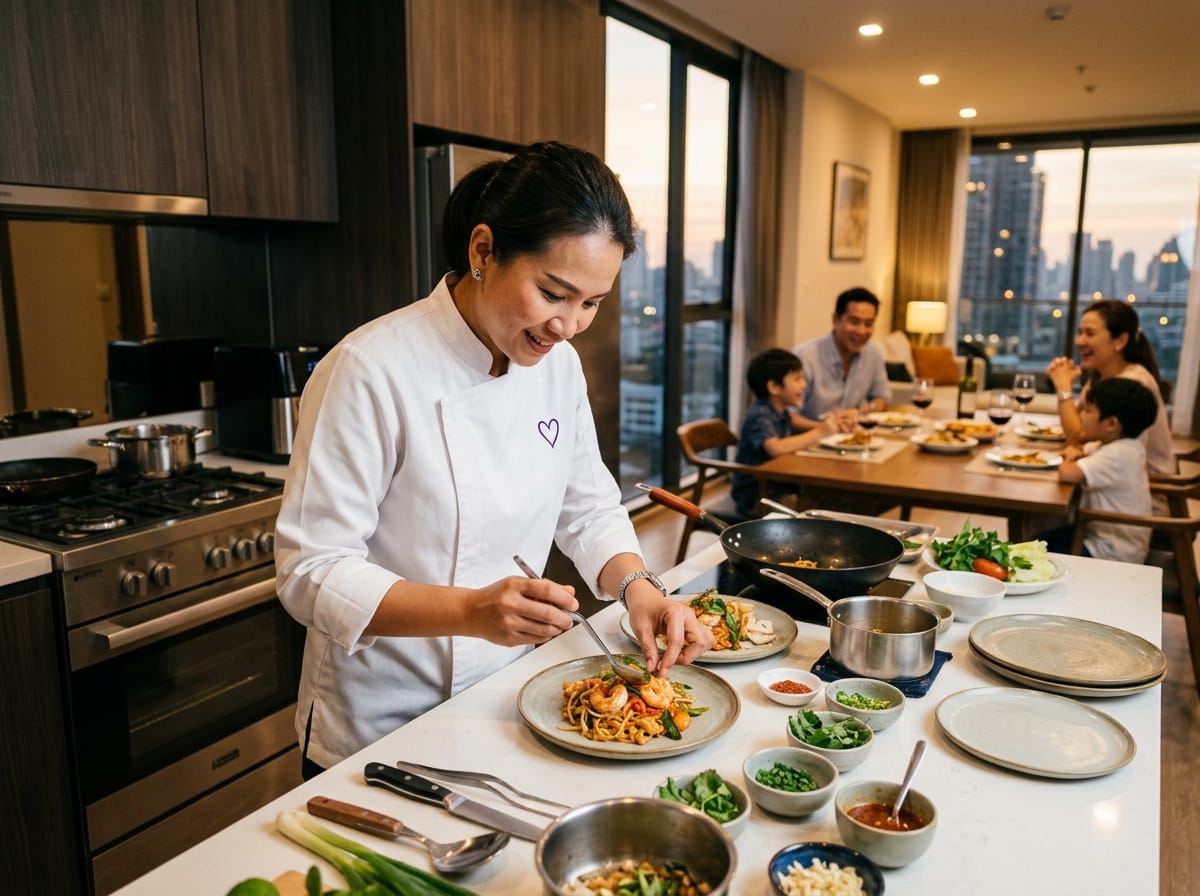
The best vegan dinner parties do not announce themselves. If the meat-eaters at the table only notice at dessert, the chef did it right. Thai food makes this easy, because many of its best dishes are built on vegetables, herbs and coconut already.
| Course | Dish | Main allergens | Ingredient estimate for eight |
|---|---|---|---|
| Canapés | Miang kham: betel-leaf wraps with toasted coconut, ginger, lime and peanuts | Peanut | ฿500–700 |
| Starter | Tom kha with oyster mushrooms, tofu and galangal | Soy | ฿400–600 |
| Salad | Green papaya and pomelo salad with soy-based "fish" sauce and lime | Soy, peanut (optional) | ฿350–500 |
| Main | Massaman of roasted pumpkin, chickpeas and potato | None of the major allergens if made without peanuts | ฿600–800 |
| Main | Grilled king oyster mushroom skewers with peanut sauce | Peanut, soy | ฿600–800 |
| Sides | Riceberry and jasmine rice; morning glory with tao jiao | Soy | ฿300–400 |
| Dessert | Mango sticky rice, or coconut and pandan pudding set with agar | None of the major allergens | ฿500–700 |
That is roughly ฿3,250–4,500 in ingredients for eight, depending on the market and the mangoes. CareRova's guide rate for a chef dinner is ฿5,900 for up to six guests; for eight we quote on request, and you may want a helper to serve and clear.
Two food-safety points matter at a dinner like this. Coconut-milk dishes and peanut sauce spoil quickly in heat, so they stay on the stove or in the fridge until service rather than sitting on a balcony table. And with peanut in three dishes, the chef labels every bowl and serves a peanut-free guest from the kitchen. Our sibling guide to hosting a private chef dinner party covers timelines, staffing and buffets in more detail.
Weekly meal prep: rice, beans and the Bacillus cereus problem
Plant-based meal prep runs on rice, grains and legumes, and those are exactly the foods with specific risks. None of them is a reason to avoid batch cooking. They are reasons to cook and cool properly.
Rice, pasta and noodles
Bacillus cereus is a bacterium whose spores survive cooking. If cooked rice cools slowly on the counter, the spores germinate and produce a toxin that reheating does not destroy, which is why "fried rice syndrome" is a textbook food-poisoning case. A large body of research on the organism is indexed on PubMed for anyone who wants the detail.
The chef's routine: spread cooked rice in a thin layer on a tray, get it into the fridge within an hour if possible, keep it at 5 °C or below, eat it within a day, and reheat it once only, until steaming throughout. The same applies to cooked pasta, noodles and quinoa held for salads.
Beans and tofu
Dried red kidney beans contain a natural toxin that is destroyed only by a hard boil. Soak them overnight, discard the water, then boil vigorously for at least 10 minutes before simmering. A slow cooker on low does not get hot enough on its own. Canned beans are already cooked and safe.
Fresh tofu, once opened, sits covered in clean water in the fridge, with the water changed daily, and is used within a few days. Tempeh is always cooked before eating. Raw bean sprouts, a Thai garnish staple, are a known source of food poisoning; for young children, pregnant women and older relatives, the chef blanches them, in line with general advice from the CDC's food safety pages.
How long it keeps
| Item | Fridge at 5 °C or below | Freezer at −18 °C | Notes |
|---|---|---|---|
| Cooked rice | 1 day | 1 month | Cool within an hour; reheat once |
| Cooked beans, lentils, chickpeas | 3–4 days | 2–3 months | Freeze in portions on prep day |
| Curries and stews | 3–4 days | 2–3 months | Coconut curries freeze well; potatoes go grainy |
| Hummus and dips | 3–4 days | Not ideal | Serve with a clean spoon, not dipped bread |
| Opened tofu | 3–4 days | Changes texture; fine for scrambles | Change the water daily |
| Cooked grains and pasta salads | 3–4 days | Not ideal | Dress on the day |
These follow the FoodSafety.gov cold storage chart and the USDA's leftovers guidance, which puts most cooked leftovers at three to four days. All of it assumes the fridge really is at 5 °C or below, which many Bangkok condo fridges are not when packed full. The US FDA's advice on fridge thermometers is the cheapest fix in this article.
Bangkok humidity is the other enemy. Rice, flour, lentils, nuts and seeds go into airtight containers, because damp nuts and grains can grow moulds that produce aflatoxins, and an open bag of chickpeas attracts weevils and cockroaches in the rainy season. If the pantry already has visitors, our sister company PestsRova handles kitchen pest control.
Hidden animal ingredients and cross-contamination in a mixed household
In Bangkok, the hardest part of vegan cooking is the sauces. These are the items a chef new to vegan work misses.
| Ingredient | Where it hides | Vegan swap |
|---|---|---|
| Fish sauce | Dressings, som tam, most stir-fries, dipping sauces | Soy-based jay "fish" sauce, or light soy with salt and lime |
| Shrimp paste | Most red, green and yellow curry pastes; nam prik relishes | Paste made at home, or a jay-labelled paste |
| Oyster sauce | Stir-fried greens, noodles | Mushroom "oyster" sauce |
| Dried shrimp | Som tam, fried rice, chilli relishes | Toasted peanuts or dried mushrooms |
| Chicken stock powder | Soups, rice, seasoning | Vegetable stock or mushroom powder |
| Lard | Older-style stir-fries, some pastry | Vegetable oil |
| Egg | Yellow egg noodles, some mock meats, batters | Rice noodles; check labels |
| Ghee and butter | Roti, Indian dishes, baking | Coconut oil or a plant butter |
| Condensed milk | Thai tea, coffee, desserts | Coconut cream or a plant-based condensed milk |
| Honey | Dressings, marinades | Palm or coconut sugar |
| Gelatine | Jellies, gummies, mousse | Agar |
Running a mixed kitchen
Many of our plant-based clients live with people who eat meat. That works fine with a few rules:
- Vegan food gets its own boards and knives, which also keeps raw meat away from salad for ordinary food-safety reasons.
- The wok is washed between a meat dish and a vegan one, and frying oil is never shared.
- Vegan sauces live on one shelf; vegan meal-prep boxes are labelled and stored above any raw meat.
- At a shared table, vegan dishes get their own serving spoons.
- A common trick: cook a vegan base, such as a curry or fried rice, and add meat to a separate portion at the end.
Vegan is not the same as allergen-free. A plant-based menu is often heavier in soy, peanut, sesame, tree nuts and wheat than a standard one. The UK Food Standards Agency's allergy guidance lists the 14 allergens to label, and FARE's food allergy resources explain cross-contact, which is the right frame for a family with both a vegan member and an allergic child.
Rates and booking
CareRova's guide rates are the same for vegan and non-vegan cooking. Long-term rates are all-in; groceries are always extra and bought at cost. A plant-based grocery bill is usually lighter than a meat-heavy one, though imported tempeh, plant milks and nutritional yeast add up.
| Format | Guide rate (2026) | Typical use |
|---|---|---|
| Hourly, four-hour minimum | ฿900 an hour | A single meal-prep session |
| Daily, eight hours | ฿4,900 | A full week's meal prep plus baking |
| Part-time, three days a week | ฿19,900 a month | Family dinners and lunchboxes |
| Full-time live-out | ฿34,900 a month | Every meal, shopping, nutrition planning |
| Live-in, six days | ฿31,900 a month | Families with a maid's room |
| Chef dinner, up to six guests | ฿5,900 | Dinner parties; larger groups quoted |
Direct-hire home cooks in Bangkok earn about ฿18,000–35,000 a month and trained private chefs ฿30,000–60,000; a cook who can plan a complete vegan menu for children sits in the upper half. Our guide to what a private chef costs in Bangkok explains the formats, and the full table is on the pricing page.
Every chef we place has a police background check, ID and work-eligibility checks, two or more references phoned, food-hygiene certification and a paid trial day. For a vegan brief, the trial meal should include a curry with homemade paste and one children's dish, and you should ask the chef to walk you through the shopping list. Read more about CareRova's private chef service.
What to send us
- Who is vegan, who is vegetarian and who eats everything.
- Children's ages, any supplements already prescribed and any allergies.
- Goals: family nutrition, high protein, weight, or simply good food.
- Cuisines you like, and whether jay rules (no garlic or onion) apply to anyone.
- The format you have in mind and your nearest BTS or MRT station.
Message us on WhatsApp at +66 97 120 3054 or use the contact form, and you will have a shortlist within 48 hours.
Frequently asked questions
Can children be raised safely on a vegan diet?
Yes, with planning. Young children need enough energy, a reliable vitamin B12 source, vitamin D and attention to iron, calcium and iodine, and the NHS advises supplements for vegan babies and toddlers. Agree the plan with your paediatrician and keep up regular growth checks.
What is the difference between vegan food and Thai jay food?
Jay is a Chinese-Thai Buddhist way of eating that excludes all animal products and also pungent vegetables such as garlic, onion, shallots and chives. Vegan food allows those vegetables. Jay food is marked with yellow flags with red lettering and is everywhere during the Vegetarian Festival, usually around October.
How much does a vegan private chef cost in Bangkok?
CareRova's 2026 guide rates are ฿900 an hour with a four-hour minimum, ฿4,900 for an eight-hour day, ฿19,900 a month part-time and ฿34,900 a month full-time live-out, all-in. A dinner for up to six guests is ฿5,900. Ingredients are always extra and bought at cost.
Can a vegan chef cook in a household where others eat meat?
Yes. The chef keeps separate boards, knives and labelled containers for vegan food, stores vegan sauces on their own shelf and never shares frying oil. Many mixed households have the chef cook a vegan base and add meat or fish to a separate portion at the end.
Is it safe to meal-prep vegan food for a whole week?
Most cooked beans, curries and grain dishes keep three to four days in a fridge at 5 °C or below. Cooked rice is best eaten within a day. For days five to seven, the chef freezes portions on prep day and you thaw them in the fridge the night before.
Need someone properly vetted?
Get a written rate for your household in under 60 seconds.
Written by the CareRova team
We're Bangkok's vetted home-care agency — everything we write comes from real nanny, chef, housekeeper and senior-care placements across condos, houses and short-stay villas.
Get our Bangkok family-care guides straight in Google — add CareRova as a preferred source.