
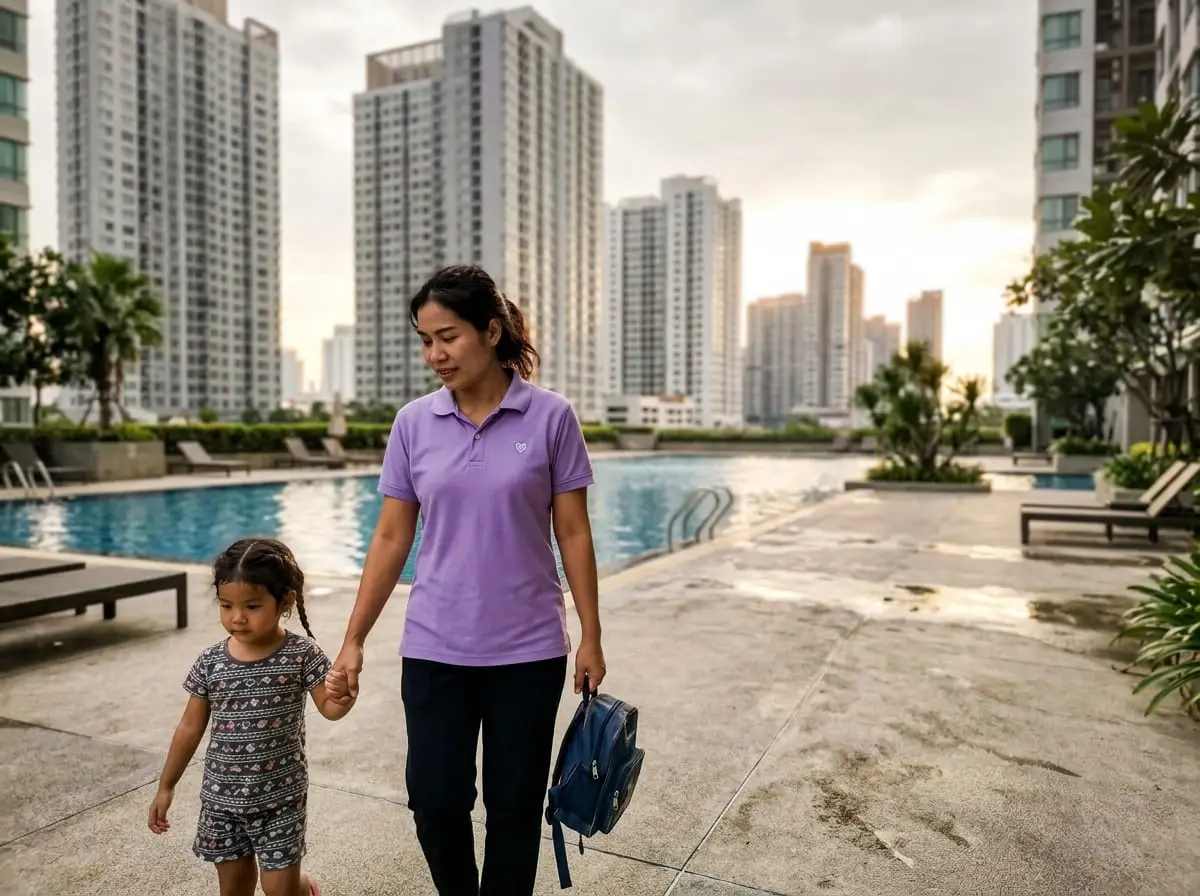
Nanny first aid, as Bangkok families actually need it, is not the same thing as a certificate in a plastic sleeve. A certificate tells you someone sat a course. What you want to know is whether the person holding your toddler can clear a blocked airway, start CPR, cool a scald properly and keep a child safe around a pool without thinking twice.
This guide covers what a good first-aid standard looks like, the emergencies a nanny should rehearse, where carers train in Bangkok, the safety audit to run in a condo or house, the kit and emergency card, heat and water rules, and how to check all of it before you hire. It is written by people who match nannies for a living, not by doctors, so for the actual technique the answer is always a certified, hands-on course.
What "first-aid certified" should actually mean
The word "certified" covers everything from a two-day paediatric course with an instructor to a forty-minute online video with a downloadable PDF. Only the first is worth much when a child stops breathing.
A useful certificate for a nanny has four features. It is paediatric, covering infants under one and children over one separately, because the technique for both choking and CPR differs by age. It includes hands-on practice on manikins, assessed by an instructor. It is recent, typically issued within the last two years. And it comes from a provider you can identify and contact.
The American Red Cross child and baby CPR guidance is a good illustration of why the hands-on part matters: compression depth, hand position and the ratio of compressions to breaths all change between a baby and a five-year-old. You cannot learn the feel of that from a screen.
What a certificate does not tell you
It does not tell you whether the nanny can stay calm, whether she knows your address in Thai, or whether she would call 1669 before calling you. Those are things you test at interview and on the trial day, with a few scenario questions. Ask: "Your two-year-old is eating grapes and goes silent. What do you do, in order?" A trained nanny answers in steps. An untrained one answers with feelings.
At CareRova, first aid and CPR are a requirement for every child carer we place, alongside a police background check, ID and work-eligibility checks, at least two references phoned and a paid trial day. Our guide on how to vet a nanny in Thailand covers the rest of that process.
The six emergencies a nanny must handle
Most serious incidents with small children fall into six groups. A good course covers all of them; a good nanny can explain her first three actions for each without notes. The table below is a summary for parents to discuss with a carer, not instructions to follow in place of training.
| Emergency | First actions a trained nanny takes | What she does not do | Call 1669 when |
|---|---|---|---|
| Choking | Checks if the child can cough or cry; if not, uses the age-correct back blows and thrusts she was taught | Blind finger sweeps, or holding a baby upside down by the feet | The airway does not clear, or the child becomes unresponsive |
| Unresponsive, not breathing normally | Shouts for help, starts CPR, sends someone to call 1669 | Waits to reach a parent first | Immediately |
| Burns and scalds | Cools under cool running water for 20 minutes, removes nappies and clothing not stuck to skin | Ice, butter, toothpaste, bursting blisters | Burn is larger than the child's palm, on face, hands, genitals or joints, or looks white or charred |
| Drowning or near-drowning | Gets the child out, checks breathing, starts CPR if needed | Assumes the child is fine because they are now coughing | Always, even if the child seems to recover |
| Febrile seizure | Lays the child on their side on a safe surface, times it, keeps hands and objects out of the mouth | Restrains the child or puts them in a cold bath | The seizure lasts more than five minutes, breathing is difficult, or it is the first one |
| Severe allergic reaction | Uses the prescribed auto-injector as trained, lays the child down, calls for help | Waits to see if an antihistamine works | Any sign of breathing difficulty, swelling of lips or tongue, or collapse |
Choking and CPR
Choking is the emergency most likely to happen at your dining table. Grapes, cherry tomatoes, nuts, popcorn, hard sweets and chunks of sausage are the usual culprits, and the risk sits mostly with under-fives. Prevention is half the skill: cutting round foods lengthways and sitting children down to eat. A nanny who cooks should already do this; our sibling guide on toddler nutrition and lunchboxes goes through safe cuts by age.
CPR is the skill you hope is never used. The point of a refresher is speed: the first minutes before help arrives matter most, and in Bangkok traffic an ambulance can take a while. A nanny should start, not wait.
Burns, seizures and allergies
Scalds in Bangkok homes come mostly from kettles, instant-noodle cups, hot drinks on low tables and bath water from water heaters set too hot. The 20-minute cool running water rule is the one people get wrong by stopping after a minute.
Febrile seizures are frightening but usually brief, and paediatric bodies such as the American Academy of Pediatrics are clear that a first one always needs a doctor's assessment. For allergies, FARE's guidance on food allergy is clear that an auto-injector is the first-line treatment for anaphylaxis and that the child still needs emergency care after it is used. If your child has a prescribed auto-injector, the nanny practises with a trainer device in front of you during the first week.
Where nannies train in Bangkok and how to check a certificate
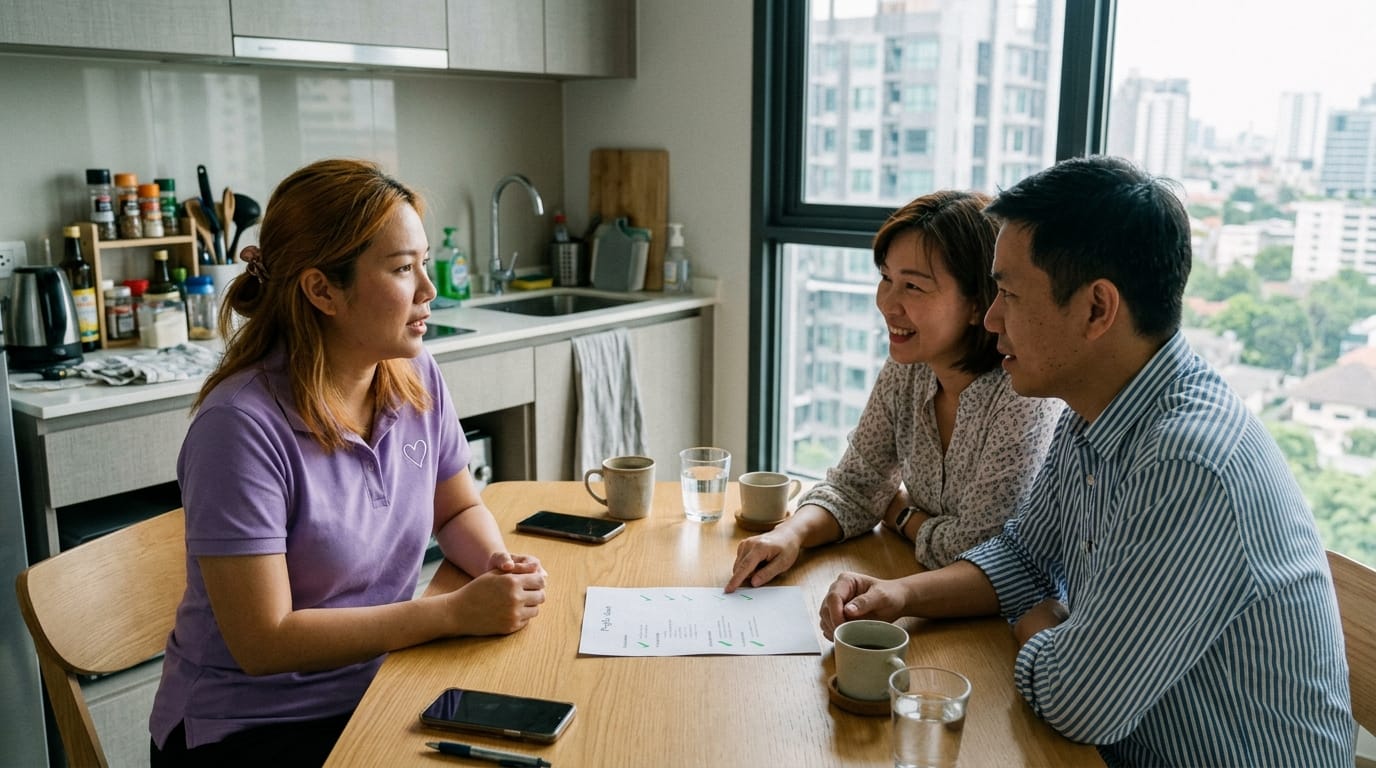
The Thai Red Cross Society is the best-known provider of first-aid and CPR training in Thailand and the name most nannies will recognise. Several private hospitals also run courses for parents and carers, often in English, and international schools sometimes host sessions for families and staff. Course content and certificate validity vary, so look at the details rather than the logo.
What to look for on the course outline
- Separate infant (under one) and child (one to puberty) sections for CPR and choking.
- Hands-on manikin practice, assessed by an instructor.
- Burns, bleeding, head injuries, seizures, poisoning and anaphylaxis.
- Use of an automated external defibrillator (many Bangkok condos and malls now have one in the lobby).
- A written or practical assessment at the end, not just attendance.
How to check the certificate itself
Ask for the original or a clear photo. Check the provider name, the date, the course title and the trainee's name against her ID. If anything looks off, call or email the provider and ask them to confirm. A genuine provider will do this in a minute.
Then ask her to show you, on a cushion, what she would do for a choking one-year-old. You are not grading technique; you are checking she has done it with her hands before. Families who hire through CareRova get this checked for them, but it is still worth seeing for yourself on the trial day.
| Check | Pass | Worry |
|---|---|---|
| Course length | Full day or longer, in person | Under two hours, or online only |
| Age coverage | Infant and child sections | Adult CPR only |
| Date | Within the last two years | Older, with no refresher |
| Provider | Named, contactable, confirms on request | No contact details, will not confirm |
| Demonstration | Shows steps calmly, in order | Vague, or "I would call you first" |
The condo safety audit: balconies, windows, pools, kitchens
Training covers what to do after something happens. The audit is about stopping it. We ask every nanny to walk the home with a parent in her first week and note anything that worries her. Bangkok high-rises have particular risks, and so do the older shophouses and family compounds around the city.
Safe Kids Worldwide and the AAP's HealthyChildren home-safety pages both publish checklists; the list below is the version adapted to a typical Bangkok condo.
Balconies and windows
Balconies are the risk that keeps matchers up at night. The rail height is usually fine; the problem is what a child can climb on. Move chairs, planters, storage boxes and the aircon compressor cover away from the rail, or lock the balcony door with a latch placed high. Check that balcony doors cannot be opened by a three-year-old: many sliding doors can.
Windows that open outward need restrictors that stop them opening more than a few centimetres. Furniture under windows becomes a step, so move beds and sofas. Your building's juristic office can tell you what modifications are allowed.
Kitchen and bathroom
- Set the water heater so the tap cannot scald; HealthyChildren and Safe Kids suggest no higher than about 49 °C.
- Turn pan handles inward and use the back burners first.
- Keep kettles, rice cookers and hot drinks off counter edges and low tables.
- Move cleaning chemicals, dishwasher tablets, laundry pods and mosquito sprays to a high cupboard with a child latch. Never decant them into drinking bottles.
- Keep the bathroom door closed and the toilet lid down for under-threes; a bucket of water is a drowning risk too.
Living areas
- Anchor bookcases, TV units and chests of drawers to the wall.
- Tie up curtain and blind cords out of reach.
- Find every button battery (remotes, scales, toys, car keys) and every set of small, strong magnets, and secure them. Swallowed button batteries need emergency care straight away.
- Cover sockets in rooms the child uses and tidy cables behind furniture.
- Check that the main door lock and any lift-lobby door cannot be opened by a child.
Hygiene during the audit
Use the walk-through to fix health hazards too. Check under sinks and behind the fridge for mould, which thrives in Bangkok humidity, and look for standing water on balconies and in plant saucers, where dengue mosquitoes breed. If you find mould on walls or a pest problem, sort it before the nanny's routine sets in; our guide on a healthy home with a nanny and housekeeper covers the detail, and our sister company PestsRova handles pest control if needed.
The first-aid kit and emergency card on the fridge
A good nanny will ask where the kit is on her first morning. If you do not have one, build it together.
| Item | Quantity | Why |
|---|---|---|
| Disposable nitrile gloves | 1 box | Protects both of you when dressing wounds or handling vomit |
| Plasters, assorted, plus fabric ones | 1 box | Plastic ones peel off in Bangkok humidity |
| Sterile non-stick dressings and a roll of tape | 6 to 10 | Grazes and larger cuts |
| Saline pods | 10 | Washing out eyes and wounds |
| Digital thermometer | 1, plus spare battery | Fever readings for the log |
| Oral syringe | 2 | Accurate medicine doses |
| Tweezers and small scissors | 1 each | Splinters, cutting tape |
| Instant cold pack | 2 | Bumps and bruises |
| Antiseptic wipes and hand sanitiser | 1 pack each | Clean hands before and after first aid |
| Prescribed medicines and auto-injector | As prescribed | Check expiry monthly |
Store the kit in a cool, dry cupboard, not the bathroom, where heat and steam degrade dressings and medicines faster. The nanny checks expiry dates on the first of each month and writes the date on a sticker inside the lid. She washes her hands before and after any first aid, following the CDC's handwashing guidance, and bins gloves and dressings in a tied bag.
The emergency card
Stick an A5 card on the fridge and keep a photo on the nanny's phone. It should contain:
- Medical emergency: 1669. Police: 191. Fire: 199.
- Your full address in Thai and English, including tower, floor, unit and a landmark the driver will know.
- The nearest 24-hour hospital with a paediatric emergency department, and a second option.
- Both parents' mobile numbers, and one backup adult.
- Each child's full name, date of birth, weight, allergies, conditions and regular medicines.
- Your paediatrician's name and clinic.
- Where the hospital card, passport copies and insurance details are kept.
For hospital choice, many families on the Sukhumvit side use Bumrungrad International or Samitivej, and families nearer Phetchaburi and the east often choose Bangkok Hospital. The right answer is whichever 24-hour emergency department is quickest from your door at rush hour. If you live in Sukhumvit, drive the route once at 5 pm before you need it.
Heat, dehydration and sun for children in Bangkok
Bangkok heat is a safety issue, not just a comfort one. Small children heat up faster than adults and tell you later. A nanny plans outings around the temperature, not the other way round.
| Time | What works | What to avoid |
|---|---|---|
| 06:30 to 09:30 | Park, playground, walk to the market | Nothing much; this is the best window |
| 10:00 to 15:30 | Indoor play, library, mall play areas, nap | Open playgrounds, metal slides, long stroller walks |
| 16:00 to 18:00 | Shaded outdoor play, pool if not stormy | Sitting near standing water at dusk |
| Any time in a car | Child never left inside, even for a minute | Leaving a sleeping child "just while I pay" |
Signs a nanny watches for
Fewer wet nappies, dark urine, a dry mouth, unusual tiredness, irritability, flushed hot skin and a headache in older children. The response is shade, cool water to drink and a cool damp cloth. A child who is floppy, confused, vomiting repeatedly or stops sweating needs medical help straight away.
Sun, mosquitoes and air
Hats, long-sleeved swim tops and shade come first; sunscreen is a back-up. During the rainy months, roughly May to October, dengue risk rises, and the WHO's dengue fact sheet notes that the mosquitoes that spread it bite during the day. A nanny applies an age-appropriate repellent on outings and avoids parks with standing water at dusk.
From roughly December to March, PM2.5 can climb. The nanny checks IQAir's Bangkok readings before planning outdoor time and moves the morning park session indoors on bad days. If your child has asthma, the inhaler and its instructions go in the outing bag, every time.
Pool and water rules for every outing
Condo pools are one of the best things about Bangkok living and one of the biggest risks. Drowning in small children is fast and quiet; there is rarely splashing or shouting. Safe Kids and the AAP both stress active, undistracted supervision as the core rule.
The house rules we recommend
- Under-fives are always within arm's reach in or near water, armbands or not.
- One adult is the named "water watcher": no phone, no conversation, no reading. If she needs to step away, she hands over by saying so out loud, or takes the child out.
- Inflatables and armbands are not safety devices. A properly fitted life jacket is, for weak swimmers.
- No running on wet tiles; no going into the pool area without an adult.
- Condo pool gates must close and latch on their own. Report any that do not to the juristic office the same day.
- At home: empty paddling pools, buckets and baths straight after use.
Hygiene in and around the pool
A child with diarrhoea or vomiting stays out of shared pools until fully recovered. Swim nappies go on under-threes, checked often, and are changed in the changing room, never at the poolside. Everyone showers before swimming. Afterwards, the nanny rinses ears, dries skin folds properly in the humidity and washes swimwear the same day so it does not grow mould in a bag.
Hotel and villa trips
On holiday the risks multiply: unfamiliar pools with no gates, villa ponds, sea swimming and tired adults. If you are travelling with children, a babysitter or holiday nanny who knows these rules lets the adults relax without letting their guard down. The same water-watcher rule applies, and the nanny walks the property on arrival to find every bit of water before the children do.
Hiring a first-aid-trained nanny and how to book
If you are hiring now, here is the checklist we use, condensed for families:
- Ask for the first-aid and CPR certificate: provider, date, course title, name matching ID.
- Confirm it covers infant and child CPR and choking, with hands-on practice.
- Ask three scenario questions at interview: choking, a scald and a child who goes limp in the pool.
- On the trial day, walk the home together and see what she notices.
- Build the kit and the emergency card together in week one.
- Practise a short drill every few months, and diarise the certificate renewal.
- Write down your medicine rules: nothing given without your written instruction and a log entry.
What it costs
CareRova's guide rates for 2026 are all-in, covering vetting, first-aid and CPR for child carers, monthly check-ins and a 90-day free replacement on long-term placements.
| Engagement | Nanny or babysitter |
|---|---|
| Hourly (4-hour minimum) | from ฿450 |
| Daily (8-hour day) | ฿2,900 |
| Part-time, 3 days a week | ฿16,900 a month |
| Full-time live-out, 5 to 6 days | ฿29,900 a month |
| Live-in, 6 days, room and meals provided | ฿26,900 a month |
For comparison, direct-hire full-time nannies in Bangkok typically cost ฿18,000 to ฿40,000 a month, and unvetted sitters ฿250 to ฿350 an hour, but first-aid training and background checks are then yours to arrange and verify. Our sick-child policy guide is a useful next read once your nanny starts.
To get a shortlist within 48 hours, send us your children's ages, your area, the hours you need and any medical conditions or allergies. WhatsApp or call +66 97 120 3054, email support@carerova.com, or use the contact form.
Frequently asked questions
Do nannies in Bangkok have first-aid training?
Some do and many do not, and certificates vary widely in quality. CareRova requires first aid and CPR for every child carer it places, and you should still ask to see the certificate, the provider and the date before any hire.
What is the emergency ambulance number in Thailand?
1669 is the national medical emergency number. Put it on a card by the phone with your full address written in Thai, because the person answering may need directions to your building and tower.
Where can a nanny take a CPR course in Bangkok?
The Thai Red Cross runs first-aid and CPR training, and several private hospitals run courses for parents and carers. Look for paediatric content and hands-on practice, and keep the certificate date on file so you know when it needs renewing.
How often should a nanny renew first-aid and CPR certification?
Most providers issue certificates valid for around two years. Skills fade faster than that, so a short practice drill every few months at home is worth the ten minutes.
What should be in a first-aid kit for a toddler in a Bangkok condo?
Disposable gloves, plasters, sterile dressings, a digital thermometer, saline, tweezers, an oral syringe, any prescribed auto-injector and your doctor's fever-medicine dosing for your child's weight. Store it in a cool, dry cupboard, not the bathroom.
Can a nanny give my child medicine?
Only with your written instructions for the specific medicine and dose, recorded each time it is given. A trained nanny does not diagnose or decide doses on her own; she follows your doctor's plan and calls you.
Need someone properly vetted?
Get a written rate for your household in under 60 seconds.
Written by the CareRova team
We're Bangkok's vetted home-care agency — everything we write comes from real nanny, chef, housekeeper and senior-care placements across condos, houses and short-stay villas.
Get our Bangkok family-care guides straight in Google — add CareRova as a preferred source.