

A nanny cooking for kids is one of the quiet advantages of family life in Bangkok. Fresh rice porridge at breakfast, steamed fish and greens at lunch, a lunchbox packed at 6:30 before the school bus: done well, it shapes how your children eat for years.
Done badly, it is a sticky trail of sweetened yoghurt drinks, instant noodles on busy days, fish sauce in everything and a lunchbox that has been sitting in a warm bag since breakfast. The difference is rarely about talent. It comes from clear expectations, a few evidence-based rules and good food hygiene in a hot kitchen.
This guide is for parents hiring or briefing a nanny who will feed young children. It covers what the role includes, weaning and toddler meals, picky eaters, a week of international-school lunchboxes, keeping food safe until noon, sugar and salt, allergens and choking, and when to add a cook.
What a nanny who cooks does, and what she should not be asked to do
A nanny's cooking is for the children. In most Bangkok households that means breakfast, lunch, snacks and an early dinner for children under ten, plus purées and finger foods for a baby, packed lunches and the washing-up that goes with them.
What is fair to include:
- Planning the children's meals for the week with you, and shopping from the list.
- Cooking fresh, simple food: rice and noodle dishes, soups, steamed fish, eggs, stir-fried vegetables, pasta, simple Western dishes the children like.
- Batch-making purées and freezing them in labelled portions.
- Packing school lunches and snacks, and washing the boxes and bottles every evening.
- Keeping a food diary for babies and toddlers, especially during allergen introduction.
What she should not be asked to do on a nanny's salary:
- Cook separate adult dinners every night, dinner parties or weekend entertaining.
- Weekly meal prep for the whole household.
- Specialist diets for adults (keto, low-FODMAP, medical diets) that need real planning.
- Homework help beyond reading together, if your older child needs structured maths or English support; that is a tutor.
The line matters because cooking for adults takes time that should go on the children. A nanny stirring a curry for six while a two-year-old climbs the sofa is not doing either job well. When you brief us through the nanny service, tell us how much cooking you expect and we shortlist carers who can do it.
Weaning to toddler meals: the evidence-based basics
The WHO's guidance on infant and young child feeding recommends exclusive breastfeeding for the first six months and introducing safe, nutritious solid foods from six months while breastfeeding continues. The NHS weaning guide says the same on timing and adds practical rules: no added salt or sugar, no honey before 12 months, no whole nuts for under-fives, and no rice drinks as a milk substitute.
Bangkok nannies often have strong habits from home, some excellent and some outdated. Rice porridge from four months, a pinch of sugar to help it go down, or a little seasoning powder for flavour are all common. Agree the rules gently and in writing on day one; most nannies are glad to have them.
| Age | Textures | Bangkok-friendly examples | Nanny notes |
|---|---|---|---|
| Around 6 months | Smooth then mashed; soft finger foods | Pumpkin, sweet potato, banana, avocado, plain jok (rice porridge) with no seasoning | One new food at a time; watch for reactions; offer water in an open cup with meals |
| 7 to 9 months | Mashed and lumpy; soft pieces | Steamed fish flaked and checked for bones, kai tun (steamed egg), soft tofu, broccoli florets | Introduce common allergens one at a time; keep offering once tolerated |
| 10 to 12 months | Chopped family food | Soft rice with minced chicken and vegetables, pasta, omelette strips, soft mango | Family food without fish sauce or added salt; three meals plus snacks |
| 1 to 3 years | Family meals, cut safely | Gaeng jued (clear soup) with tofu and greens, fried rice cooked with less soy, pasta with vegetable sauce | Small portions, regular times, milk no longer the main food |
| 3 to 5 years | Most family food | Khao man gai with less sauce, noodle soup, fish cakes made at home, sandwiches | Whole nuts and round foods still cut or avoided |
How much food a toddler needs
Less than parents expect. Toddler appetites rise and fall from day to day, and a child who eats a big breakfast may pick at lunch. The Harvard Nutrition Source "healthy plate" idea works well for the nanny's planning at any age: half the plate vegetables and fruit, a quarter whole grains, a quarter protein, with water as the drink.
Ask the nanny to serve small portions and let the child ask for more, rather than piling the plate and coaxing. Then let the child decide how much to eat.
Picky eaters: what works and what backfires
Almost every toddler goes through a fussy phase, usually between about 18 months and four years. It is normal development, not a feeding failure. The approach the nanny takes in these years has a big effect on how long it lasts.
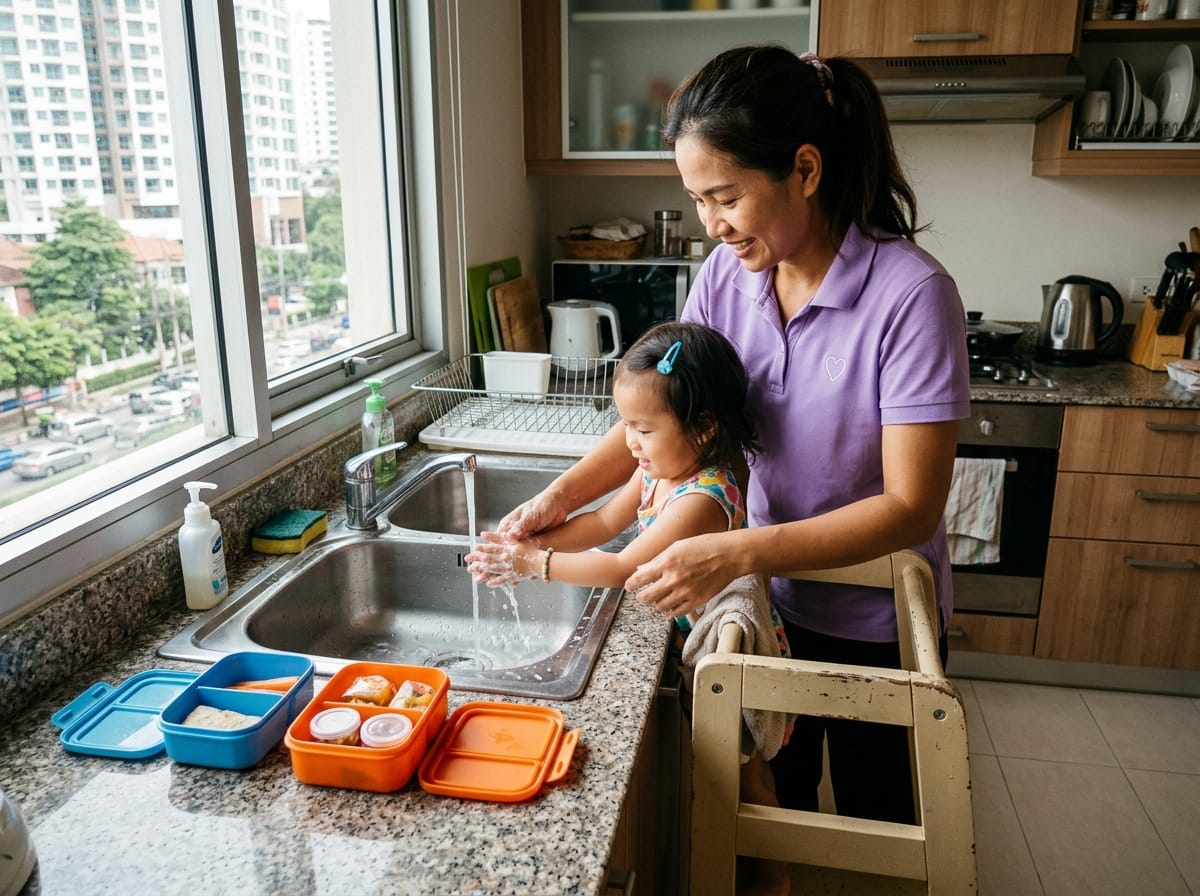
What works
- Repeated, relaxed exposure. The AAP's HealthyChildren nutrition pages note that a child may need to try a new food many times before accepting it. The nanny puts a small amount on the plate, with no comment, again and again.
- One safe food on every plate. Plain rice, bread or a fruit the child likes, alongside the new thing.
- Eating together. Children copy. A nanny who sits and eats some vegetables with the toddler does more than one who supervises standing up.
- Involving the child. Washing vegetables, tearing lettuce, choosing between two fruits at the market. Three-year-olds eat what they helped make more often.
- Regular times. Three meals and two planned snacks, with no grazing in between, so the child arrives at the table hungry.
What backfires
- Rewards: "Eat your broccoli and you get ice cream" teaches that broccoli is the price and dessert is the prize.
- Pressure, counting bites, spoon-feeding a toddler who can feed herself.
- Cooking a separate "kid meal" on request every night.
- Screens at the table. Eating in front of a tablet removes the chance to notice hunger and fullness.
- Snacks and milk close to meals. A large bottle of milk or a yoghurt drink at 11:00 is often why lunch goes untouched.
The rule we suggest families give their nanny is simple: the adult decides what is served and when; the child decides whether and how much to eat. If a child's eating is so restricted that weight or growth worries you, or meals cause gagging or distress, that is a conversation for your paediatrician.
A week of lunchboxes for an international-school morning
Most international schools in Bangkok start between 7:30 and 8:30, and a bus pick-up from Sukhumvit, Thonglor or Sathorn can be before 7:00. Lunch is often at 11:30 to 12:30, which means a packed lunch may spend five hours out of the fridge in a hot country. Some schools have fridges for lunchboxes; many do not. Ask yours.
Here is a five-day plan a nanny can cook, pack and keep safe. Everything listed as "cold" goes in an insulated bag with two ice packs; "hot" goes in a pre-heated food flask.
| Day | Main | Vegetable or fruit | Snack | Pack as |
|---|---|---|---|---|
| Monday | Wholemeal wrap with chicken, cucumber and cream cheese, cut into rounds | Cherry tomatoes quartered, apple slices with lemon | Plain yoghurt in a sealed pot, frozen overnight | Cold |
| Tuesday | Chicken and vegetable fried rice, cooked fresh that morning | Steamed broccoli and carrot sticks | Banana | Hot (flask) |
| Wednesday | Pasta salad with tuna, sweetcorn and peas, olive oil dressing | Sliced pear, edamame | Rice crackers, cheese cubes | Cold |
| Thursday | Clear chicken soup with rice noodles and bok choy | Mango cheeks, cut at home | Homemade banana oat muffin | Hot (flask) |
| Friday | Egg and cheese sandwiches on wholegrain bread | Cucumber sticks, grapes cut lengthways into quarters | Plain popcorn for older children only, or a small handful of raisins | Cold |
Packing routine for the nanny
- Wash hands thoroughly before starting, and again after handling raw meat or eggs.
- Cook fresh, or reheat yesterday's cooked food until steaming hot all the way through.
- For cold lunches, cool hot food fast, then pack it straight from a fridge running at 5 °C or below.
- For hot lunches, fill the flask with boiling water for five minutes, empty it, then add food that is steaming hot.
- Pack two ice packs: one under the box, one on top. A frozen water bottle or yoghurt pot doubles as one.
- Close the bag and keep it out of the sun while waiting for the bus.
If you want this done for a whole week in advance, or for adults too, our sibling guide on weekly meal prep with a chef covers fridge planning and storage times.
Keeping a lunchbox safe until noon in Bangkok heat
Food-poisoning bacteria grow fastest between 5 °C and 60 °C. The USDA's danger-zone guidance says perishable food should not sit in that range for more than two hours, or one hour when the air is above 32 °C. On a Bangkok morning, the inside of a school bag on a bus or a classroom hook can easily be that warm.
That is why the ice packs and the flask are not optional. An insulated bag with frozen packs can keep food cold for several hours; an empty bag cannot.
Foods that travel badly
- Cooked rice that was kept warm or left out after cooking. Rice should be cooled quickly, refrigerated, and reheated only once.
- Mayonnaise-based salads, cream desserts and custards.
- Cut fruit packed loosely, especially melon.
- Sliced deli meats in heat. Fresh-cooked chicken or egg is a safer bet.
- Sushi rolls and raw-fish dishes. Keep them for home.
Using leftovers well
Leftovers make good lunches if they were handled properly the night before. The USDA's leftovers guidance suggests refrigerating within two hours, eating within three to four days, and reheating to 74 °C. A nanny can check the fridge with a cheap thermometer; the FDA's advice on refrigerator thermometers explains why the dial setting is not enough.
Cleaning the lunchbox kit
Every evening, the nanny empties, washes and fully dries lunchboxes, flasks and bottles. Silicone seals and bottle straws come out and get scrubbed with a small brush. In Bangkok humidity, a seal left damp overnight grows black mould within days. Replace cracked or stained boxes; scratched plastic is hard to get clean.
Sugar, salt, snacks and drinks
The two quiet problems in a Bangkok child's diet are salt in savoury Thai cooking and sugar in drinks and snacks.
Salt
UK guidance suggests no added salt for babies and no more than about 2 g of salt a day for children aged one to three. A tablespoon of fish sauce or soy sauce can contain more than that. Seasoning powder, stock cubes, sausages, ham and many crackers add more.
Ask the nanny to cook children's portions before seasoning the adults' food, use fresh herbs, garlic, lime, a little coconut milk and homemade stock for flavour, and keep fish sauce and seasoning powder out of children's food under one and to a minimum after. Many Thai nannies are surprised at first; most adapt quickly once they see the child eats happily without it.
Sugar and drinks
Sweetened UHT milk, yoghurt drinks, juice boxes, cordials, bubble tea and many breakfast cereals add up fast. The AAP advises no fruit juice for babies under one and whole fruit over juice for older children. Water and plain milk should be the everyday drinks.
| Swap this | For this | Why |
|---|---|---|
| Flavoured UHT milk | Plain milk, with fruit on the side | Much less added sugar |
| Juice box | Water and a piece of whole fruit | Fibre, fewer free sugars, better for teeth |
| Yoghurt drink | Plain yoghurt with mango or banana mashed in | Same calcium, far less sugar |
| Sweet bakery bun | Homemade banana oat muffin | Lower sugar, more fibre |
| Crisps or prawn crackers | Edamame, cucumber, rice crackers, cheese cubes | Less salt and fat |
| Sweets as a reward | Praise, a sticker, a trip to the park | Breaks the food-as-reward habit |
Snacks that work in Bangkok
Good snacks are small, planned and served at a table: fruit (mango, papaya, banana, rambutan peeled and seeded for older children), boiled egg, plain yoghurt, steamed corn, edamame, rice crackers, a slice of wholemeal toast with peanut butter once peanuts are introduced. Two snacks a day, not a constant supply.
Allergens, choking and small-portion hygiene
Introducing allergens
The NHS advises introducing the common allergens (cow's milk, egg, foods containing gluten, nuts and peanuts as smooth butter or ground, seeds, soya, shellfish and fish) one at a time from around six months, in very small amounts, so any reaction is easier to spot. Once tolerated, keep them in the diet regularly. If your child already has eczema or a known allergy, ask your paediatrician before starting.
The nanny keeps a simple log: food, date, amount and any reaction. Mild reactions get reported to you the same day. Signs of a serious reaction, such as swelling of the face, lips or tongue, difficulty breathing or collapse, mean calling 1669 immediately. FARE's food allergy resources explain the signs clearly, and the UK Food Standards Agency's allergy guidance lists the 14 major allergens that labels must show.
If a child in the house has a diagnosed allergy, the kitchen needs separate utensils, a clean board and surfaces wiped before preparing their food, and labels on every container in the fridge. For parties, our sibling guide on allergy-safe kids' birthday menus covers how to manage a buffet.
Cutting food to reduce choking risk
- Grapes, cherry tomatoes and blueberries: cut lengthways into quarters for under-fives.
- Sausages and hot dogs: cut lengthways into thin strips, not rounds.
- Whole nuts: none for under-fives; use smooth nut butter or ground nuts.
- Popcorn, hard sweets, marshmallows and chunks of raw carrot or apple: avoid for toddlers, or grate and steam.
- Fish: flake and check for bones with your fingers.
- Always seated, always supervised, never eating in a car seat or while running around.
Every nanny CareRova places for children holds first aid and CPR, including choking, and our guide to nanny first aid and child safety covers what that training should include.
Hygiene for small portions
Small children are more vulnerable to food poisoning than adults, and the WHO's food safety fact sheet notes that children under five carry a large share of the burden of foodborne illness. Baby food has a few rules of its own:
- Wash hands before preparing food and after every nappy change, following the CDC's handwashing advice.
- Use a separate board and knife for raw meat and seafood.
- Freeze purées in ice-cube trays, label with the date and contents, and use within about a month for best quality.
- Thaw in the fridge or microwave, never on the counter. Stir and test the temperature before serving.
- Spoon a portion into a bowl; never feed from the jar or container you plan to keep, because saliva carries bacteria into the rest.
- Throw away what is left in the bowl after the meal.
- Wash bibs and high-chair trays after every meal; high-chair straps harbour old food and mould in the humidity.
When a child has a stomach bug, the nanny serves small, frequent drinks and plain food, washes hands with soap rather than relying on sanitiser, and does not prepare food for anyone else if she is unwell herself.
When to add a cook, and how to book either
A nanny who cooks well for the children is enough for most families with one or two young children. The signs that you need a separate cook:
- The adults want proper dinners most nights, not leftovers from the children's tea.
- You entertain regularly, or need meal prep for the week.
- There are three or more children and the nanny is spending more than two hours a day in the kitchen.
- Someone in the family needs a medical or specialist diet.
- The nanny is good with the children but not confident in the kitchen, and you would rather keep her.
| Role | What it covers | CareRova guide rate (2026, all-in) |
|---|---|---|
| Full-time live-out nanny who cooks for the children | Childcare, children's meals, lunchboxes, kitchen clean-up for children's food | ฿29,900 a month |
| Live-in nanny | As above, six days, room and meals provided | ฿26,900 a month |
| Part-time home cook or chef, 3 days a week | Family meals, batch cooking, menus; groceries extra at cost | ฿19,900 a month |
| Full-time live-out cook or chef | Daily family cooking, entertaining, meal prep | ฿34,900 a month |
| Hourly nanny (4-hour minimum) | Cover, after-school, holidays | from ฿450 an hour |
Groceries are never included in a cook's rate; they are bought on your account or reimbursed at cost. Every chef we place holds food-hygiene certification, and every child carer holds first aid and CPR. The private chef service and the full rates page have the detail.
To get a shortlist within 48 hours, send CareRova your children's ages, any allergies or dietary needs, your school's start time and how much cooking you want done. WhatsApp or call +66 97 120 3054, email support@carerova.com, or use the contact form.
Frequently asked questions
Should my nanny cook for my children?
Yes, cooking simple, fresh meals for the children is a normal part of a nanny's role in Bangkok. Cooking for the whole family, dinner parties or weekly meal prep for adults is a cook's job and should be paid as one.
What can I put in a lunchbox in hot weather?
Food that is fine cold, packed straight from a fridge at 5 °C or below, in an insulated bag with two ice packs. Hot food goes in a pre-heated food flask. Avoid mayonnaise salads, cut fruit left uncovered and rice that has been sitting warm.
How much salt can a toddler have?
UK guidance suggests babies under one should have no added salt and children aged one to three no more than about 2 g of salt a day. That is easy to exceed with fish sauce, soy sauce, stock cubes and processed meats.
When should I introduce allergens like peanut and egg?
NHS guidance is to introduce common allergens one at a time from around six months, in small amounts, and to keep giving them once tolerated. If your child has eczema or an existing allergy, speak to your paediatrician first.
How do I get my toddler to eat vegetables?
Serve them often, in small amounts, alongside food your child already likes, and eat them yourself. It can take many tries before a child accepts a new food, so the nanny keeps offering without pressure or rewards.
Need someone properly vetted?
Get a written rate for your household in under 60 seconds.
Written by the CareRova team
We're Bangkok's vetted home-care agency — everything we write comes from real nanny, chef, housekeeper and senior-care placements across condos, houses and short-stay villas.
Get our Bangkok family-care guides straight in Google — add CareRova as a preferred source.