
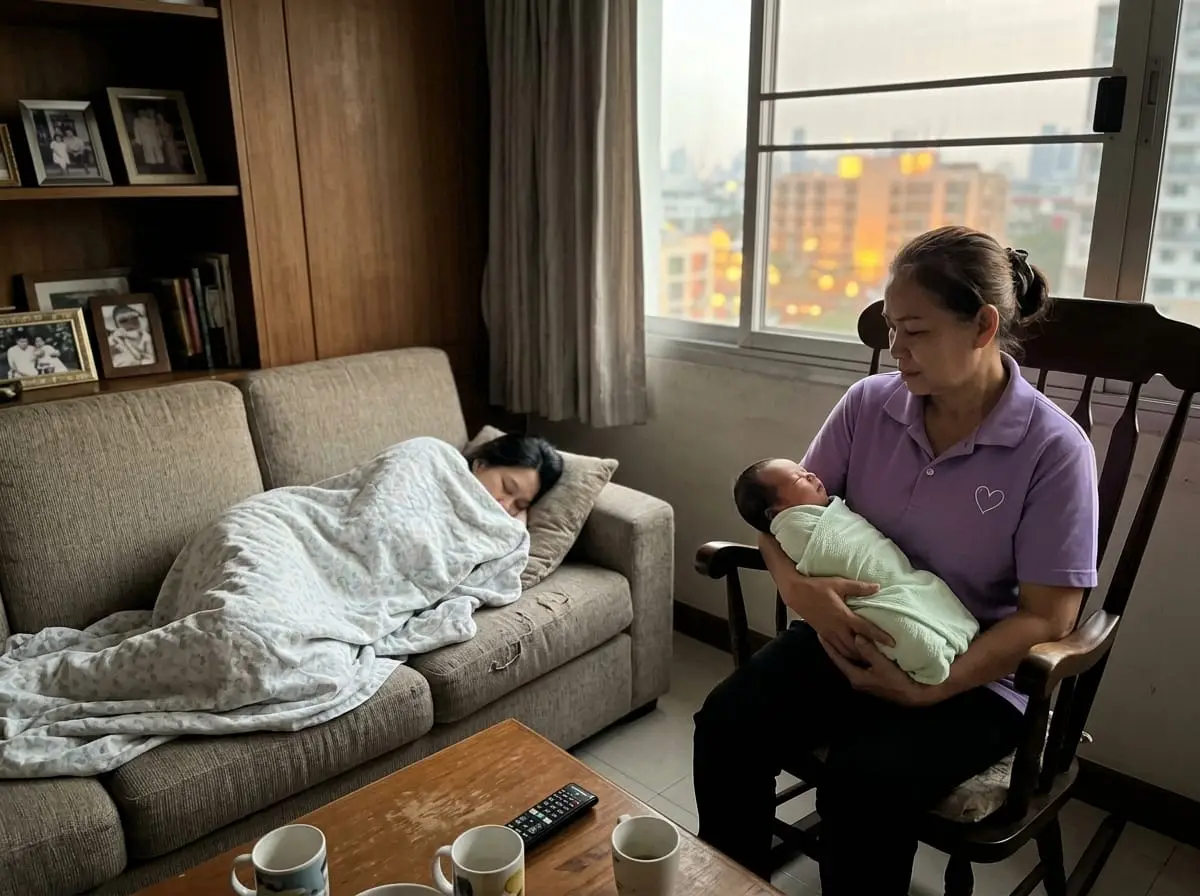
Families usually think of a nanny housekeeper Bangkok arrangement in terms of hours and chores: who does the laundry, who cooks the children's dinner, who mops on Fridays. The more useful question is who keeps the home healthy, because a Bangkok condo or townhouse has health problems that a cleaning rota written for London or Sydney does not cover.
Three come round every year. From about December to March, fine particulate pollution (PM2.5) seeps in through windows and door gaps. From May to October, humidity grows mould in wardrobes, bathrooms and aircon units. And dust mites thrive year-round in warm, damp bedding. Children, with small airways and faster breathing, feel all three more than adults do.
This guide covers how to split the work between a nanny and a housekeeper (or one person doing both), the season-by-season routines, safe products, a weekly schedule built around a child's day, and what each role costs.
One person or two: nanny, housekeeper or household assistant
The first decision is structural, and getting it wrong is the most common reason household staff burn out in the first three months.
| Role | Core job | Cleaning she should do | What does not work |
|---|---|---|---|
| Nanny | Children's care, routines, play, meals, outings | Children's rooms, toys, bottles, children's laundry, tidying after meals | Deep cleaning bathrooms or the whole flat while minding a toddler |
| Housekeeper | Cleaning, laundry, ironing, kitchen, household stock | The whole home, on a schedule | Being left in charge of a young child as an extra |
| Household assistant | A mix: errands, admin, light cleaning, cooking, occasional childcare | Light cleaning and organisation | Replacing a full-time nanny or housekeeper |
| Nanny-housekeeper (one person) | Childcare first, housework in gaps | Light daily cleaning, children's laundry, simple cooking | Babies or toddlers at home all day in a large home |
A combined nanny-housekeeper works well when the children are at school from 8 am to 3 pm. She cleans in the morning, collects them, and switches to childcare in the afternoon. With a baby at home all day, it fails in a predictable way: either the cleaning slips or the supervision does. A toddler cannot be watched from the bathroom while someone scrubs the shower with bleach.
The household assistant service suits families who need flexible help across errands, admin and light housework rather than a defined nanny or cleaning role. For most families with under-fives, though, the answer is a full-time nanny plus a part-time housekeeper two or three days a week. CareRova places both roles, so you can interview for each from one shortlist.
Write the split down
Friction between two staff members almost always starts in the grey areas, not the main jobs. Settle these in writing on day one:
- Children's dishes and bottles: the nanny, straight after each meal, so they never sit in a humid sink.
- Children's laundry: usually the nanny on days the housekeeper is off; bedding always the housekeeper.
- Toys: the nanny tidies and washes them; the housekeeper cleans the shelves and floor underneath.
- The fridge: the housekeeper does the weekly clear-out; whoever cooks labels leftovers with the date.
- Purifiers and dehumidifiers: the nanny switches them on and off with the child's routine; the housekeeper cleans filters and tanks.
A one-page list on the inside of a cupboard door saves dozens of awkward conversations, and it gives both staff something to point to when a parent asks why something was missed.
Bangkok's three home-health problems: PM2.5, humidity and mould, dust
Each of these is invisible until it is bad, which is why a routine matters more than a reaction.
PM2.5
PM2.5 means particles 2.5 microns or smaller, small enough to reach deep into the lungs. The WHO fact sheet on ambient air quality sets a 24-hour guideline of 15 µg/m³ and lists children among the groups most affected. In Bangkok, traffic, construction, industry and crop burning in surrounding provinces push levels well above that for weeks at a time in the cool, dry months, when still air traps pollution near the ground.
Indoors is not automatically safer. The US EPA's indoor air quality pages explain that outdoor particles enter through gaps and ventilation, and that indoor sources such as cooking, candles and incense add their own.
Humidity and mould
Bangkok's relative humidity sits high for much of the year, and condos with windowless bathrooms, wardrobes against outside walls and aircon units running day and night are ideal for mould. The EPA's mould guidance is clear that the key is moisture control, and that mould exposure can trigger allergic reactions and asthma symptoms in sensitive people.
Dust and dust mites
Dust mites are microscopic and live in mattresses, pillows, soft toys and curtains, feeding on skin flakes. Their droppings are a common allergen, and they prefer exactly the warm, humid conditions a Bangkok bedroom offers. Signs to mention to your doctor include a child with a constantly blocked or runny nose at night, itchy eyes in the morning, or a cough that is worse in bed.
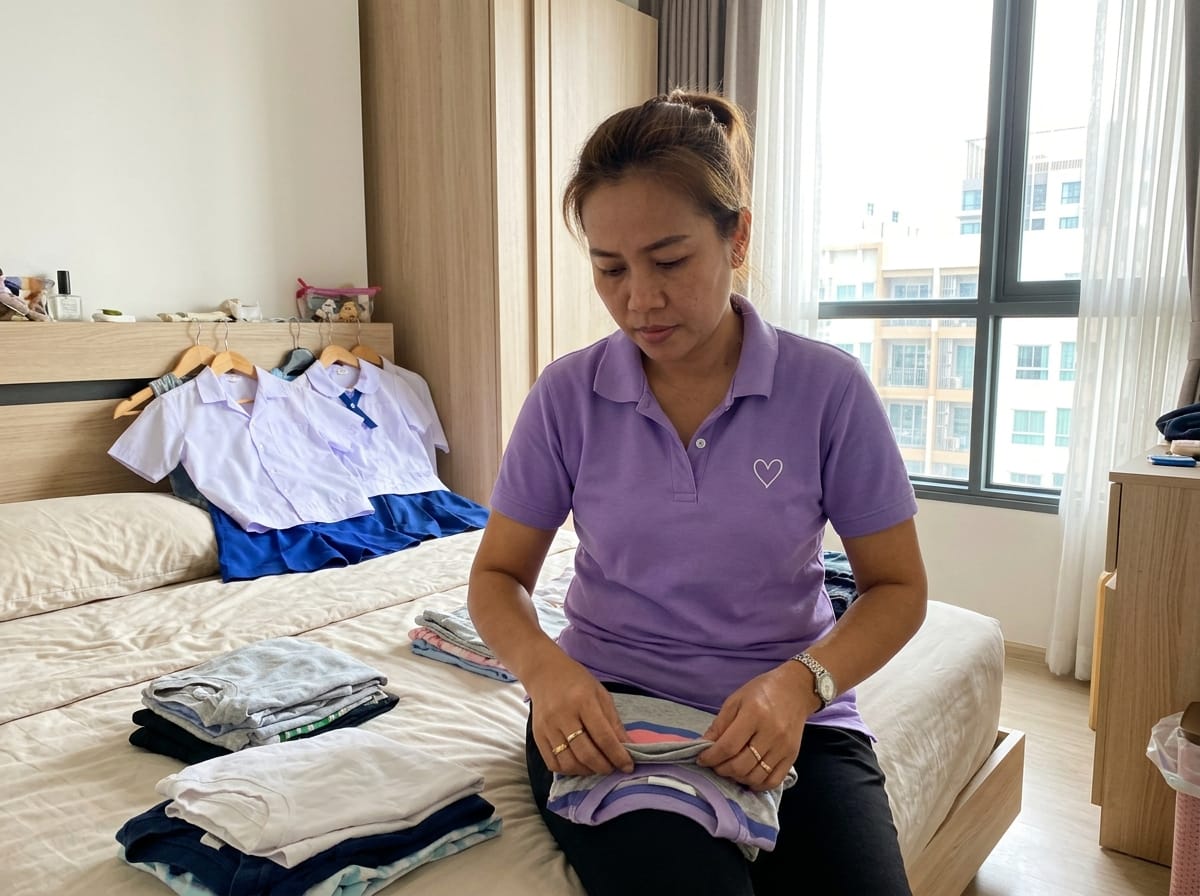
The PM2.5 season playbook for a home with children
The playbook is simple to write and hard to keep up for three months, so build it into the nanny's and housekeeper's daily routine rather than leaving it to whoever notices the haze.
Check the number every morning
The first job at 7 am is to check the air-quality reading on IQAir's Bangkok page, the Pollution Control Department or the Bangkok Metropolitan Administration, which publishes district-level warnings during bad spells. Then act on the band, not on how the sky looks.
| US AQI band | What it means | What the nanny and housekeeper do |
|---|---|---|
| 0–50 (good) | Clean air | Open windows to air the flat; normal outdoor play |
| 51–100 (moderate) | Acceptable for most | Normal routine; keep an eye on children with asthma |
| 101–150 (unhealthy for sensitive groups) | Children affected | Windows shut, purifiers on, shorter outdoor play in the morning |
| 151–200 (unhealthy) | Everyone affected | No outdoor play; indoor activities, mall or covered play centre |
| 201+ (very unhealthy or worse) | Serious | Stay in; purifiers on high; check with school about outdoor activities |
Purifiers and filters
A purifier should have a true HEPA filter and a clean air delivery rate (CADR) suitable for the room. One unit in the living room does little for a child asleep with the bedroom door shut, so plan one per bedroom, running all night. The housekeeper's weekly job is to vacuum the pre-filter and check the indicator; HEPA filters are replaced on the manufacturer's schedule, and earlier if the pre-filter turns grey within days.
Keep particles out, and do not make more
- Keep windows and balcony doors closed on bad days; put draught tape on gaps around old sliding doors.
- Run aircon on recirculate and clean its filters every two weeks in season.
- Shoes off at the door, and outdoor clothes changed after a walk.
- Avoid frying, grilling and burning incense or candles indoors on high-reading days; use the extractor hood every time someone cooks.
- Wet-dust and mop rather than sweep, which throws particles back into the air; vacuum with a HEPA-filter machine.
Outings and the school run
Bad-air days still have a school run. Keep car or taxi windows closed with the aircon on recirculate, and plan indoor play at a mall or covered play centre rather than a park. For older children, ask your paediatrician whether a well-fitting mask designed for children makes sense on unavoidable trips outside. Masks are not suitable for babies and toddlers; the American Academy of Pediatrics advises against them under the age of two.
Children with asthma need a written plan from their doctor, and the nanny should know where the inhaler is, when to use it and when a wheezing child needs hospital rather than another puff. Fast or laboured breathing, struggling to speak, or blue-tinged lips mean calling 1669 straight away.
Mould, aircon and humidity control
Mould is a moisture problem first and a cleaning problem second. The EPA advises fixing leaks, drying wet materials within 24 to 48 hours and keeping indoor relative humidity below 60%, ideally between 30% and 50%. A ฿300 digital hygrometer tells you where you stand; many Bangkok condos sit well above 60% in the rainy season without dehumidifying.
The daily and weekly moisture routine
- Run the bathroom extractor fan during and for 20 minutes after every shower, and squeegee the walls.
- Use aircon dry mode or a dehumidifier in bedrooms during the rains; empty and rinse the dehumidifier tank daily so it does not grow its own slime.
- Leave wardrobe doors slightly open, do not pack clothes tightly, and move wardrobes a few centimetres away from outside walls.
- Dry laundry fully before it goes in drawers; never leave a wet load in the machine overnight.
- Wipe window frames and sliding-door tracks where condensation collects from aircon.
- Report leaks from the unit above to the building management the same day and photograph them.
Cleaning mould safely
For small patches on hard surfaces, the EPA's advice is to scrub with detergent and water and dry completely. Porous materials such as ceiling boards, carpet or a mouldy mattress may need to be thrown away. If mould covers more than about a square metre, or keeps coming back, get a professional to find the moisture source; painting over it does nothing.
Keep children out of the room while cleaning mould, wear gloves, and do not dry-brush it, which releases spores. Clothes or soft toys with mould spots should be washed hot or discarded.
Viewing a new condo or house
If you are moving, check for mould before you sign. Open wardrobes on outside walls and smell inside; look at the ceiling around bathroom fans and aircon units for brown rings or bubbling paint; ask when the units were last cleaned; run the bathroom fan and hold a tissue to it to see whether it actually pulls air. A ground-floor townhouse near a canal will need more dehumidifying than a high-floor condo with cross-ventilation, and that is worth knowing before the baby's room is chosen. Ask the agent or building manager directly about past leaks from the unit above.
Aircon units
A split aircon unit is a dark, damp box that pulls in room air all day. When filters and coils are dirty, it recirculates dust and mould into the room where your child sleeps. The housekeeper can rinse and dry the front filters every two weeks; the coil, fan and drip tray need a professional clean at least twice a year in a Bangkok home. A musty smell when the unit starts, black spots on the louvres or water dripping into the room all mean it is overdue.
Dust mites, allergies and bedding
You cannot get rid of dust mites in Bangkok, but you can keep their numbers low where children sleep.
| Item | Routine | Why |
|---|---|---|
| Sheets and pillowcases | Weekly wash at 60 °C, dried fully | Heat kills mites; damp bedding feeds them |
| Mattress and pillows | Zipped anti-allergy covers, washed every two months | Creates a barrier mites cannot cross |
| Duvets and blankets | Monthly hot wash, or use washable cotton | Bulky bedding traps humidity and skin flakes |
| Soft toys | Keep a few on the bed; wash hot monthly or as the label allows | Each toy is a small mite habitat |
| Curtains and rugs | Wash curtains every three months; prefer hard floors to carpet in bedrooms | Fabric holds dust |
| Bedroom floor and surfaces | Damp mop and wet-dust twice a week | Stops dust settling and being kicked up |
The housekeeper usually owns this table, but the nanny should own the soft-toy rule, because she knows which toy is the one that cannot leave the bed. For an allergic child, involve your paediatrician before buying anything expensive; testing tells you whether mites are actually the trigger.
Ask the nanny to note symptoms in the same log she keeps for meals and naps: a night-time cough, a nose that runs every morning, rubbing eyes after time on the sofa. A fortnight of notes before and after a change, such as new mattress covers, tells you and your doctor far more than a single bad night.
Pets add dander, so homes with cats or dogs need the pet kept out of the child's bedroom and the vacuuming doubled.
Cleaning products that are safe around children
The safest cleaning product is often the mildest one that does the job. Most daily cleaning in a family home needs only detergent, warm water and microfibre cloths. Stronger products have their place, but they come with rules.
Storage and use
- Every product stays in its original labelled container. Never decant bleach or floor cleaner into a drinking-water bottle, which is a well-known cause of child poisonings.
- Store all cleaners, dishwasher tablets and laundry pods in a locked cupboard or above adult shoulder height.
- Never mix bleach with ammonia, vinegar or acid toilet cleaners: the combination releases toxic gas.
- Clean bathrooms with the door open and fan on, and keep children out until surfaces are dry.
- Avoid aerosol sprays and strongly perfumed products in children's rooms, especially on PM2.5 days when windows are shut.
- Check that household chemicals carry a registration number from the Thai Food and Drug Administration, which regulates hazardous household products.
The AAP's family site, HealthyChildren.org, has detailed advice on poison-proofing a home. Put the numbers for the Ramathibodi Poison Center (1367) and the ambulance service (1669) on the fridge, and make sure the nanny knows to take the product container with her to hospital.
Separate cloths for separate jobs
The UK Food Standards Agency's guidance on cleaning recommends separate cloths for different areas and a two-stage clean in the kitchen: first remove grease and food with detergent, then disinfect. A simple colour code makes this work with two people sharing a home:
- Blue: kitchen counters, table and highchair
- Green: living areas, toys, children's furniture
- Yellow: bathroom sinks and showers
- Red: toilets only, never used anywhere else
Cloths are washed hot after each day's use. Sponges in a humid Bangkok kitchen go sour within days; replace them weekly or switch to cloths.
A weekly cleaning schedule that works with a nanny's day
The schedule below assumes a full-time nanny caring for a toddler and a part-time housekeeper on Monday, Wednesday and Friday. The rule that makes it work: bleach and heavy cleaning happen during the nap or while the nanny has the child out of the room.
| Day | Housekeeper (9 am–5 pm) | Nanny (in the gaps) |
|---|---|---|
| Every day | — | Wipe highchair and table after each meal; wash bottles and cups; tidy toys; children's laundry; run purifiers; check AQI |
| Monday | Kitchen deep clean: fridge wipe-down and check, bin wash, extractor filter; change and hot-wash all bedding | Toy wash: hard toys in hot soapy water during nap |
| Tuesday | (not in) | Wet-dust children's room; empty dehumidifier; check plant saucers for standing water |
| Wednesday | Bathrooms top to bottom with fan on; mould check in wardrobes and window tracks; mop all floors | Wash bath toys and squeeze them dry |
| Thursday | (not in) | Vacuum children's room with HEPA vacuum; soft-toy rotation |
| Friday | Vacuum and mop whole home; purifier and aircon filter clean; restock cleaning supplies; laundry and ironing | Clear the week's leftovers from the fridge |
| Weekend | (off) | (off) |
The kitchen and fridge
The kitchen gets its own rules because children eat from it. The fridge should be at 5 °C or below; the FDA recommends a fridge thermometer to check, because the dial is not a reading. Cooked leftovers are cooled and refrigerated within two hours and eaten within three to four days, in line with the USDA's leftovers guidance. Raw meat sits on the bottom shelf in a sealed box. If a cook prepares the family's meals, our guide to weekly meal prep and fridge safety has the full storage table.
Pests
Cockroaches and their droppings are an asthma trigger, and rats and ants follow food. Keep food in sealed containers, take rubbish out every evening rather than leaving it on the balcony, fix dripping taps and seal gaps around pipes under the sink. If you are seeing cockroaches in daylight, a building-wide problem is likely; our sister company PestsRova handles treatment in occupied family homes. In the rainy season, the same weekly check for standing water that stops cockroaches also cuts mosquito breeding; see our sick child policy guide for the dengue checklist.
Rates for each role and how to book
Every CareRova carer has a police background check, ID and work-eligibility check, at least two phoned references and a paid trial day; child carers also hold first aid and CPR certification. Long-term placements include monthly check-ins and a 90-day free replacement.
| Engagement | Nanny | Housekeeper |
|---|---|---|
| Hourly (4-hour minimum) | ฿450 | ฿350 |
| Daily (8-hour day) | ฿2,900 | ฿2,200 |
| Part-time, per month (3 days a week) | ฿16,900 | ฿12,900 |
| Full-time live-out, per month (5–6 days) | ฿29,900 | ฿22,900 |
| Live-in, per month (6 days, room and meals) | ฿26,900 | ฿19,900 |
The most common combination for a family with a child under three is a full-time live-out nanny and a part-time housekeeper: ฿29,900 plus ฿12,900, or ฿42,800 a month in total. Families with school-age children often choose one full-time nanny-housekeeper and add a part-time cook later. A deep clean before PM2.5 season or after a leak is a separate one-off job; our sister company CleanRova does those.
All rates are on the pricing page, and each long-term placement comes with CareRova's 90-day free replacement. To book, tell us your area of Bangkok, the size of the home, your children's ages and school hours, any allergies or asthma in the family, and which days you need each role. We send a shortlist within 48 hours. WhatsApp or call +66 97 120 3054, email support@carerova.com, or use the contact form.
Frequently asked questions
Can one person be both nanny and housekeeper in Bangkok?
With school-age children who are out until mid-afternoon, often yes. With a baby or toddler at home all day, a single person cannot supervise safely and clean properly at the same time, so most families either split the roles or keep cleaning to light tidying and laundry.
What air purifier do I need for PM2.5 in a Bangkok condo?
A purifier with a true HEPA filter and a clean air delivery rate (CADR) that matches the room size, ideally one per bedroom. Run it continuously during smoke season with windows closed, and change filters on the manufacturer's schedule, sooner if the pre-filter is visibly grey.
How do I stop mould in my condo during the rainy season?
Control moisture: run the bathroom fan after showers, use aircon dry mode or a dehumidifier, keep wardrobes slightly open and away from damp walls, and report leaks to building management quickly. The EPA advises drying wet materials within 24 to 48 hours and keeping humidity below 60%.
Which cleaning products are safe around young children?
Mild detergent and water does most household cleaning. Keep bleach and toilet cleaners for specific jobs, store all products in their original containers in a locked or high cupboard, ventilate while using them and never mix bleach with ammonia or acid cleaners.
How much does a housekeeper cost compared with a nanny in Bangkok?
CareRova guide rates for a housekeeper are ฿350 an hour (4-hour minimum), ฿2,200 a day, ฿12,900 a month part-time and ฿22,900 full-time live-out. A nanny is ฿450 an hour, ฿2,900 a day, ฿16,900 part-time and ฿29,900 full-time.
Need someone properly vetted?
Get a written rate for your household in under 60 seconds.
Written by the CareRova team
We're Bangkok's vetted home-care agency — everything we write comes from real nanny, chef, housekeeper and senior-care placements across condos, houses and short-stay villas.
Get our Bangkok family-care guides straight in Google — add CareRova as a preferred source.