
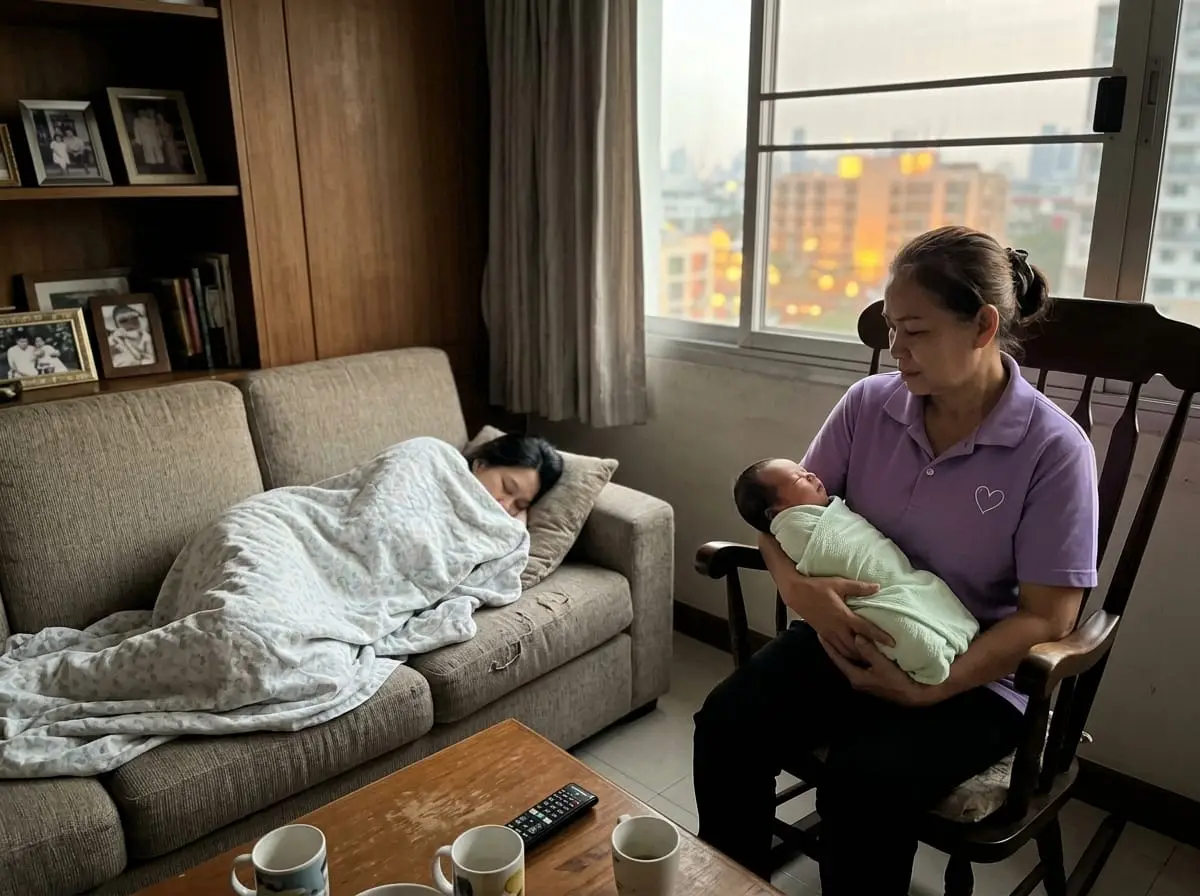
The worst time to decide what a nanny should do with a feverish child is at 2 pm on a Tuesday when you are in a meeting and she is calling from your condo. A nanny sick child plan, written down in advance, means she already knows what to give, what to watch, when to call you and which hospital to go to.
Bangkok makes this more pressing than most cities. Children here meet hand, foot and mouth disease (HFMD) in nursery, flu and RSV in the rainy season, dengue from mosquitoes in the stairwell, and stomach bugs from shared toys. The policy also has to work the other way round, for the day your nanny wakes up with a fever or has been vomiting all night.
This guide gives you both halves, a cleaning routine for after the bug, the logs worth keeping and a one-page template at the end. It is practical advice, not a diagnosis: any child who seems seriously unwell should see a doctor.
Why every family needs a written sick policy
Without a policy, every illness becomes a negotiation. Is the child well enough for school? Can the nanny give paracetamol syrup? Should she take a taxi to hospital or wait for you? Is the nanny allowed to come in with a cold? These questions have answers, and they are much easier to agree calmly at the kitchen table.
A written policy also protects the nanny. A carer who gives medicine without written consent, or who keeps a child home from school without telling anyone, is in a difficult position if something goes wrong. A carer who followed a clear instruction is not. Many experienced nannies have worked for families who never discussed this, and they will appreciate it. If your nanny is placed by CareRova, the monthly check-in after the first illness is a good moment to review what worked.
The policy needs to cover five things: the decision rights (who can authorise a doctor visit), the medicines and doses allowed, the warning signs that mean hospital, the rules for when the child stays home, and what happens when the nanny herself is ill. Live-in and live-out arrangements change the details, particularly for sick nannies; our guide on live-in versus live-out nannies covers the wider trade-offs.
The Bangkok illness calendar: HFMD, flu, RSV, dengue, stomach bugs
Most childhood illnesses in Bangkok circulate year-round, but the rainy season from roughly May to October is the busiest. This is the short version a nanny should know by heart.
| Illness | When it peaks | Typical signs | Usually back to school or nursery | Go to hospital if |
|---|---|---|---|---|
| Hand, foot and mouth disease | Year-round, more in rainy months | Fever, sore mouth, blisters or spots on hands, feet, bottom | When well and the school's policy allows; often about a week | Not drinking, very drowsy, jerking movements, stiff neck, vomiting |
| Flu | Rainy season, smaller bump in cool months | Sudden fever, aches, cough, tiredness | Fever-free 24 hours without medicine and improving | Fast or hard breathing, blue lips, dehydration, fever above 40 °C, fever returns after improving |
| RSV | Rainy season | Runny nose, cough, wheeze; in babies, poor feeding | When symptoms are improving and fever has gone | Working hard to breathe, pauses in breathing, poor feeding in a baby |
| Dengue | May to October | High fever, headache, pain behind eyes, aches, rash | After recovery, on a doctor's advice | Belly pain, persistent vomiting, bleeding gums or nose, restlessness or lethargy |
| Stomach bugs including norovirus | Year-round | Vomiting, diarrhoea, stomach cramps | 48 hours after the last episode | Signs of dehydration, blood in stool, vomiting for more than a day |
Hand, foot and mouth disease
HFMD is the illness Bangkok parents meet most often. The CDC's HFMD page describes it as a common, usually mild viral illness in children under five that spreads through saliva, nose secretions, blister fluid and faeces. The virus can stay in stool for weeks after the child feels better, which is why nappy hygiene matters long after the spots fade.
The NHS guidance on hand, foot and mouth disease focuses on comfort: fluids, soft cool food, and paracetamol or ibuprofen for pain at the right dose. The real risk at home is dehydration, because mouth sores make children refuse to drink. Rarely, HFMD causes more serious complications, so a child who becomes very drowsy, floppy, has jerking movements or will not drink needs hospital the same day.
Bangkok schools often handle outbreaks strictly, sometimes closing a classroom. Your school's written policy decides when your child goes back, so keep a copy where the nanny can read it.
Flu and RSV
The CDC's flu guidance recommends a yearly vaccine for everyone over six months, including the nanny, and lists the emergency signs in children: fast or troubled breathing, bluish lips or face, chest pain, not urinating for eight hours, not alert when awake, seizures, a fever above 40 °C, or a fever or cough that improves then comes back worse. Antiviral medicines work best when started early, so call your doctor promptly if flu is suspected.
RSV usually looks like a cold in older children but can make young babies seriously ill. The CDC's RSV pages are worth reading if you have a baby under one; for newborn-specific routines, see our guide to newborn hygiene and infection control.
When the child is sick: care at home and the hospital line
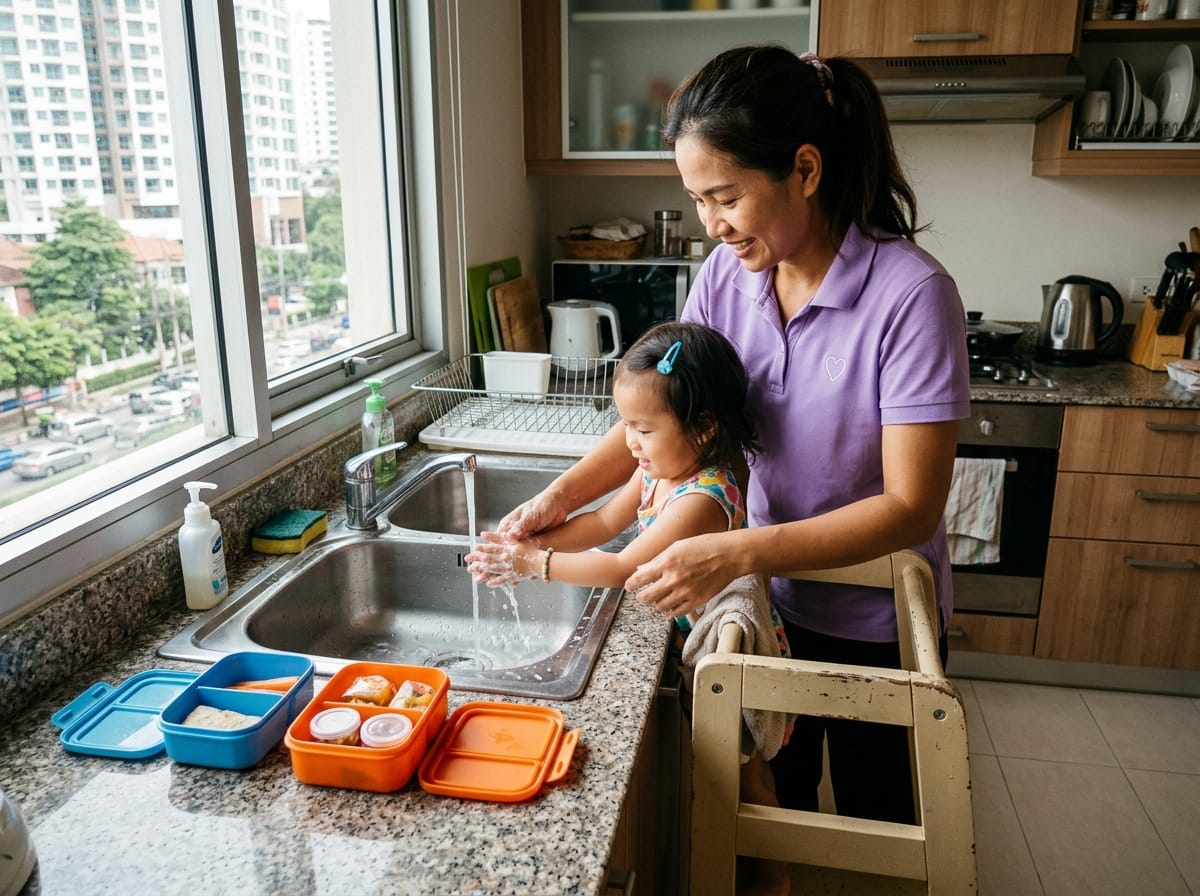
Most sick days are spent at home with fluids, rest, cartoons and a parent checking in by phone. The nanny's job is to keep the child comfortable, keep fluids going in, keep the log up to date, and recognise the moment that home care is no longer enough.
Care at home
- Offer small amounts of fluid often: water, oral rehydration solution from any Bangkok pharmacy, diluted juice or ice lollies for sore mouths.
- Count wet nappies or toilet trips. Fewer than usual is an early sign of dehydration.
- Dress the child lightly and keep the room comfortably cool. Bundling up a feverish child in Bangkok heat makes things worse.
- Let the child rest and eat what they want. Appetite comes back after the fever.
- Give medicine only as agreed in writing, and record every dose.
- Keep the sick child's cup, towel and toys separate from siblings'.
The hospital line
The thresholds below come from NHS and CDC guidance. Print them, translate them into the nanny's first language if needed, and stick them inside a kitchen cupboard.
Call 1669 for an ambulance, or go straight to emergency, if the child:
- has trouble breathing, is breathing very fast, or the skin between the ribs pulls in with each breath
- has blue, grey or very pale lips or skin
- has a fit (seizure), especially a first one
- is floppy, very hard to wake, or unusually confused
- has a stiff neck, a rash that does not fade when pressed with a glass, or a severe headache
- shows dengue warning signs: severe belly pain, repeated vomiting, bleeding from gums or nose
Call the parents and see a doctor the same day if:
- a baby under 3 months has a temperature of 38 °C or higher
- a baby aged 3 to 6 months has 39 °C or higher
- the child has had a fever for more than three days, or seems to be getting worse
- there are signs of dehydration: a dry mouth, no tears, no wet nappy or wee for eight hours
- the child is not drinking at all
Which hospital
Choose before you need it. Bumrungrad International Hospital, Bangkok Hospital and Samitivej all run 24-hour emergency departments with paediatric staff, and many families keep the children's records at one of them. Give the nanny the child's hospital card, a copy of passports or ID, a note of allergies and current medicines, cash or a card for the taxi, and a signed note saying she may bring the child in on your behalf.
When the nanny is sick: the 48-hour rule and cover
Nannies get ill too, and in a city of shared transport they catch whatever is going around. The policy here is about protecting the children and being fair to the carer.
| Nanny's symptom | Rule | Back to work when |
|---|---|---|
| Vomiting or diarrhoea | Stays home; tells the family before the shift | 48 hours after the last episode |
| Fever | Stays home | Fever-free for 24 hours without medicine and feeling better |
| Cough or cold, no fever | Can work with the family's agreement | Masks on, strict handwashing, no face contact with babies |
| Cold sore | Can work | Covered, no kissing, extra handwashing, no contact with newborns |
| Conjunctivitis or skin infection | Stays home until seen by a doctor | Doctor's advice |
| Dengue, flu or COVID diagnosis | Stays home | Doctor clears her and symptoms are gone |
The 48-hour rule after vomiting and diarrhoea is the one families most often get wrong. The NHS food-poisoning guidance says to stay off work until 48 hours after symptoms stop, and the CDC norovirus pages explain why: people can still spread the virus after they feel fine. For a nanny who prepares bottles and food and wipes small noses all day, there is no safe shortcut.
Paying for sick days
Thai labour rules give domestic workers sick leave, along with at least one day off a week and paid public holidays; the Department of Labour Protection and Welfare publishes the current details. A nanny who loses pay when she is ill will come to work ill. Agree in writing how she reports sickness (a phone call before 7 am, not a message at 9), how sick days are paid, and when you might ask for a doctor's note.
Cover
The hardest part is not the money; it is the morning when both parents have work and the nanny is vomiting. If your nanny is placed through CareRova, we arrange a replacement carer from our vetted pool, same day where someone is available, so she can stay home properly. If you hire directly, line up a back-up babysitter in advance and do the trial before you need her. Short-notice cover is billed at the guide rates of ฿450 an hour (4-hour minimum) or ฿2,900 for an 8-hour day.
Cleaning after a bug: toys, surfaces and laundry
Viruses that cause stomach bugs and HFMD survive on surfaces, and Bangkok's humidity does not help. The CDC clean-hands guidance is the base layer: soap and water for 20 seconds. Note that alcohol sanitiser does not work well against norovirus, so after a vomiting bug it is soap and water every time.
Norovirus clean-up
The CDC recommends a chlorine bleach solution for norovirus. Its range of 5 to 25 tablespoons of household bleach per gallon of water works out at roughly 20 to 100 ml of bleach per litre of water for standard 5 to 8% household bleach. Check the label of the bleach you buy in Bangkok and mix fresh each time.
- Put on disposable gloves and, if possible, a mask.
- Cover vomit with paper towels, scoop it into a plastic bag and seal it.
- Clean the area with detergent and water, then apply the bleach solution and leave it for the contact time on the label, usually about five minutes.
- Rinse food-contact surfaces and toys that go in mouths with clean water afterwards.
- Bag soiled clothes and bedding, handle them as little as possible and wash them hot (60 °C where the fabric allows), then machine dry or dry fully in the sun.
- Bin the gloves and wash hands thoroughly with soap.
Bleach damages marble, wood and coloured fabrics, and fumes are a problem in small, closed condo bathrooms. Keep children out of the room, open a window or run the extractor fan, and never mix bleach with other cleaners.
Toys and surfaces after HFMD or flu
| Item | How to clean | How often while someone is ill |
|---|---|---|
| Hard plastic toys | Wash in hot soapy water, rinse, air dry; dishwasher if safe | Daily, and before siblings play with them |
| Soft toys | Hot wash or set aside in a bag for a week | Once at the end of the illness |
| Door handles, light switches, remote controls, tablets | Detergent wipe, then a suitable disinfectant | Twice a day |
| Bathroom taps, toilet seat, flush handle | Detergent then bleach solution | After every use by the sick child if it is a stomach bug |
| Child's cup, bowl and spoon | Hot water and detergent, kept separate | After every use |
| Bedding and pyjamas | Hot wash, dry fully | Daily during fever or vomiting |
Disinfectant labels matter more than brands: follow the dilution and contact time on the bottle, and keep every product locked away from children.
Medication, fever and symptom logs the nanny keeps
A log turns "she seemed a bit hot this afternoon" into information a doctor can use. It also prevents the most common medicine error in households with more than one carer: two people giving the same dose an hour apart.
What the log records
| Time | Temperature and method | Medicine, dose, given by | Fluids in | Wet nappies or wees | Vomit or stools | Notes |
|---|---|---|---|---|---|---|
| 09:15 | 38.6 °C (ear) | Paracetamol 5 ml, nanny | 120 ml water | 1 | none | Sleepy, watching TV |
| 13:30 | 38.1 °C (ear) | none | 80 ml ORS, half an ice lolly | 1 | 1 loose stool | Refused lunch |
Use one thermometer and one method, write down which, and photograph the log for the parents every few hours. A paper sheet on the fridge works better than a shared app nobody updates.
Rules for medicine
- The nanny gives only medicines listed in the policy, at the dose on the label for the child's age and weight or as a doctor prescribed.
- A parent confirms by phone or message before the first dose of the day.
- Paracetamol and ibuprofen are dosed at different intervals; write both intervals on the log sheet.
- No aspirin for children; the NHS advises against it for anyone under 16.
- No ibuprofen if dengue is possible (see below).
- Antibiotics are given exactly as prescribed, to the end of the course, with each dose ticked off.
- Medicines live in a locked or high cupboard, never in a handbag on the sofa.
Dengue: mosquitoes, repellent and the home check
Dengue gets its own section because it behaves differently from other childhood fevers. According to the WHO dengue fact sheet, most infections are mild, but a small proportion become severe, and the warning signs often appear around the time the fever goes down. That is the opposite of what parents and nannies expect.
What the nanny watches for
The CDC's dengue pages and the NHS dengue guidance describe the typical picture: high fever, headache, pain behind the eyes, muscle and joint pain, nausea and a rash. Warning signs that need emergency care include severe belly pain, vomiting at least three times in a day, bleeding from the nose or gums, blood in vomit or stool, and a child who becomes very tired, restless or irritable. A nanny should keep watching for these for 48 hours after the fever breaks.
WHO advises paracetamol for fever and pain and recommends avoiding ibuprofen and aspirin, which can increase bleeding. A doctor should test and confirm dengue; the policy should say a fever above 38.5 °C in the rainy season means a call to the parents and probably a doctor visit.
Repellent and nets
Aedes mosquitoes bite mainly during the day, which is when the nanny is in charge. The CDC advises that registered repellents containing DEET or picaridin can be used on children over two months old, applied by an adult to the child's exposed skin (not hands, eyes or mouth), and that products with oil of lemon eucalyptus should not be used on children under three. For babies under two months, use a net over the cot or pram instead.
The weekly home check
Mosquitoes breed in small amounts of clean standing water, and Bangkok homes have plenty. Once a week, the nanny or housekeeper should:
- empty and scrub plant saucers, vases and pet water bowls
- check the aircon drip trays and condensate pipes on the balcony
- turn over buckets, toys and paddling pools left outside
- clear the shower drain and any bathroom water jars, or cover them tightly
- check window screens for holes
The Department of Disease Control runs campaigns along exactly these lines every rainy season. For a whole-building view of mosquito and pest control, see our guide to keeping a healthy home in Bangkok.
A one-page sick policy template and how to book cover
Copy this, fill in the blanks, and give one copy to the nanny and one to every parent and grandparent who looks after the children.
- Contacts. Parent 1, parent 2, back-up adult, paediatrician, preferred hospital and its emergency number. Ambulance: 1669.
- Decision rights. The nanny may take a child to [named hospital] without waiting for a parent if any emergency sign on the list appears. For anything else she calls a parent first.
- Medicines allowed. Name, strength, dose by weight, minimum interval, maximum doses in 24 hours. Parent confirms before the first dose each day.
- Allergies and conditions. Listed in full, with what to do.
- Staying home. The child stays home with a fever, vomiting or diarrhoea, or a rash with fever, and returns when the school's policy allows.
- Logs. Temperature, medicine, fluids, nappies, symptoms, photographed to parents every three hours.
- Cleaning. Separate cup and towel; bleach solution after vomiting; toys washed daily.
- When the nanny is ill. Calls by 7 am; stays home with fever, vomiting or diarrhoea; returns 48 hours after the last episode of vomiting or diarrhoea; sick days paid as agreed.
- Cover. Who to call for a replacement, and the agreed rate.
Our FAQ page answers common questions about placements and cover, and our nanny service explains how CareRova vets every carer: police background check, ID and work-eligibility check, phoned references, first aid and CPR for child carers, and a paid trial day. For the first-aid side of the policy, our guide to first aid and CPR for nannies covers choking, burns and febrile seizures.
To set up cover for sick days or find a long-term nanny, send us your area of Bangkok, your children's ages, the hours you need and any health conditions. We send a shortlist within 48 hours. WhatsApp or call +66 97 120 3054, email support@carerova.com, or use the contact form.
Frequently asked questions
Should a nanny look after a child who is sick?
Yes, caring for a mildly ill child at home is part of a nanny's job, as long as she has clear instructions, your consent for any medicine and a list of warning signs that mean calling you or going to hospital. Children with a contagious illness should stay home from school, which is exactly when a nanny is most useful.
How long should a child with hand, foot and mouth disease stay home in Bangkok?
The NHS says to keep a child home while they feel unwell, but many Bangkok nurseries and international schools ask for longer, often until blisters have dried or for about a week, and some want a doctor's note. Check your school's written policy, because it decides the return date.
What medicine is safe for a child with suspected dengue?
Paracetamol, at the dose on the label for the child's age and weight, is the usual choice. WHO guidance is to avoid ibuprofen and aspirin when dengue is possible because they increase bleeding risk. A doctor should confirm the diagnosis, and a nanny should never give medicine without the parents' consent.
Can my nanny come to work after a stomach bug?
Not until 48 hours after the last vomiting or diarrhoea, which is the standard advice from the NHS for anyone who cares for others or handles food. Norovirus spreads very easily and can be passed on after the person feels better.
Do I have to pay my nanny when she is sick in Thailand?
Thai labour rules give domestic workers sick leave alongside a weekly day off and paid public holidays. Agree in writing how sick days are paid and reported. With a CareRova placement, we handle cover so you are not left without help.
Which Bangkok hospitals have 24-hour children's emergency care?
Bumrungrad International Hospital, Bangkok Hospital and Samitivej all run 24-hour emergency departments with paediatric doctors. Choose the one closest to your home in advance and make sure your nanny has the address, the child's hospital card and money for a taxi.
Need someone properly vetted?
Get a written rate for your household in under 60 seconds.
Written by the CareRova team
We're Bangkok's vetted home-care agency — everything we write comes from real nanny, chef, housekeeper and senior-care placements across condos, houses and short-stay villas.
Get our Bangkok family-care guides straight in Google — add CareRova as a preferred source.