
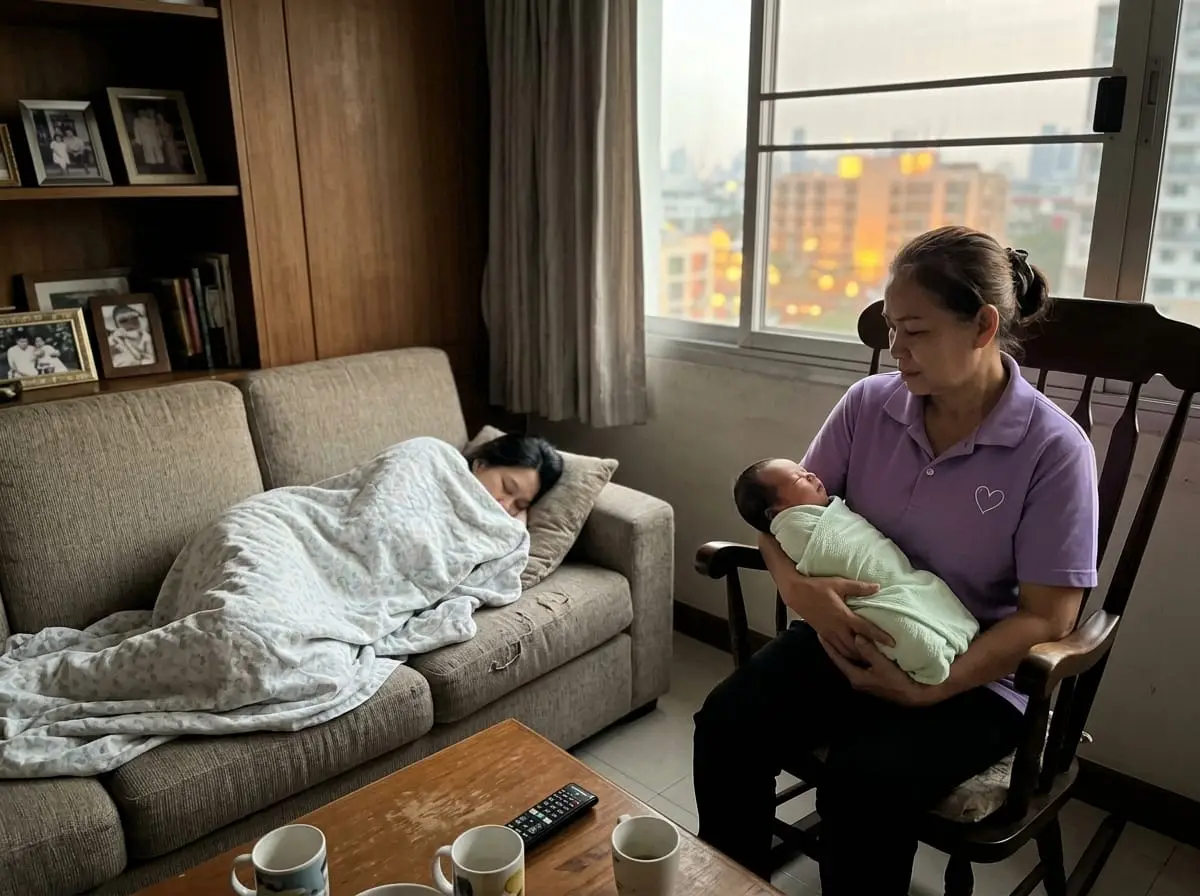
Parents tend to interview by asking about experience and temperament, and both matter. But most of what a newborn nanny in Bangkok does in the first three months is hygiene. A baby this young has an immune system that is still learning, and most infections that reach a newborn arrive on someone's hands, on a feeding bottle, or on a visitor who felt "only a bit sniffly".
This guide sets out the infection-control routine a good newborn nanny runs: handwashing, sterilising in a small condo kitchen, formula and breast-milk storage, cord care, visitors, and the seasonal risks Bangkok adds. It ends with the questions to ask before you hire, and what it costs. None of it replaces your paediatrician; it is the daily system underneath their advice.
Why a newborn nanny's first skill is hygiene
A newborn cannot tell you she is unwell, and early signs of infection are easy to miss: a little sleepier, feeding a little less, a little warm. The NHS and the American Academy of Pediatrics both treat a temperature of 38 °C or higher in a baby under three months as a reason to see a doctor urgently, because at that age a fever can be the only sign of something serious. That is why prevention carries so much weight.
The routine has five parts: clean hands, clean feeding equipment, safe milk, clean skin and laundry, and control over who gets close. Parents set the rules with their doctor; the nanny keeps them on day 40 at 3 am, when the temptation is to rinse a bottle and call it done.
The families whose newborns stay well are rarely the ones with the most expensive equipment. They are the ones where the nanny does things the same way every time, including when the grandparents are visiting and the kitchen is full.
Hygiene is tightest in the first six to eight weeks, while the cord heals and before the first vaccines. After that, visitor rules can relax a little, but not the core habits. Sterilising feeding equipment continues until the first birthday, according to the NHS pregnancy and baby guide, and handwashing before feeds never stops.
The handwashing moments that matter
Handwashing is so obvious that families forget to check it. The CDC's clean-hands guidance is specific: wet your hands with clean running water, lather with soap including the backs, between the fingers and under the nails, scrub for at least 20 seconds, rinse and dry with a clean towel or air dry. Alcohol sanitiser with at least 60% alcohol is a fallback when soap and water are not available, but it does not work well on visibly dirty or greasy hands.
The moments that matter most with a newborn:
| Moment | Why it matters | Soap or sanitiser |
|---|---|---|
| Arriving for the shift | Brings in whatever was on the BTS handrail or motorbike taxi | Soap, then change into house clothes or a clean top |
| Before preparing a bottle or handling expressed milk | Milk is an ideal medium for bacteria | Soap, always |
| Before every feed, including passing the baby to the mother to breastfeed | Hands touch the baby's mouth and face | Soap, or sanitiser if hands are clean |
| After every nappy change | Gut bacteria and viruses spread this way | Soap, always |
| After wiping the baby's or a sibling's nose | Respiratory viruses survive on hands | Soap, or sanitiser if no sink nearby |
| After touching rubbish, pets, shoes or a phone | Common, overlooked contamination | Soap |
| After using the toilet or eating | Basic hygiene | Soap |
The small habits that make handwashing work
Nails short and unpainted, no rings or bracelets, hair tied back. A phone is one of the dirtiest objects in the house, so no scrolling during feeds. Hand towels in Bangkok stay damp all day in the humidity, which turns them into a bacterial culture: for bottle preparation, use paper towels or a fresh cloth from the drawer each time.
Put sanitiser and a small sign at the condo door. A nanny can enforce a rule already on the wall far more easily than one she has to explain to your mother-in-law.
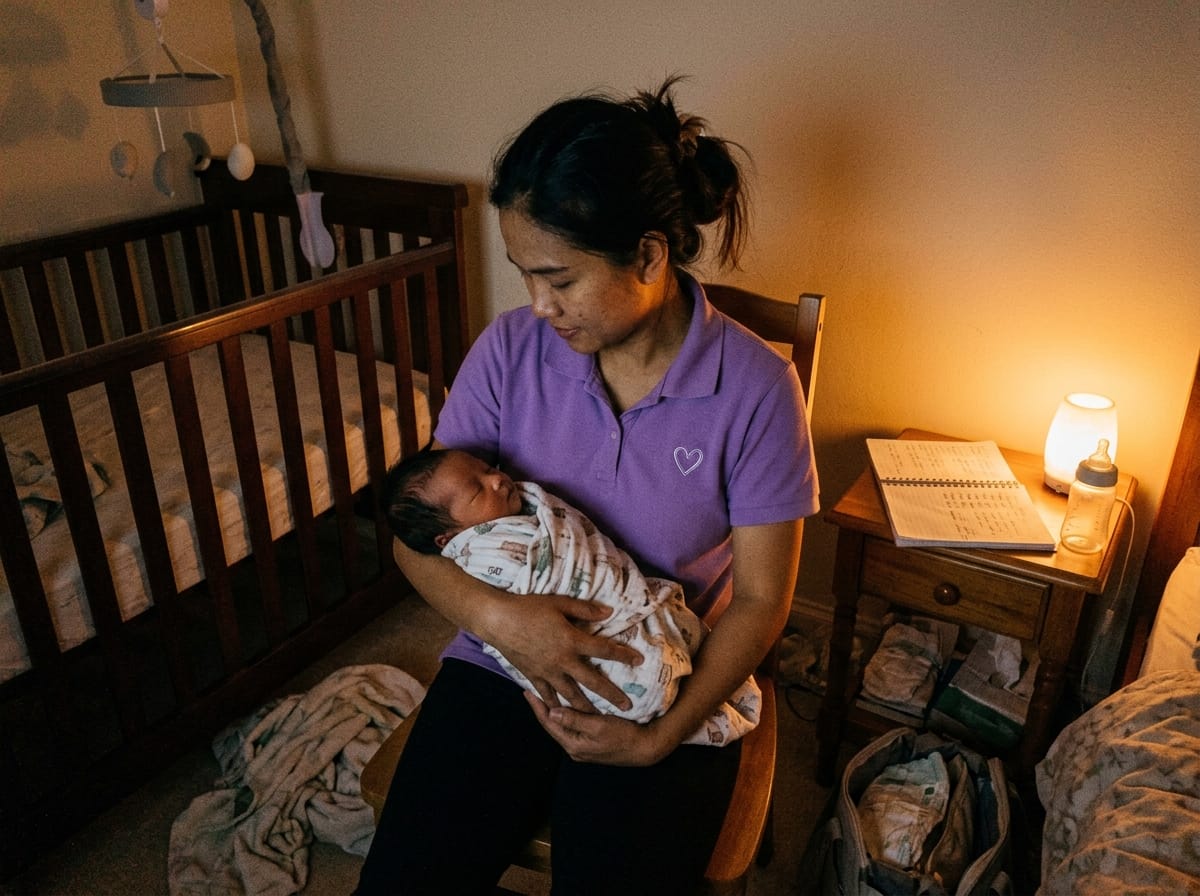
Bottles, pumps and sterilising in a Bangkok kitchen
Sterilising is a two-step process, and the step families skip is the first one. The NHS advice is to clean bottles, teats, rings, caps and pump parts in hot soapy water as soon as possible after each feed, using a dedicated bottle brush and turning teats inside out, then rinse in clean water before sterilising. A steriliser cannot remove dried milk film.
The four common sterilising methods each work if they are done properly:
| Method | How long | Points to watch in a Bangkok home |
|---|---|---|
| Boiling in a pan | At least 10 minutes, fully submerged | Teats wear out faster; let items cool in the covered pan, not on the counter |
| Cold-water sterilising solution | At least 30 minutes; make fresh solution every 24 hours | Keep everything under the surface with the floating cover; label the container |
| Electric steam steriliser | Per manufacturer, usually 5–10 minutes | Descale weekly if you use hard water; keep the lid closed until use |
| Microwave steam bag or box | Per manufacturer | Check for metal parts; condo microwaves vary in power, so follow the wattage table |
A baby station, not a shared sink
In a small condo kitchen, the most useful thing a newborn nanny can set up is a baby station: a basin used only for feeding equipment, its own bottle brush, a drying rack and a closed box for sterilised items. Bottles are never washed in the sink where someone has just rinsed raw chicken. If a cook shares the kitchen, agree whose zone is whose.
Two Bangkok problems come up constantly. Sugar ants find milk residue within hours, so sterilised items stay covered and the station is wiped after every session. And humidity keeps items on an open rack damp for hours, so leave them in the closed steriliser until needed and assemble bottles with clean hands just before use.
Breast-pump parts that touch milk get the same treatment: dismantle, wash after every session, sterilise at least daily. A second set of parts means nobody is washing flanges at 4 am.
Formula and breast-milk storage times
Making up formula safely
Powdered infant formula is not sterile and can carry bacteria. The WHO infant and young child feeding fact sheet supports breastfeeding where possible, and for families who use formula, WHO and NHS guidance on preparation is consistent: use water that is still at least 70 °C so the heat kills bacteria in the powder.
In a Bangkok home, the routine looks like this:
- Wash hands and clean the counter.
- Boil fresh water. Most families use sealed bottled drinking water rather than tap water; it still needs boiling for a newborn.
- Leave the kettle to cool for no more than 30 minutes, so the water is still above 70 °C.
- Pour the water into the sterilised bottle first, then add the exact number of level scoops the tin specifies. Too much or too little powder is a problem in its own right.
- Cap and shake, then cool quickly under a cold running tap or in a bowl of cold water.
- Test a few drops on the inside of the wrist. It should feel warm, not hot.
- Use within 2 hours, and throw away whatever the baby leaves.
If a bottle has to be made ahead, cool it quickly, store it at the back of the fridge (not in the door) and use it within 24 hours. The fridge must actually be cold: the US FDA's note on refrigerator thermometers recommends keeping it at 4 °C or below, and a ฿200 fridge thermometer is the cheapest piece of baby equipment you will buy. Condo fridges opened constantly in a hot kitchen often run warmer than the dial suggests.
For outings, carry boiled water in a clean vacuum flask and pre-measured powder separately, and mix when needed.
Breast-milk storage
Expressed breast milk is safer than formula in some ways, but it still spoils. Families usually work to the stricter of the NHS and CDC figures:
| Where it is kept | How long | Notes |
|---|---|---|
| Room temperature, fresh | Up to 4 hours at 25 °C or below | Most Bangkok rooms without aircon are warmer; refrigerate straight away |
| Fridge at 4 °C or below | Up to 4 days as a house rule (NHS allows up to 8 days at 4 °C or lower) | Back of the fridge, never the door |
| Freezer at -18 °C | Up to 6 months is best | Leave space at the top of the bag or bottle |
| Thawed in the fridge | Use within 24 hours | Never refreeze |
| Left in the bottle after a feed | Use within 1–2 hours, then discard | Saliva introduces bacteria |
Label every bag with the date and time expressed, and use the oldest first. Thaw in the fridge or in warm water. Never microwave milk: it heats unevenly and can scald.
Cord, skin and bath care
The umbilical cord
The NHS advice is simple: keep the cord stump clean and dry, and let it fall off on its own, which usually happens within one to two weeks. Fold the top of the nappy down below the stump so it gets air and stays out of urine. If it gets dirty, clean it with plain water and pat it dry. Never pull at a stump hanging by a thread.
Signs that need a doctor the same day: redness spreading onto the skin around the stump, a bad smell, pus or bleeding that does not stop, or a baby with a fever.
Bathing and skin
In the first weeks a daily "top and tail" wash with cotton wool and warm water is enough, using a fresh piece for each eye. A full bath two or three times a week is plenty. The NHS recommends plain water for the first month, with no bubble bath or liquid cleansers. Bath water should feel warm on an elbow or read around 37 °C on a bath thermometer, and the baby is never left alone in water, not even to grab a towel.
Bangkok heat brings heat rash: tiny red spots on the neck, chest and nappy area when a baby is overdressed or the room is warm. Check the chest or back of the neck for sweat rather than the hands or feet, which are often cool. Light cotton and a comfortably cool aircon room are the usual fixes. The AAP's safe sleep guidance on HealthyChildren.org also warns against overheating, so this is a safety issue as well as a comfort one.
Nappies, nails and laundry
Change the nappy on a dedicated mat that is wiped after use, clean front to back, let the skin dry before closing a fresh nappy, and wash hands afterwards. File the baby's nails rather than cutting them in the first weeks.
Wash baby clothes, muslins and bedding with a fragrance-free detergent, and run soiled items (poo, vomit, leaked milk) at 60 °C. Clothes hung indoors in a condo in the rainy season can take two days to dry and come out smelling of mildew, so use a dryer or an aircon room. Feed muslins go in the wash daily.
Visitors, siblings and the sick-contact rule
A newborn in Bangkok usually has a lot of visitors, and a nanny cannot refuse a grandparent at the door. The rules need to come from the parents and be agreed before the baby comes home.
| Who | The rule | What the nanny does |
|---|---|---|
| Every visitor | Hands washed or sanitised on arrival; no kissing the baby's face or hands | Points to the sanitiser and offers to pass the baby only after |
| Anyone with a cough, cold or sore throat | Visit postponed, or no holding the baby and a mask on | Tells the parents quietly rather than confronting the visitor |
| Anyone with fever, vomiting or diarrhoea | Stays away until 48 hours after symptoms have stopped | Keeps the baby in another room if they arrive anyway |
| Anyone with a cold sore | No contact with the baby at all, no kissing | Mentions it to the parents straight away |
| Older siblings back from nursery or school | Change clothes and wash hands before touching the baby | Builds it into the arrival routine with a song or a game |
| Drivers, cleaners and other staff | Hand hygiene before entering the nursery | Keeps nursery door closed and the baby's items out of shared areas |
Cold sores deserve their own mention: the herpes virus behind them can be very dangerous to a newborn, and the NHS advises that nobody with one should kiss a baby. That includes the nanny.
Siblings and nursery bugs
A sibling aged two to five often brings home whatever is circulating at nursery: hand, foot and mouth disease, colds, stomach bugs. A nanny caring for both keeps the toddler's toys out of the baby's cot, washes toys that go in mouths, and makes "wash hands, change clothes" automatic every afternoon. Our guide to what to do when a child is sick covers exclusion periods for older children in more detail.
The nanny's own health
A newborn nanny should tell you she feels unwell before she arrives, not halfway through the shift, and your agreement should say she will not be penalised for it. With a CareRova placement, we arrange cover so she can stay home.
Ask about her vaccinations too. The CDC vaccines pages explain why people who spend time with young babies should be up to date, particularly on flu and whooping cough (pertussis) vaccines, because babies are too young to be fully protected themselves. Many families pay for the nanny's annual flu jab; it is a small cost.
RSV, flu and PM2.5 season for a newborn in Bangkok
Bangkok has no winter flu season, but it has patterns, and a newborn nanny should adjust the routine as the calendar turns.
| Months (roughly) | Main risks for a newborn | What changes in the routine |
|---|---|---|
| May to October (rainy) | RSV, flu and other respiratory viruses; dengue mosquitoes | Stricter visitor rules, window screens and a cot net, no stagnant water in the home |
| November to February (cool, dry) | Rising PM2.5; some respiratory viruses continue | Daily air-quality check, windows closed, purifier on, fewer outdoor walks |
| March to April (hot) | Heat, dehydration, heat rash; PM2.5 can linger into March | Short outings early in the morning, light clothing, aircon serviced |
RSV
RSV (respiratory syncytial virus) is very common; according to the CDC's RSV pages, almost all children catch it by the age of two. In older children and adults it looks like a cold. In very young or premature babies it can cause bronchiolitis and breathing difficulty, and the CDC notes that in very young infants, irritability, reduced activity and breathing problems may be the only signs.
The CDC also describes protection options for infants, including a vaccine given during pregnancy and an antibody injection for babies. Ask your paediatrician what suits your baby; this is a medical decision, not a nanny's.
Flu
The CDC's flu guidance recommends an annual flu vaccine for everyone from six months of age. Babies under six months cannot have it, so protection comes from the people around them: parents, siblings, grandparents and the nanny. In Thailand, flu usually peaks in the rainy season, and the Department of Disease Control publishes surveillance updates if you want to see what is circulating.
PM2.5 days
Fine particulate matter from traffic, crop burning and industry builds up over Bangkok most years from about December to March. The WHO fact sheet on ambient air quality explains that these particles penetrate deep into the lungs, and young children are among the most vulnerable groups.
The newborn routine on a bad-air day:
- Check the morning reading on IQAir's Bangkok page or the Pollution Control Department before planning anything outside.
- Keep windows and balcony doors closed and run a HEPA purifier sized for the nursery, on continuously, not just when someone remembers.
- Move walks to a mall or covered space with filtered air, or skip them.
- Do not put a mask on the baby. Masks are not suitable for infants, and the American Academy of Pediatrics advises against them for children under two.
Aircon matters too. A split unit not cleaned for a year circulates dust and can grow mould in the coil and drip tray. Have units serviced before the baby comes home and twice a year after; our sister company CoolRova does this across Bangkok.
Where to go and when
For a baby under three months, go to hospital the same day for a temperature of 38 °C or higher, fast or laboured breathing, blue or grey lips, refusing feeds, far fewer wet nappies, or a baby who is unusually floppy or hard to wake. For an ambulance, call 1669.
Bumrungrad International Hospital, Bangkok Hospital and Samitivej all run 24-hour emergency departments with paediatric teams. Pick the nearest one now, and make sure the nanny has the baby's hospital card and knows the route.
What to check before you hire and how to book
A CV says little about hygiene. Ask a candidate to talk you through the routine and listen for detail:
- How do you clean and sterilise bottles and pump parts, and how often?
- What temperature should the water be for formula, and how long can a made-up bottle sit out?
- How long does expressed milk keep in the fridge and freezer, and how do you label it?
- What do you do if the baby feels warm? At what temperature do you call us or go to hospital?
- When did you last have a flu vaccine?
- Tell me about the youngest baby you have cared for, and who I can call about it.
Then watch the paid trial day: does she wash her hands before the bottle without being reminded? Our guide to vetting a nanny in Thailand explains the references, police checks and trial day in more detail.
What CareRova checks and what it costs
Every carer CareRova places has a police background check, ID and work-eligibility check, at least two references we phone ourselves, infant first aid and CPR, and a paid trial day in your home. Long-term placements include monthly check-ins and a 90-day free replacement.
| Engagement | Newborn nanny guide rate (all-in) |
|---|---|
| Hourly (4-hour minimum) | ฿450 an hour |
| Daily (8-hour day) | ฿2,900 |
| Part-time (3 days a week) | ฿16,900 a month |
| Full-time live-out (5–6 days) | ฿29,900 a month |
| Live-in (6 days, room and meals provided) | ฿26,900 a month |
Night shifts are quoted on request; see how a night nanny works if broken nights are the main problem. If you want postnatal support for the mother as well, read our guide to postpartum care and confinement meals. Full rates are on the pricing page, and the newborn and night nanny service page explains the role in detail. For an older baby or toddler, see our nanny service.
To book, send us your due date or the baby's age, your area, the hours you need, how the baby is fed, and any notes from your paediatrician. We send a shortlist within 48 hours. Message CareRova on WhatsApp or call +66 97 120 3054, email support@carerova.com, or use the contact form.
Frequently asked questions
What hygiene training should a newborn nanny in Bangkok have?
At minimum, infant first aid and CPR, plus practical knowledge of sterilising, safe formula preparation and breast-milk storage. Ask her to talk you through each routine at interview; someone who has done it for years will describe it in detail without hesitating.
How long do I need to sterilise baby bottles?
The NHS advises sterilising bottles, teats and other feeding equipment until your baby is 12 months old. Wash everything in hot soapy water first, then boil for at least 10 minutes, soak in cold-water sterilising solution for at least 30 minutes, or use a steam steriliser following the manufacturer's instructions.
Can a nanny with a cold look after my newborn?
Not without a conversation first. Most families ask that anyone with a fever, vomiting or diarrhoea stays away until 48 hours after symptoms stop, and that a mild cold means a mask, strict handwashing and no face contact. With CareRova placements, we arrange cover if your nanny is unwell.
When should I take a newborn to hospital in Bangkok?
Go the same day for a temperature of 38 °C or higher in a baby under 3 months, breathing that looks hard or fast, blue or grey lips, a baby who will not feed or has far fewer wet nappies, or unusual floppiness. Call 1669 for an ambulance or go to a 24-hour paediatric emergency department.
Is it safe to take a newborn outside during PM2.5 season?
On days when Bangkok's air quality is poor, keep the baby indoors with windows shut and a HEPA purifier running. Check the reading each morning before planning a walk; masks are not suitable for babies, so staying inside is the main protection.
How much does a newborn nanny cost in Bangkok?
CareRova guide rates are ฿450 an hour with a 4-hour minimum, ฿2,900 for an 8-hour day, ฿29,900 a month full-time live-out and ฿26,900 a month live-in with room and meals provided. Night shifts are quoted on request.
Need someone properly vetted?
Get a written rate for your household in under 60 seconds.
Written by the CareRova team
We're Bangkok's vetted home-care agency — everything we write comes from real nanny, chef, housekeeper and senior-care placements across condos, houses and short-stay villas.
Get our Bangkok family-care guides straight in Google — add CareRova as a preferred source.