
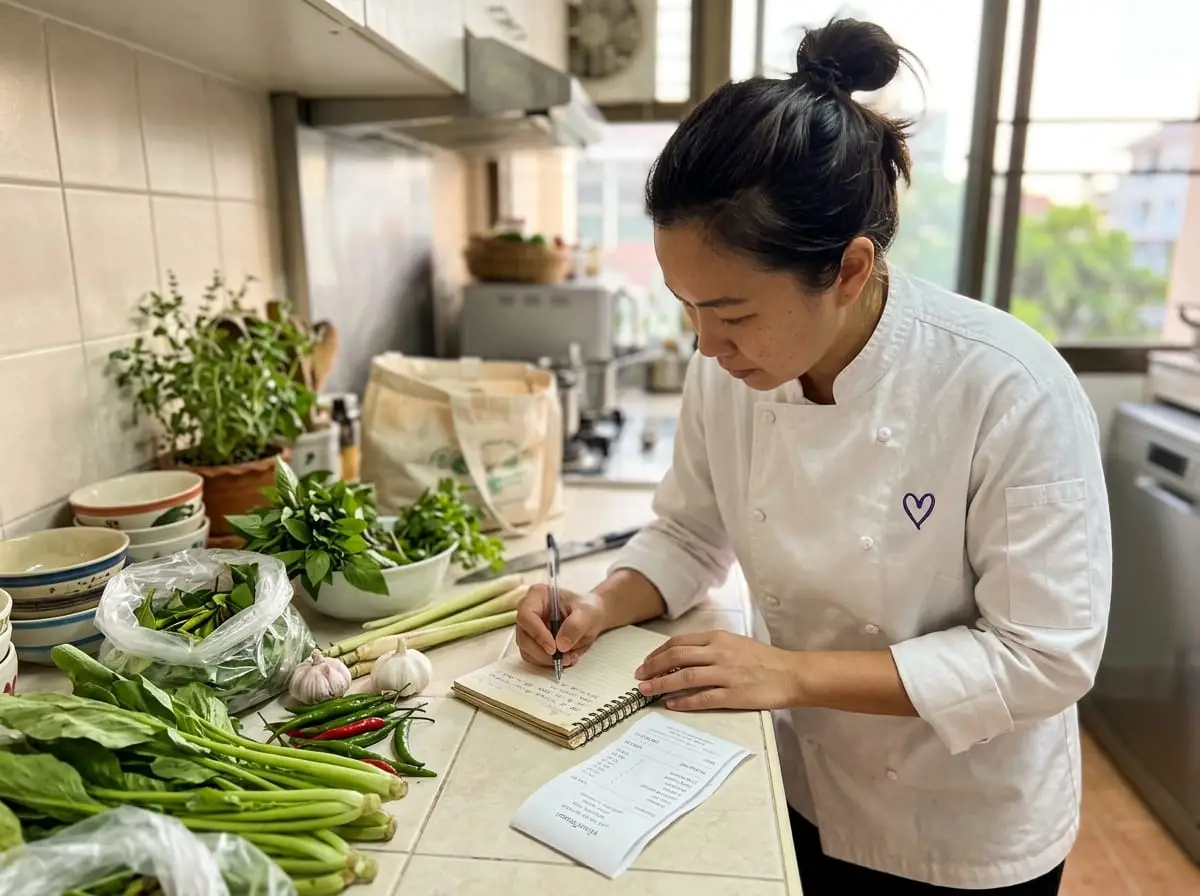
For many Indian families in Bangkok, a daily cook is not a luxury. It is how home works: hot rotis at dinner, dal that tastes like a grandmother's, and a tiffin packed every morning. The hard part is finding an Indian private chef in Bangkok with the details that matter, such as a Jain household's rules, a Punjabi family's idea of a proper dal makhani, or a Kerala family's fish curry.
This guide covers who hires an Indian cook in Bangkok, how to match the cook to your region and your kitchen rules, what a week of meals and tiffins looks like, what it costs, and the health and food-safety habits that matter most when you are cooking big pots in a hot city.
Who hires an Indian private chef in Bangkok and why
Bangkok's Indian community is old and large. The Sikh and Punjabi families around Pahurat have been trading in the city for generations, and a newer wave of professionals working in finance, technology and trade lives along Sukhumvit, in Phrom Phong, Asok, Ekkamai, Phra Khanong and On Nut. Most of the families who ask us for an Indian cook fall into one of four groups.
Indian families who want home food every day. Dal, rice, roti and a sabzi, cooked the way it is cooked at home. This is the largest group, and they usually want a full-time or part-time cook rather than a dinner-party chef.
Vegetarian, Jain and sattvic households. Restaurant food in Bangkok is difficult when fish sauce, oyster sauce and shrimp paste are in almost everything. A cook who keeps a pure vegetarian kitchen solves a daily problem.
Muslim families wanting halal Indian food. Hyderabadi biryani, Lucknowi kormas, Kerala Muslim cooking, with meat that is reliably halal.
Non-Indian families who love Indian food. They usually want two or three Indian dinners a week alongside Thai or Western meals, with the heat turned down for children.
Families who are new to Bangkok often arrive expecting to find a cook through word of mouth, as they would at home. That works sometimes, but it skips the checks: police background, references actually phoned, and a trial day in your kitchen. For families living on Sukhumvit, or further out in On Nut and Bang Na, the advantage of an agency is that the cook has been vetted before they walk in.
North, South, Gujarati, Punjabi, Bengali: briefing the right cook
"Indian food" covers cuisines as different as French and Greek. A cook who makes excellent Punjabi rajma may never have made a sambar from scratch. Tell us your region first, then your favourite dishes.
| Style | Everyday staples | Fats and flavour | Ask the cook about |
|---|---|---|---|
| Punjabi and North Indian | Roti, paratha, dal makhani, rajma, chole, paneer, sabzi | Ghee, butter, cream; onion-tomato masala | Soft rotis every evening; how much butter and cream they use |
| South Indian | Rice, sambar, rasam, idli, dosa, poriyal, curd rice | Coconut oil, coconut, curry leaves, mustard seed | Dosa and idli batter, fermentation, regional variation (Tamil, Kerala, Andhra, Karnataka) |
| Gujarati | Thepla, dhokla, kadhi, dal with jaggery, undhiyu, khichdi | Groundnut oil, sweet-sour balance | Jain adaptations; sugar and jaggery levels |
| Bengali | Rice, fish curry (macher jhol), shukto, dal, luchi, sweets | Mustard oil, panch phoron | Fish sourcing and bone-free portions for children |
| Mughlai and Hyderabadi | Biryani, korma, haleem, kebabs | Ghee, nuts, saffron, cream | Halal meat sourcing; nut allergies in kormas |
Who the cooks are
Indian home cooks in Bangkok come from two pools. Some are Thai cooks who have worked for Indian families for years and cook North Indian food very well. Others are Indian or Nepali chefs, often with restaurant experience. Both can be excellent. Any foreign cook needs a valid work permit for the role, and that is something we check, not something to take on trust.
Spice levels for children
Indian children grow up with spice, but not at adult levels. The standard technique is the same in every region: cook the base masala mild, take the children's portion out, then add green chilli, red chilli powder or a second tadka to the adult pot. Ask the cook to keep a small bowl of chopped green chilli and a jar of chilli pickle on the table so adults can top up.
Vegetarian, Jain, sattvic and halal kitchens: rules the chef must keep
Kitchen rules are where Indian cook placements go wrong most often, because the family assumes the cook knows and the cook assumes the family will say. Write them down.
Pure vegetarian
Many Hindu vegetarian households also avoid eggs. In Bangkok the hidden problems are Thai and imported ingredients: fish sauce, oyster sauce and shrimp paste in Thai sauces, gelatine in desserts and sweets, animal rennet in imported cheeses, lard in some bakery products, and egg in cakes and mayonnaise. Home-made paneer, set with lemon juice or vinegar, avoids the rennet question entirely. If anyone in the house eats meat, agree whether it may be cooked in the kitchen at all, and if so on which boards and in which pans.
Jain
A Jain kitchen is the strictest brief most cooks will receive. Typical rules include:
- No root vegetables: onion, garlic, potato, carrot, beetroot, radish and fresh ginger. Dried ginger is usually acceptable.
- No honey, and many households avoid mushrooms and aubergine.
- Nothing stored overnight for stricter families: food is cooked and eaten the same day, and batters are not kept.
- No eating after sunset for those who observe it, which shifts dinner to late afternoon.
- Extra rules during Paryushana and on particular days of the month, when some families also avoid green leafy vegetables.
Every Jain household is different. Give the cook your family's list, not a general one.
Sattvic
A sattvic kitchen usually excludes onion, garlic, meat, fish, eggs, alcohol and mushrooms, favours freshly cooked food, and avoids reheated leftovers and heavily fried dishes. Many families following an Ayurvedic or ISKCON practice cook this way.
Halal
A halal Indian kitchen needs meat and poultry from a halal-certified butcher, no pork in any form, no alcohol in cooking, and utensils that have never been used for non-halal meat. In Thailand, halal certification for products and butchers is issued under the Central Islamic Council of Thailand's halal standard, and certified products carry its logo. A cook who shops for a halal kitchen should know which butchers and supermarket counters are certified. Our halal private chef guide covers separation, sourcing and Ramadan schedules in detail.
Allergens in Indian cooking
Indian food uses several allergens heavily: tree nuts and peanuts in kormas, chikkis and some chutneys; milk in ghee, paneer and curd; mustard seed in tadka; sesame in some breads and chutneys; and gluten in atta, maida and asafoetida blends, which often contain wheat flour. The UK Food Standards Agency's allergy and intolerance guidance lists mustard and sesame as major allergens, which surprises many families. Gluten-free households should buy pure asafoetida rather than the compounded powder.
Daily cook vs dinner-party chef: formats and rates
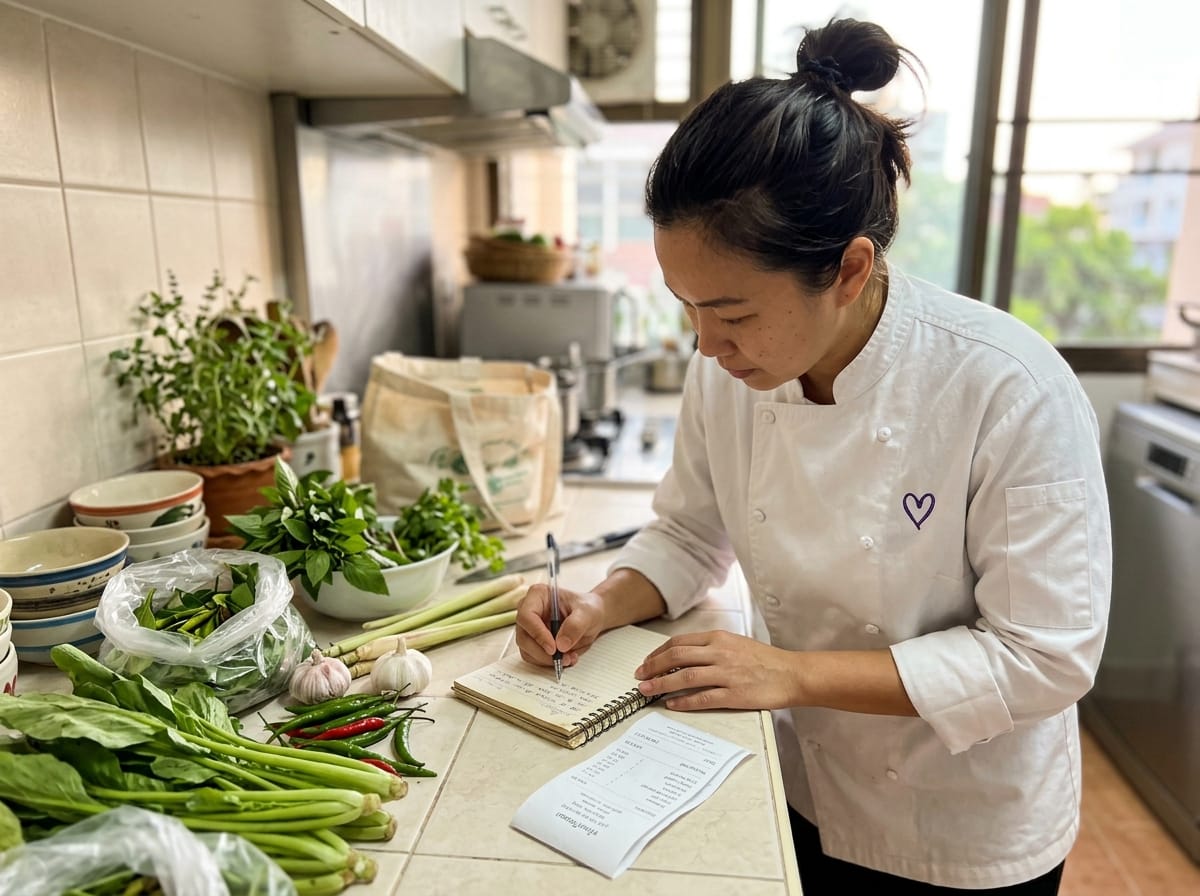
Indian families almost always want a daily cook. Dinner-party chefs are for Diwali, Eid, birthdays and engagement dinners.
| Format | Best for | CareRova guide rate |
|---|---|---|
| Full-time live-out, five to six days | Breakfast, tiffins, lunch and dinner every day | ฿34,900 a month |
| Live-in, six days | Early breakfasts, late dinners, a cook who is part of the household | ฿31,900 a month, room and meals provided |
| Part-time, three days a week | Dinner and next-day tiffins on weekdays, or batch cooking | ฿19,900 a month |
| Daily, eight hours | A trial day, a festival cook-up, or a big batch for the freezer | ฿4,900 |
| Hourly, four-hour minimum | A single dinner or cooking lesson | ฿900 an hour |
| Dinner party, up to six guests | Diwali dinner, a birthday, guests from home | ฿5,900, larger parties quoted |
For comparison, Indian home cooks hired directly in Bangkok earn ฿18,000–35,000 a month, and trained chefs with restaurant backgrounds ฿30,000–60,000. The CareRova rate is all-in: pay, payroll, vetting, monthly check-ins, sick cover and a free replacement within 90 days on long-term placements. Groceries are always extra, bought on your account or reimbursed from receipts at cost. For a family of four cooking vegetarian Indian food at home, ฿3,000–5,000 a week in groceries is typical; a meat-eating household spends more. Full details are on the pricing page, and our guide to what a private chef costs in Bangkok compares every format.
Live-in or live-out
Live-in suits families who want hot rotis at 7 am and dinner at 9 pm. It requires a private room, meals and a real day off each week; Thai law entitles domestic workers to at least one day off a week, paid public holidays and sick leave. Live-out suits families who want the evening to themselves after dinner is served.
A sample week of family meals and tiffins
Here is a realistic week for a North Indian vegetarian family of four with two children at school, cooked by a full-time cook. Adults get a hotter version; children get the mild base.
| Day | Dinner | Next-day tiffin |
|---|---|---|
| Monday | Dal tadka, jeera rice, bhindi masala, roti, cucumber raita | Aloo paratha with a small pot of plain curd, kept cold |
| Tuesday | Rajma chawal, kachumber salad, roti | Vegetable pulao with raita in a separate chilled pot |
| Wednesday | Palak paneer, mixed dal, roti, carrot and beetroot salad | Paneer and pepper wrap, apple slices |
| Thursday | South Indian night: sambar, cabbage poriyal, rice, rasam | Mini idlis with coconut chutney, kept on an ice pack |
| Friday | Chole, jeera rice, onion salad, roti | Vegetable sandwich with mint chutney, grapes |
| Saturday | Vegetable biryani, boondi raita, papad | Weekend, no tiffin |
| Sunday | Khichdi, kadhi, sautéed greens; a light reset meal | Cook's day off; leftovers planned |
Tiffins in Bangkok heat
A tiffin sits in a school bag from 7 am to noon, often in a classroom that is warm before the aircon is on. The rules are simple:
- Rice is cooled before packing. Hot rice sealed in a box stays warm for hours, and cooked rice is a known source of Bacillus cereus.
- Curd and raita go in a separate small pot with an ice pack, or are left out.
- Fresh coriander and coconut chutneys are made on the day and kept cold; they spoil within hours in heat.
- Paratha, thepla and dry sabzi travel best, because they hold little moisture.
- The tiffin is washed and fully dried every evening, with the rubber seal removed so mould cannot build up underneath it.
The American Academy of Pediatrics' nutrition pages for families are a sensible guide to portion sizes and protein for school-age children, which in a vegetarian tiffin means dal, paneer, curd, chickpeas or beans every day.
Health: oil, ghee, salt and sugar in everyday cooking
Indian home food is built on pulses, vegetables, whole spices and whole grains, which is about as healthy as a cuisine gets. The risks are in the measures, and a cook can change them without changing the taste much.
Oil and ghee
The single biggest lever is fat. A cook who pours oil from the bottle into every pan uses two or three times as much as one who measures by the teaspoon. Ask for a measured tadka: one or two teaspoons of oil or ghee per dish for a family of four, more only for festival food. Ghee is mostly saturated fat; Harvard's Nutrition Source explains why replacing some saturated fat with unsaturated oils such as groundnut, mustard or sunflower helps heart health. Ghee for flavour on dal and roti, oil for cooking, is a sensible split.
Reused frying oil and vanaspati
Puris, pakoras and samosas are fried, and many kitchens keep the frying oil for days. Repeatedly heated oil breaks down into compounds that research indexed on PubMed has linked with oxidative stress and heart risk. Use fresh oil for each frying session and discard it afterwards. Vanaspati, the hydrogenated vegetable fat sold as a cheap ghee substitute, has historically been a major source of trans fats and has no place in a family kitchen.
Salt
Pickles, papad, packaged masalas and namkeen snacks carry a lot of salt. Home cooking can be modest on salt if the cook leans on lemon, tamarind, fresh herbs and properly toasted spices. Children's portions should be salted lightly, and a jar of pickle on the table does not need to be emptied every week.
Sugar and refined carbohydrate
South Asian adults develop type 2 diabetes at higher rates and at lower body weights than many other groups, a pattern documented in decades of research. The everyday changes that help are modest: smaller portions of white rice, more dal and vegetables on the plate, millets such as ragi and jowar a few times a week, brown or mixed rice where the family accepts it, less sugar in chai, and mithai kept for festivals. Gujarati dal and kadhi traditionally include jaggery or sugar; ask the cook to halve it.
For older relatives
Many Indian households in Bangkok include grandparents visiting for months at a time. A cook can make softer rotis, lower-salt dal, sugar-free desserts and diabetic-friendly breakfasts. If a grandparent needs more than meals, CareRova also places senior carers who work alongside a cook.
Food safety for big-batch cooking in Bangkok heat
Indian home cooking often means large pots: dal for two days, a big batch of rajma, biryani for twelve. Large volumes of hot food are the classic setting for food poisoning, because they cool slowly through the temperature range in which bacteria multiply.
The large-pot problem
Clostridium perfringens forms spores that survive boiling. When a big pot of dal, chole or meat curry cools slowly on the counter, the spores germinate and multiply rapidly between about 5 °C and 60 °C. The CDC's food safety pages list it among the most common causes of foodborne illness, typically from food cooked in bulk and left to cool. The symptoms are cramps and diarrhoea within six to 24 hours.
The fix is fast cooling. The USDA's leftovers and food safety guidance says to divide large amounts into small, shallow containers and refrigerate within two hours. In practice:
- Split the pot into shallow containers no more than about 5 cm deep.
- Stand the containers in a sink of cold water and ice for 15 to 20 minutes before they go in the fridge.
- Never put a ten-litre pot straight in the fridge. It stays warm in the middle for hours and warms everything around it.
- Never leave it on the hob overnight, even with the lid on.
Fridge and reheating
The fridge should be at 5 °C or below; the FDA's refrigerator thermometer guidance explains how to check. Leftover dal and curry are reheated until steaming throughout, 74 °C on a probe, which is the leftover temperature in the FoodSafety.gov minimum temperature chart, and reheated once only. Cooked dishes keep three to four days in the fridge.
Pressure cookers and kidney beans
The pressure cooker is the Indian kitchen's most important tool, and it needs looking after. Check the gasket and safety valve before every use, never fill beyond two-thirds (half for pulses, which foam), and let the pressure release fully before opening. Rajma, red kidney beans, must be soaked and then boiled hard or pressure-cooked; undercooked kidney beans contain a lectin that causes severe vomiting. A slow cooker on low is not hot enough.
Batters, curd and paneer
Dosa and idli batter ferments in Bangkok in six to eight hours rather than overnight, and over-fermented batter turns sour quickly. Once risen, it goes in the fridge and is used within two or three days. Home-set curd sets fast in the heat and should be refrigerated as soon as it is firm. Fresh paneer keeps two or three days chilled.
Spices and the pantry
Humidity is the enemy of an Indian pantry. Chilli powder, turmeric and flours absorb moisture, clump and can grow mould, and damp spices and nuts are where aflatoxins form. Store spices, atta and pulses in airtight containers in a cool cupboard, buy in smaller quantities, and throw out anything that smells musty. Pantry moths and weevils thrive in Bangkok kitchens; if they keep coming back, our sister company PestsRova handles pest control.
The cook's health
Hand hygiene matters most in dishes that are not cooked after handling: chutneys, raitas, salads and rotis shaped by hand. A cook should wash their hands before starting, after raw meat, after the bin or phone, and before making roti dough. Anyone with vomiting or diarrhoea stays home until 48 hours after it stops. Hepatitis A spreads through food prepared by an infected person, and the WHO's hepatitis A fact sheet notes that a safe and effective vaccine exists, so it is reasonable to ask a full-time cook about vaccination. If anyone in the family does become ill, the NHS's food poisoning guide covers hydration and the warning signs that need a doctor.
Finding and trialling your cook
What to send us
- Your region and the five dishes that define home for your family
- Kitchen rules: vegetarian, egg-free, Jain, sattvic or halal, in writing
- Who eats: ages of children, grandparents, any diabetes, allergies or low-salt needs
- Meals needed: breakfast, tiffins, lunch, dinner, and on which days
- Live-in or live-out, and your area
- Your weekly grocery budget
The trial day
Every long-term placement starts with a paid trial day at ฿4,900. Ask the cook to make a dal, a dry sabzi, rice, rotis and one dish your family considers the test, such as a Sunday chole or a fish curry. Then judge on five points:
- The rotis. Soft, round, made in front of you, with clean hands and short nails.
- The rules. Did the cook follow the kitchen rules without being reminded?
- The fat. How much oil and ghee went into each dish?
- The clean-down. Counters, hob, pressure cooker and sink left clean; leftovers in shallow containers in the fridge.
- The family's verdict, especially the children's.
Every cook CareRova places holds food-hygiene certification, has passed a police background check and an ID and work-eligibility check, and has had at least two references phoned. Our article on weekly meal prep and fridge safety is a useful companion for families who batch-cook.
Book
Read more about the private chef and home cook service, then send your brief on WhatsApp to +66 97 120 3054 or through the contact form. We will send a shortlist of Indian cooks within 48 hours, and then arrange the paid trial day around your kitchen and your schedule.
Frequently asked questions
How much does an Indian cook cost in Bangkok?
A home cook hired directly costs ฿18,000–35,000 a month in 2026, and a trained chef ฿30,000–60,000. CareRova's all-in guide rates are ฿19,900 a month part-time, ฿34,900 full-time live-out and ฿31,900 live-in, with groceries at cost.
Can I find a Jain cook in Bangkok?
Yes, but brief carefully. Jain cooking excludes root vegetables such as onion, garlic, potato and carrot, many households avoid honey and food stored overnight, and some eat nothing after sunset. Write the rules down and confirm them during the trial day.
Do Indian cooks in Bangkok cook halal?
Many do. A halal kitchen needs meat from halal-certified butchers, no pork or alcohol in the house's cooking, and clean utensils that have never touched non-halal meat. Thailand's halal certification is run by the Central Islamic Council of Thailand.
Where do Indian cooks buy spices and groceries in Bangkok?
Pahurat, Bangkok's Little India beside Chinatown, has the widest range of spices, flours and pulses. Indian grocers around Nana and lower Sukhumvit cover daily needs, and large supermarkets now stock paneer, atta and basmati.
Should we hire a daily cook or book a chef for parties?
For everyday dal, sabzi and roti, a daily or part-time cook is the better fit and better value. For a Diwali dinner or a family celebration, book a chef for the evening at ฿5,900 for up to six guests, with larger parties quoted.
Need someone properly vetted?
Get a written rate for your household in under 60 seconds.
Written by the CareRova team
We're Bangkok's vetted home-care agency — everything we write comes from real nanny, chef, housekeeper and senior-care placements across condos, houses and short-stay villas.
Get our Bangkok family-care guides straight in Google — add CareRova as a preferred source.