
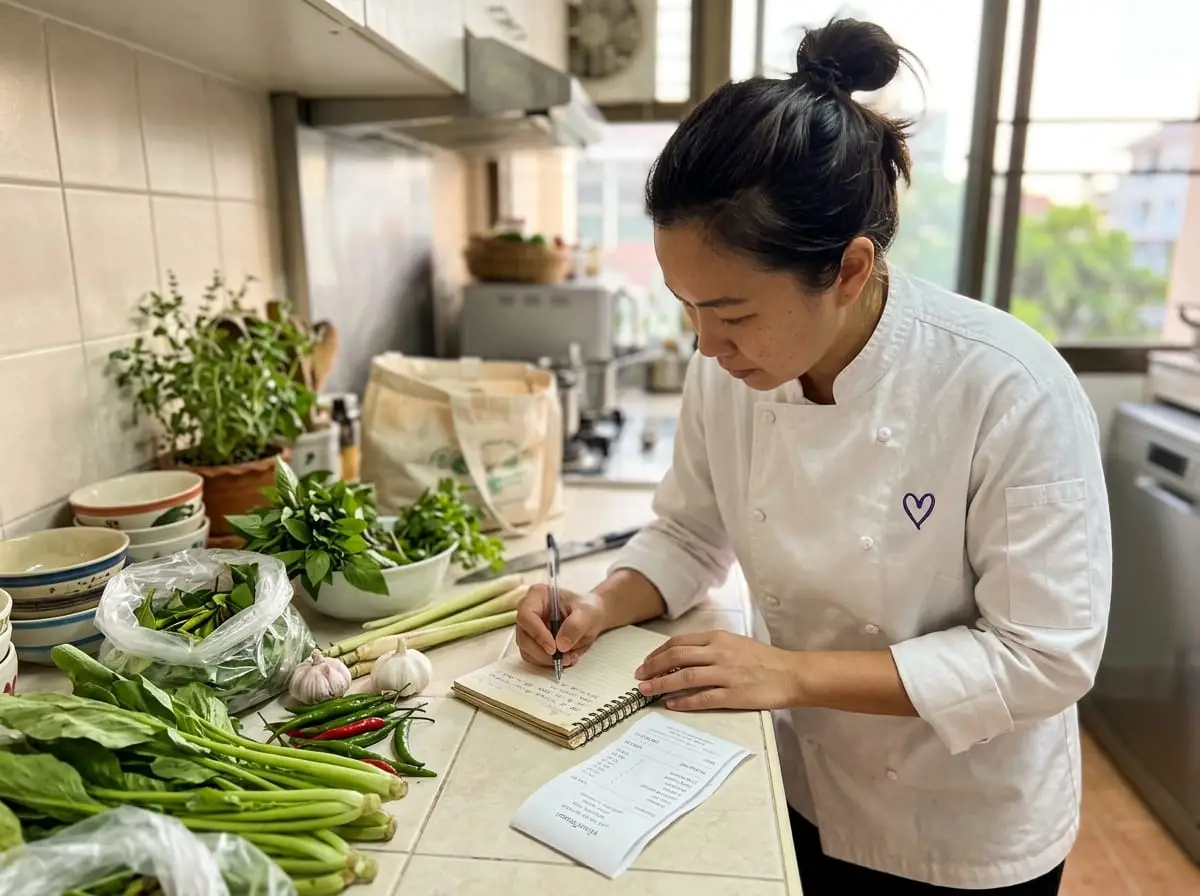
Finding a halal private chef in Bangkok is less about recipes than about habits. Plenty of good cooks in this city make a fine biryani or massaman curry. Far fewer can tell you where the lamb came from, why the soy sauce on the shelf is the wrong one, or which pan has never touched pork.
The requests we see come in two shapes. Muslim families who live here, often from Malaysia, Indonesia, the Gulf, South Asia or southern Thailand, want a daily or part-time cook who runs a halal kitchen without being reminded. Hosts of villas, serviced apartments and family homes want a chef for a few nights while Muslim guests stay, and they want to get it right the first time.
This guide covers both: how a halal kitchen works in practice, where the ingredients come from in Bangkok, menus, Ramadan hours, hygiene in a hot climate, and what CareRova charges.
Halal at home is a kitchen system, not a menu
A halal dish on the table is the last link of a chain. If the chicken was not slaughtered according to Islamic rules, if the wok was last used for pork belly, or if the marinade has a splash of rice wine in it, the dish is not halal however carefully it is plated. A chef has to control the whole chain, from the shop to the sink.
In a home kitchen that chain has four links:
- Sourcing. Meat and poultry from a certified supplier or a Muslim butcher, and packaged foods checked for a recognised halal mark or a clean ingredient list.
- Separation. Halal food stored, prepared and cooked apart from anything that is not, with its own knives, boards, pans and boxes wherever the household is mixed.
- Ingredients. No pork or pork derivatives such as lard and most gelatine, and no alcohol, including the alcohol hiding in cooking wine, mirin and vanilla extract.
- Cleaning. Equipment and surfaces cleaned so nothing carries over from one food to the next.
Families apply these rules with different degrees of strictness, and a good cook asks rather than assumes. Some families from South Asian traditions avoid prawns, crab and squid while eating fish. Some accept any certified imported meat; others want only meat from a butcher they know. Some are relaxed in restaurants but strict at home. Write the answers into the brief so the cook never has to guess on a Tuesday night.
The Arabic phrase often paired with halal is tayyib: good, wholesome, clean. That is a useful frame for hiring. A cook who keeps meat separate but leaves rice out on the counter all afternoon has only done half the job, and the second half is what keeps children well.
Sourcing halal meat and ingredients in Bangkok
Thailand has a large halal food industry and a formal certification system. The mark you will see on products made here is issued under the Central Islamic Council of Thailand halal standard, and it appears on chicken, sausages, sauces, instant noodles, stock powders and snacks in ordinary supermarkets. The mark is the cook's fastest check; the ingredient list is the second.
Fresh meat
- Chicken is the easiest. Many mainstream Thai poultry packs in supermarkets carry the halal mark, because Thai producers supply Muslim-majority export markets. The cook should still check every pack, because not every product line is certified.
- Beef, lamb and goat are best bought from Muslim butchers. Bangkok's long-established Muslim communities, around the mosques of Bang Rak and Ban Khrua and out east towards Min Buri and Nong Chok, have butchers and halal grocers. The Middle Eastern shops around Sukhumvit Soi 3 stock lamb, goat, frozen halal imports, flatbreads and spices.
- Imported meat from Australia, New Zealand or Brazil often carries a certificate from a body in the exporting country. Families differ on which foreign certifiers they accept, so this goes in the brief too.
- Seafood is generally treated as halal, subject to the family's own tradition as above.
Wet-market butchers rarely chill meat the way a supermarket does, so timing matters. A sensible cook shops before 9 am, carries a cool box with ice packs, and has the meat in your fridge well inside the hour. The USDA's danger-zone guidance puts the safe limit at one hour out of the fridge when the air is above 32 °C, which describes most Bangkok mornings from March to October.
The pantry
Most halal mistakes in a home kitchen are pantry mistakes, not meat mistakes. These are the items we see trip up cooks who are new to a halal household.
| Pantry item | The problem | What the cook buys instead |
|---|---|---|
| Brewed soy sauce | Some brands add alcohol as a preservative | A pack with the halal mark, or one with alcohol absent from the label |
| Mirin, Shaoxing wine, cooking sake | Alcohol | Rice vinegar with a little sugar, or a certified halal mirin-style seasoning |
| Vanilla extract | Usually alcohol-based | Vanilla powder, seeds or an alcohol-free paste |
| Gelatine (jelly, mousse, gummies, marshmallows) | Usually pork-derived | Agar, or certified bovine gelatine |
| Stock cubes and seasoning powder | May contain pork or uncertified chicken | A certified powder, or stock made from halal bones |
| Pastry, some buns and roti | May be made with lard | Butter, ghee or vegetable shortening |
| Cheese | Animal rennet of unknown origin | Cheese with a halal mark, or made with microbial rennet |
| Chinese sausage, bacon, ham | Pork | Halal beef or chicken sausage and smoked beef |
| Beer batter, wine sauces, rum desserts | Alcohol | Sparkling water batter, stock and lemon, fruit syrups |
The household pays for groceries at cost, either from a family card or against receipts, and the cook should photograph labels and keep receipts so you can check any product yourself.
Separation, utensils and the no-alcohol kitchen
A fully halal household is simple: everything that comes in is halal, nothing else is stored, and one set of equipment does it all. The tricky homes are mixed ones: a Muslim and a non-Muslim spouse, a household helper who eats pork on her day off, a rented villa where the last guests left bacon in the freezer.
Setting up a mixed kitchen
- One colour for halal. A full set of knives, boards, a wok, two pans, ladles, a colander and storage boxes marked with one tape colour and used for nothing else.
- No shared wood. Wooden spoons and boards absorb fat and cannot be cleaned back to neutral, so the halal set gets its own or uses plastic and steel.
- Raw meat stored apart. Halal raw meat sealed in a labelled box on the bottom shelf, which is also where food-safety rules put all raw meat. Anything non-halal goes into a separate sealed box in a different drawer, or better, a separate small fridge.
- Never shared oil. A fryer or a pan of oil that has fried pork is not used for halal food, and a shared barbecue grill gets a separate plate or a sheet of foil.
- The dishwasher question. Many families accept a hot dishwasher cycle for everything; others want halal equipment washed separately by hand. Ask.
Families who follow the Shafi'i school, common in Malaysia, Indonesia and southern Thailand, may ask for any item that touched pork to be ritually cleansed, a washing that includes water mixed with clean earth. Many simply prefer new equipment. Either way, the cook offers and follows the family's instructions rather than improvising.
The no-alcohol rule covers cooking, not just drinks
The "it cooks off" argument does not apply. Most Muslim families want no alcohol in food at all, and simmering does not remove all of it anyway. That rules out wine in a ragù, mirin in teriyaki and rum in a fruit cake, habits a cook trained in Western or Japanese kitchens may have.
If the host is serving alcohol to other guests, keep the bar physically apart from the kitchen. Separate glasses, a separate ice bucket and scoop, and no wine bottle parked next to the stove.
Menus: Middle Eastern, Malay-Indonesian, Thai-Muslim and children's meals
Bangkok cooks are strongest in Thai-Muslim food, which grew out of the Persian, Indian and Malay communities that settled here over centuries. Middle Eastern and Malay-Indonesian menus need a cook who has worked in those kitchens, so tell us which you want. If your family eats largely South Asian food, our sibling guide to Indian private chefs, vegetarian and halal menus goes deeper.
| Style | Weeknight dinner | Guest or weekend dish | Children's version |
|---|---|---|---|
| Thai-Muslim | Khao mok gai (Thai chicken biryani) with cucumber relish | Massaman beef with potatoes, roti, oxtail soup | Khao mok with the relish on the side, chilli left out |
| Thai-Muslim | Chicken satay, salad khaek with peanut dressing | Gaeng kurma with lamb, mataba stuffed flatbreads | Satay without the sauce for nut-allergic children |
| Middle Eastern | Lamb kofta, hummus, tabbouleh, flatbread | Lamb mandi or maqluba, mezze table, fattoush | Kofta in pitta with yoghurt, plain rice |
| Malay-Indonesian | Soto ayam, nasi goreng with fried egg | Beef rendang, nasi lemak spread, gado-gado | Ayam goreng with rice and cucumber, sambal on the side |
| Breakfast | Labneh, eggs, olives, dates, foul medames | Roti canai with dhal, halal beef sausages | Roti with banana, scrambled eggs, fruit |
Keeping it healthy
Many of the best halal dishes are rich. Massaman, rendang and kurma are coconut-heavy, roti is fried, and Malay and Gulf desserts are very sweet. A good cook balances the week rather than banning anything: one rich curry, one grilled dish, one soup and plenty of vegetables, with fruit after dinner most nights.
The Harvard Nutrition Source healthy-plate model is a sensible default for a family brief: half the plate vegetables and fruit, a quarter whole grains, a quarter protein. Stock powders and soy sauce are the hidden salt in most Bangkok kitchens, so homemade stock is worth the extra hour on a meal-prep day.
For children, keep the chilli and sambal on the side and watch the peanut sauce. Peanut, sesame, milk, egg, wheat and shellfish all appear on these menus, and the UK Food Standards Agency's allergy guidance is a good model for the allergen list the cook keeps on the fridge.
Ramadan: suhoor, iftar and a cook's working hours
Ramadan 2027 is expected to begin around 8 February, subject to the sighting of the moon, with Eid al-Fitr about a month later. In Bangkok at that time of year the dawn prayer falls a little after 5 am and sunset around 6.20 to 6.30 pm, so the fast runs for roughly 13 hours. It also overlaps with the end of the PM2.5 season and the start of the hot months.
The cook's hours have to move with the family. These are the patterns that work.
| Pattern | Typical hours | Suits | Notes |
|---|---|---|---|
| Afternoon shift, live-out | 13:00–21:00 | Most families | Cooks iftar fresh, preps suhoor for reheating, cleans after the meal |
| Split shift, live-in | 03:45–05:45 and 15:00–20:00 | Families who want hot suhoor | Long rest in the middle of the day; still one full day off a week |
| Part-time, three days a week | 13:00–21:00 on cooking days | Couples and small families | Batch-cooks iftar dishes and a freezer of suhoor portions |
| Single event | From 14:00 | Iftar for guests | StayCare in-villa dinner for up to six; larger iftars quoted |
The legal floor does not change for the month: domestic workers are entitled to at least one day off a week, paid public holidays and sick leave. Agree the Ramadan rota in writing before the month starts, including who covers the day off.
A non-Muslim cook working for a fasting family should not eat or drink in front of them during the day; a quiet break room solves it. A Muslim cook who is fasting cannot taste freely, so measured recipes and a family member tasting at iftar are the norm.
What to cook
Iftar traditionally opens with dates and water, then soup, then a moderate main meal. Suhoor should keep people going until sunset: slow carbohydrates such as oats, brown rice or wholemeal roti; protein from eggs, yoghurt, beans or chicken; fruit; and water. Very salty or fried suhoor food makes the afternoon harder in Bangkok heat.
Children who are not fasting still need breakfast, a school lunch and a normal dinner, and they often get forgotten in a kitchen working around iftar. Anyone pregnant, breastfeeding, diabetic or on regular medication should take advice from their own doctor about fasting.
The food-safety trap of Ramadan
Iftar food is often cooked at 3 pm and eaten at 6.30 pm. In a 32 °C kitchen that is three and a half hours in the danger zone between 5 and 60 °C, long enough for bacteria to multiply to levels that make people ill. The fix is to hold hot food above 60 °C in a low oven or a rice cooker on warm, or to cook closer to sunset.
Suhoor food made the night before is cooled within two hours, refrigerated at 5 °C or below and reheated until steaming hot, 74 °C at the centre, as the USDA's leftovers guidance sets out. Rice is the item to watch, as covered in the hygiene section below.
For hosts: halal chefs for villa and hotel guests
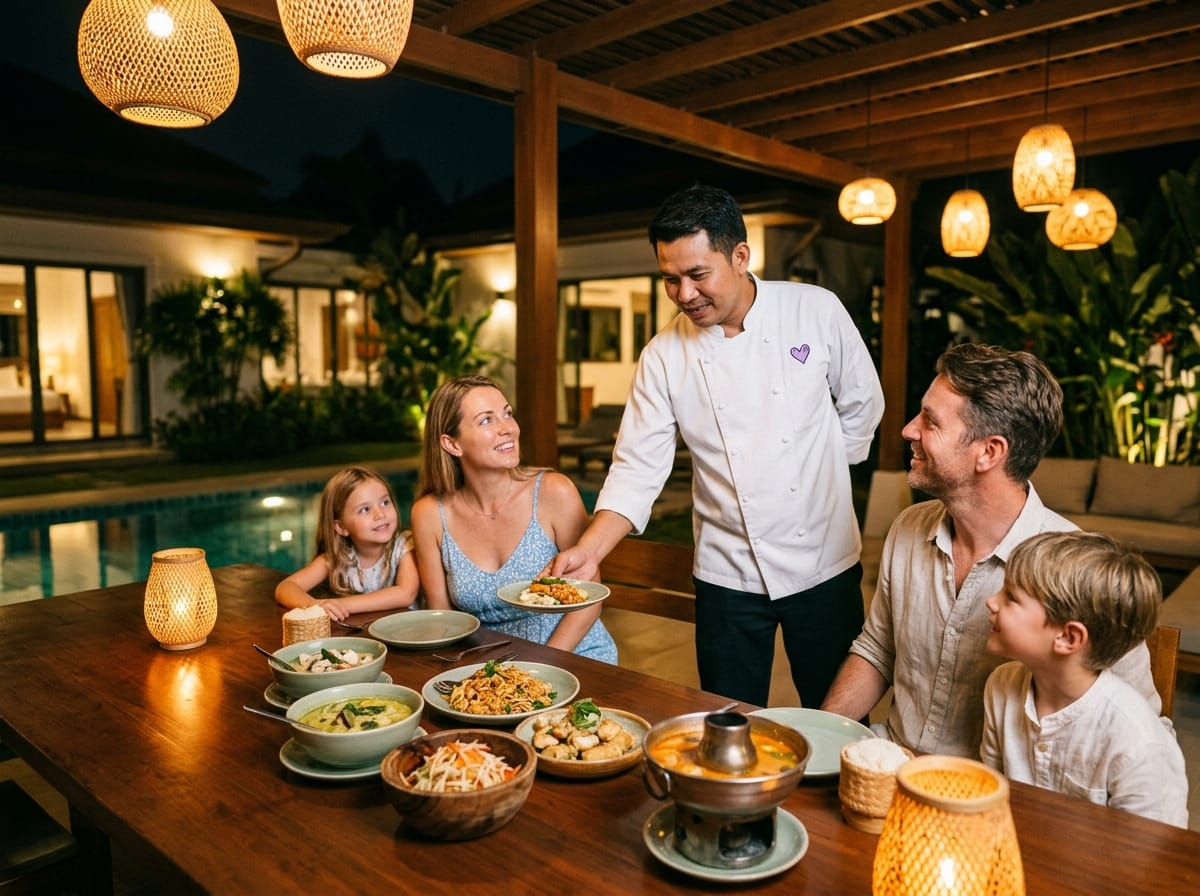
Villa owners, Airbnb hosts and families with visiting relatives often book a halal chef for a few days. StayCare, CareRova's service for guests and hosts, does this with chefs who have cooked halal before. See StayCare for hosts for the full range, including holiday nannies.
What makes a short booking work is preparation the day before the chef arrives:
- Clear the kitchen. Remove pork, bacon, ham and alcohol from the fridge, freezer and pantry, or pack them in a sealed box in another room.
- Free one fridge. A clean, empty fridge or at least two empty shelves for the guests' food.
- Ask the chef to bring a kit. Their own knives, boards, a wok and two pans removes most worries about rental-villa equipment.
- Share the guests' details. Country, any foods the family avoids, children's ages and allergies, and whether they want Thai, Middle Eastern or Malay food.
- Plan around prayer times. Dinner served after the sunset prayer is usually more welcome than dinner at 6 pm sharp.
- Choose the right property. A hotel room without a kitchen will not work; a serviced apartment or villa with a proper kitchen will.
Visiting families often want childcare too. Our guide to holiday nannies and babysitters for visiting families covers that side, and a holiday nanny runs ฿2,900 a day or ฿15,900 for six days.
Hygiene and food safety in a halal home kitchen
Halal rules and food-safety rules point the same way, and a cook who keeps one tends to keep the other. These are the specific habits to look for.
Hands, prayer and the cook's health
A Muslim cook may make ablution before prayer several times a day. That ritual washing is separate from the soap-and-water wash before handling food, and the cook should do both. The CDC's handwashing advice is 20 seconds with soap before cooking, after raw meat, after the bathroom and after taking out rubbish.
A cook who has had vomiting or diarrhoea stays out of the kitchen until 48 hours after the last episode, which matches the NHS food-poisoning guidance. Hepatitis A spreads through food handled by an infected person, and the WHO hepatitis A fact sheet recommends vaccination where risk is higher; it is worth asking whether your cook is vaccinated.
Meat, temperatures and storage
- Fridge at 5 °C or below, checked with a fridge thermometer, not the dial.
- Storage times. Fresh chicken and minced lamb keep one to two days in the fridge, steaks and lamb cubes three to five, according to the FoodSafety.gov cold storage chart. Anything longer goes into the freezer in labelled portions at the butcher-day shop.
- Cooking temperatures. Chicken to 74 °C, minced lamb or beef for kofta to 71 °C, whole cuts of lamb to 63 °C with a three-minute rest, using the safe minimum internal temperatures. A probe thermometer settles any argument about the shawarma.
- Separate boards for raw meat, in addition to the halal colour code, so raw chicken never shares a board with salad.
Rice, yoghurt and big pots
Biryani, mandi and khao mok are cooked in large pots, and rice is the classic party food-poisoning dish. Bacillus cereus spores survive cooking and multiply in rice left warm. Spread leftover rice in shallow trays, get it into the fridge quickly, eat it within a day and reheat it only once.
Yoghurt, labneh and raita need to stay cold, so they come out of the fridge just before serving and go back within the hour in hot weather. Dates, nuts, flour and spices go into airtight containers, because Bangkok humidity breeds mould in an open bag within days during the rainy season.
The UK Food Standards Agency's cleaning guidance is the model for cloths and surfaces: a two-stage clean (detergent, then sanitiser) on worktops after raw meat, and cloths changed daily and washed hot. For a broader checklist, our sibling guide on private chef kitchen hygiene standards in Thailand sets out what to inspect. The WHO's food safety fact sheet summarises the same principles in five keys: keep clean, separate raw and cooked, cook thoroughly, keep food at safe temperatures, use safe water and raw materials.
Rates and how to book a halal chef
CareRova's guide rates for chefs and home cooks are the same whether the kitchen is halal or not. They are all-in for long-term placements, and groceries are always extra, bought on the family's account or reimbursed at cost.
| Format | Guide rate (2026) | Best for |
|---|---|---|
| Hourly, four-hour minimum | ฿900 an hour | A single iftar, a lunch for visiting relatives |
| Daily, eight hours | ฿4,900 | Meal-prep day, a family party |
| Part-time, three days a week | ฿19,900 a month | Couples and small families |
| Full-time live-out, five to six days | ฿34,900 a month | Families who want every dinner cooked |
| Live-in, six days | ฿31,900 a month | Families with a maid's room who want suhoor and iftar covered |
| StayCare in-villa dinner, up to six guests | ฿5,900 | Visiting guests, one evening |
| StayCare chef day / chef week | ฿6,900 / ฿29,900 | Guests staying several days |
Dinners for more than six guests are quoted on request. If you would rather employ the cook directly, placement-only costs one month's rate, once. For comparison, direct-hire home cooks in Bangkok earn about ฿18,000–35,000 a month and trained private chefs ฿30,000–60,000. The full table is on our pricing page.
Every chef we place has a police background check, ID and work-eligibility checks, at least two references phoned, food-hygiene certification and a paid trial day in your kitchen. Read more on how CareRova matches private chefs.
What to send us
- Whether the household is fully halal or mixed, and how strict each rule is for you.
- Which meat certifiers and butchers you accept, and any seafood you avoid.
- Cuisines: Thai-Muslim, Middle Eastern, Malay-Indonesian, South Asian or a mix.
- Children's ages, allergies and how much spice they eat.
- Whether you want a Muslim cook specifically.
- Ramadan dates if relevant, and the shift you have in mind.
- Your area and nearest BTS or MRT station, and your start date.
Send it on WhatsApp to +66 97 120 3054 or through our contact form, and you will have a shortlist within 48 hours.
Frequently asked questions
Can a non-Muslim chef cook halal food for my family?
Yes, if the family is comfortable with it and the cook follows the kitchen rules exactly: certified meat, separate equipment, no alcohol or pork derivatives and careful label checking. Some families prefer a Muslim cook, which we can match for; say so in your brief and we shortlist accordingly.
How do I know if meat bought in Bangkok is halal?
On packaged products, look for the halal mark issued under the Central Islamic Council of Thailand standard. Fresh beef, lamb and goat are best bought from Muslim butchers, and imported meat should carry a certificate your family accepts. Ask the cook to photograph packaging and keep receipts so you can check.
Does a halal kitchen need separate pots and utensils?
In a fully halal household one set of equipment is enough. In a mixed household, or a villa where pork has been cooked, the halal food needs its own knives, boards, wok, pans and containers, clearly marked. Families from some traditions also ask for ritual cleansing or new equipment, so agree this before the first shop.
How much does a halal private chef cost in Bangkok?
CareRova's 2026 guide rates are ฿900 an hour with a four-hour minimum, ฿4,900 for an eight-hour day, ฿19,900 a month part-time and ฿34,900 a month full-time live-out, all-in. Groceries are extra and reimbursed at cost. Direct-hire home cooks in Bangkok typically earn ฿18,000–35,000 a month.
Can a halal chef cook iftar and suhoor during Ramadan?
Yes. Most families move the cook to an afternoon-to-evening shift that covers iftar, with suhoor prepared the night before for reheating. Live-in cooks can work a split shift, but still need at least one full day off each week.
Can I book a halal chef for guests staying at a villa?
Yes. StayCare places an in-villa chef for a single dinner at ฿5,900 for up to six guests, a full chef day at ฿6,900 or a chef week at ฿29,900, ingredients extra. Larger dinners are quoted on request.
Need someone properly vetted?
Get a written rate for your household in under 60 seconds.
Written by the CareRova team
We're Bangkok's vetted home-care agency — everything we write comes from real nanny, chef, housekeeper and senior-care placements across condos, houses and short-stay villas.
Get our Bangkok family-care guides straight in Google — add CareRova as a preferred source.