
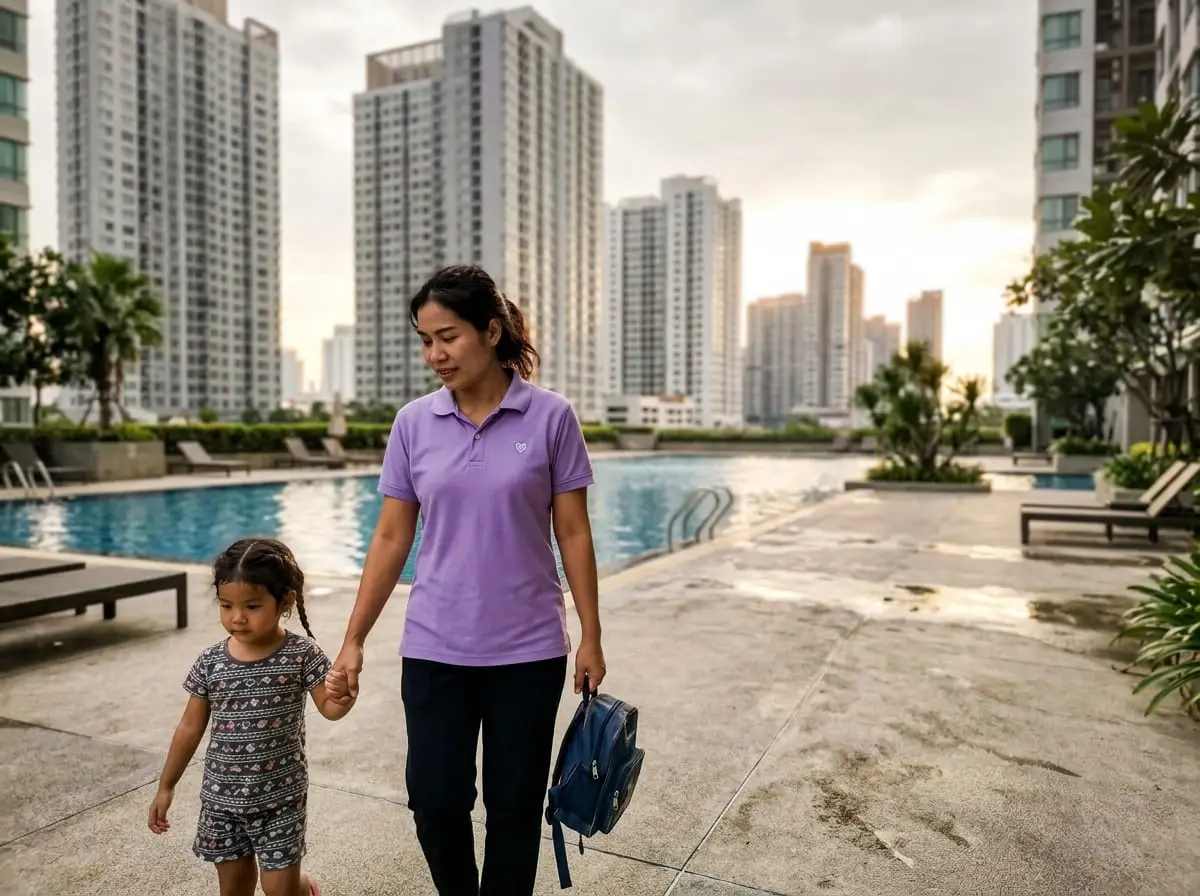
Finding an English-speaking nanny in Bangkok is the most common request we get from expat parents, and also one of the most misunderstood. "English-speaking" covers a carer who can follow instructions and send a clear message, a carer who can read Roald Dahl aloud with feeling, and everyone in between. Those are different hires at different prices.
It also covers different people: Thai nannies with years of expat-family experience, Filipino nannies, and carers from other countries who have built a life in Bangkok. Some families want English only; many want their child to grow up with Thai as well.
This guide explains who the candidates are, how to judge the English a role really needs, the work-permit position, what research says about bilingual children, costs in 2026, how to interview in two languages, and the health and hygiene standards that do not bend whatever language the nanny speaks.
Who English-speaking nannies in Bangkok actually are
Thai nannies with working English
The largest group by far. Many have worked for expat families in Sukhumvit, Sathorn or Thonglor for five or ten years and picked up their English on the job, often alongside the children. Some learned through hotel or hospitality work; a few were teaching assistants. Their English ranges from functional to excellent, and their Thai, cultural knowledge and local network (the clinic, the market, the school gate) are an asset in their own right.
Filipino nannies
English is widely spoken in the Philippines and many Filipino nannies are confident, fluent speakers with long childcare careers, sometimes in Hong Kong, Singapore or the Middle East before Thailand. They are popular with families who want English as the main language of childcare. The practical point is legal: a foreign carer needs a valid work permit for the role, which we cover below.
Other nationalities
Bangkok also has carers from Myanmar, Laos, Cambodia, Nepal and elsewhere, some with good English and many with fluent Thai. Language ability varies widely with the person, so judge each candidate on her own English, not on her passport.
Native English speakers
Occasionally families look for a native English speaker as a nanny or "au pair". These are rare in Bangkok, usually more expensive, and the same work-permit rule applies. For structured English support for an older child, a tutor a few hours a week is often a better fit than a full-time native-speaker nanny.
What level of English the job really needs
Families often ask for "fluent English" when the role does not need it, and miss out on excellent carers as a result. Other families accept weak English for a role where it really matters. The right level depends on two things: safety and the child's age.
The safety floor
Every nanny, regardless of role, needs enough English (or enough of your language) to:
- Understand your instructions on allergies, medicines, sleep and the house rules.
- Describe an incident clearly: what happened, when, what she did.
- Read a medicine label and a dosing instruction, or have them written in Thai for her.
- Speak to a doctor or hospital receptionist, or know to hand the phone to someone who can.
If a candidate cannot meet that floor in English, she can still be the right nanny if the critical information is written in Thai and you have a reliable way to communicate. Many families use a translation app for detail and keep the essentials on a bilingual card.
Testing English without a certificate
Very few nannies hold a formal English qualification, and a certificate would not tell you much about childcare English anyway. Three quick tests tell you more. First, describe a made-up instruction ("nap at 12:30, no milk after 11, call me if she has not slept by 1:15") and ask her to repeat it back. Second, ask her to tell you about a difficult day with a previous child: you hear vocabulary, tenses and how she structures a story. Third, look at her messages to previous employers if she is happy to show you; written English on WhatsApp is the English you will live with.
| Child's age and need | English level that works | What it looks like in practice |
|---|---|---|
| Newborn and baby (0 to 12 months) | Functional, with the safety floor | Follows feeding and sleep plans, keeps a log, reports clearly; talks and sings to the baby in her best language |
| Toddler (1 to 3 years) | Conversational | Names things, reads simple picture books, chats through the day, handles playgroup small talk |
| Preschool (3 to 5 years) | Good conversational, natural pronunciation | Reads aloud with expression, answers "why" questions, models full sentences |
| School age (6 to 12 years) | Fluent, confident reading and writing | Helps with reading logs and homework, messages teachers, supervises play dates |
| Children with additional needs | Fluent, plus specific training | Follows therapy plans, takes notes in sessions, communicates with specialists |
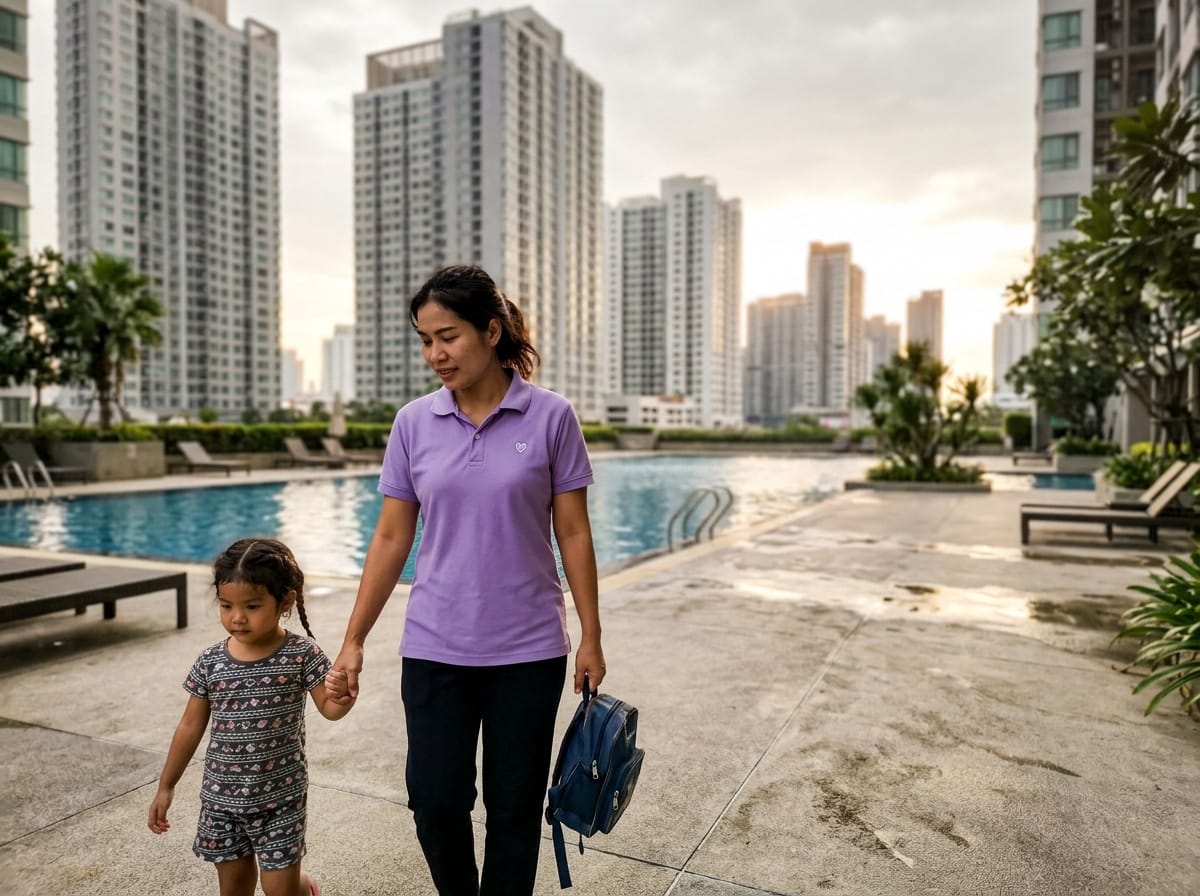
Work permits and the legal position for foreign carers
The law on this is short. A foreign carer needs a valid work permit for the role she is doing. Domestic workers are entitled to at least one day off a week, paid public holidays and sick leave. Employers may register staff with the Social Security Office, and the Department of Labour Protection and Welfare is the government body responsible for labour protection.
What to check with a foreign candidate
- Ask to see her passport and work permit, and check the names and photographs match.
- Check the permit is current and that the details fit the job you are offering.
- Keep copies, and diarise the expiry dates of both documents.
- If anything is unclear, take advice before she starts. Do not "start now and sort the paperwork later".
Families sometimes find a wonderful foreign nanny through word of mouth and only later discover the permit was tied to a previous employer or had lapsed. That is a risk for the nanny as well as for you.
Put the terms in writing, in both languages
Whoever you hire, write down the working arrangement and give her a copy in a language she reads comfortably. Cover the daily hours and any overtime rate, the weekly day off, which public holidays are paid days off, how sick leave works and what notice you need for it, annual leave, any travel with the family, and the notice period on both sides. A one-page agreement in Thai and English prevents most of the disputes we are asked to untangle, and it makes clear to a foreign nanny that you are taking her legal position seriously. CareRova checks ID and work eligibility for every carer we place, and our guide to vetting a nanny in Thailand covers the wider process, including police checks and references.
Bilingual children: what the research says about a second language at home
A common worry is that a Thai-speaking nanny will "confuse" a child learning English, or that two languages will cause a speech delay. The research, much of it indexed on PubMed, is reassuring on both points.
What the evidence broadly supports
- Children can learn two or more languages from birth. Bilingualism does not cause language disorders, and a bilingual child with a genuine delay will show it in both languages.
- A bilingual child may know fewer words in each language than a monolingual child, but the total across both is usually comparable.
- Mixing languages in one sentence is a normal stage, not a sign of confusion.
- What predicts progress in each language is the amount and quality of language a child hears: real conversation, stories, songs and back-and-forth talk, not flashcards or screens.
UNICEF's parenting guidance makes the everyday version of the same point: talking, reading and singing with babies and responding to their sounds builds language, in any language.
What that means for choosing a nanny
The practical lesson surprises some families. A nanny who speaks rich, natural Thai to your toddler all day is giving her a better language model than the same nanny speaking limited English. If English exposure from the nanny is the goal, choose someone genuinely fluent. If your home is already English-speaking, a Thai-speaking nanny adds a second language almost for free.
For mixed Thai and English-speaking families, a common arrangement is that each adult speaks the language they speak best: one parent English, the other Thai, the nanny Thai or English depending on her strength. Consistency helps, but rigid rules matter less than plenty of warm, rich talk. Families who speak a third language at home, such as Japanese, Korean or French, often keep that language with the parents and let the nanny and school cover English and Thai.
The language day, in practice
Here is how a typical weekday can carry two languages without anyone drilling vocabulary. It assumes an English-speaking family with a Thai nanny who has conversational English; swap the languages to suit your home.
| Time | Activity | Language that works best | Why |
|---|---|---|---|
| 07:00 | Breakfast and getting dressed | Nanny's strongest language | Routine talk is where everyday vocabulary sticks |
| 09:00 | Market or park trip | Thai | Real-world naming: fruit, animals, colours, counting baht |
| 10:30 | Songs and rhymes | Both | Rhythm helps memory; Thai and English nursery songs |
| 12:30 | Lunch, then nap | Nanny's strongest language | Calm, predictable talk |
| 15:30 | Picture books | English (if fluent) or Thai | Reading aloud builds vocabulary fastest |
| 18:30 | Bath and bedtime story | Parents' language | Parents keep their own language central |
Screens do not replace any of this. The AAP advises avoiding screen media other than video calls for children under about 18 months, and for older toddlers a little co-viewed, high-quality content at most. A nanny who talks, sings and reads all day is worth more to a bilingual child than any app.
If you have concerns about your child's speech at any point, raise them with your paediatrician rather than changing the language plan on your own. The American Academy of Pediatrics and its parent resources give milestones that apply to bilingual children too.
What an English-speaking nanny costs in 2026
English carries a premium in Bangkok. Direct-hire full-time nannies typically cost ฿18,000 to ฿40,000 a month; strong English pushes a candidate toward the upper half of that range, usually ฿25,000 to ฿40,000, with fluent, experienced nannies at the top.
CareRova's rates are the same whatever language the nanny speaks, and they are all-in: vetting, first aid and CPR, monthly check-ins and a 90-day free replacement on long-term placements.
| Engagement | CareRova guide rate (2026, all-in) | Direct-hire market range |
|---|---|---|
| Hourly (4-hour minimum) | from ฿450 | ฿250 to ฿350 an hour for unvetted sitters |
| Daily (8-hour day) | ฿2,900 | Varies |
| Part-time, 3 days a week | ฿16,900 a month | Varies |
| Full-time live-out, 5 to 6 days | ฿29,900 a month | ฿25,000 to ฿40,000 for English-speaking |
| Live-in, 6 days, room and meals | ฿26,900 a month | Varies |
| Placement only (you employ directly) | One month's rate, one-off | Not applicable |
What moves the price
Within any range, a few things push a nanny's rate up: genuinely fluent English and good written English; years with expat families and international schools; newborn or twins experience; swimming ability for families with a pool; willingness to travel; and a clean driving licence. Live-in roles are a little cheaper because you provide room and meals. At CareRova the guide rate does not change with nationality or language; we match you with the right person for the role and quote the same all-in price.
With direct hire, you also carry the vetting, the paperwork and the cost of starting again if it does not work. Our nanny cost guide for 2026 breaks down the full range by engagement type, what actually moves a rate, and where a cheap hire tends to go wrong.
Interviewing and trialling in two languages
A thirty-minute chat in English tells you how confident someone is in an interview. It does not tell you how she will cope when your toddler has a fever at 3 pm and you are in a meeting. Structure the interview to find out.
The interview
- Start in English, switch to Thai. If you or a Thai-speaking friend can, ask some questions in Thai. Many nannies explain their experience far better in their first language, and you learn more.
- Ask scenario questions. "Your child has a rash and a temperature. What do you do and what do you send me?" Listen for order, clarity and when she would call a doctor.
- Read aloud. Hand her a picture book suited to your child's age and ask her to read two pages as she would to the child.
- Write a message. Ask her to type a WhatsApp update about a bumped head. This is the English you will actually rely on.
- Read a label. Show a children's paracetamol box and ask what the dose would be for a given weight. A careful nanny says "I would check with you" before anything else.
The trial day
CareRova arranges a paid trial day for every placement. Use it to see the English in action: at the playground, with the children's questions, in her end-of-day handover. Watch also how she speaks to your child in Thai, if she does: warm, full sentences are a good sign.
Cultural fit
Language is one part of fit. Talk about discipline, screen time, food, sleep and how she would raise a problem with you. Thai culture places a high value on politeness and avoiding conflict, so some nannies hesitate to report a small accident or disagree with a parent. A short written daily report, and a clear statement that you want to hear about problems early, solves most of this. For families in Thonglor and Ekkamai, where many expat households are clustered, we also consider commute and school-run routes when shortlisting.
Hygiene, health and routines are not optional in any language
Whatever the nanny's English, the health and safety standards stay the same. Where language is a barrier, write them down in both Thai and English and put them where they are used.
The bilingual house card
Laminate one A4 card for the fridge in Thai and English. It holds the emergency number 1669, your address in Thai, the hospital, allergies and medicines, and the handwashing rule. Translation apps are fine for chat; for this card, have a Thai speaker check the wording.
Handwashing and food
The nanny washes hands with soap for at least 20 seconds after nappies and the toilet, before preparing or serving food, after outings and after wiping noses, as the CDC's handwashing guidance sets out. In the kitchen she keeps the fridge at 5 °C or below, uses a separate board for raw meat, and cools cooked food within two hours, the basics in the WHO's food safety fact sheet.
Vaccinations and sick days
Many families also ask for a recent medical certificate from a clinic before the start date, which is reasonable as long as you ask every candidate the same thing. If the nanny will cook, hepatitis A is worth raising with your doctor too; the WHO's hepatitis A fact sheet explains how it spreads through food and poor hand hygiene, and why vaccination and handwashing both matter.
Ask any nanny, local or foreign, about her vaccinations, especially if you have a baby. Flu, measles and whooping cough are the common ones paediatricians ask about; the CDC's vaccine information is a good starting point for the conversation with your doctor. Agree a sick rule in writing: a nanny with a fever, vomiting or diarrhoea stays home, and comes back 48 hours after vomiting and diarrhoea stop. Thai rules give domestic workers paid sick leave, and we arrange cover. Our sick-child policy guide has a template you can translate.
Bangkok-specific routines
| Season | Routine the nanny follows | Where she checks |
|---|---|---|
| PM2.5 season, roughly December to March | Checks air quality before outdoor play; moves the park session indoors on bad days; purifier on in the bedroom | IQAir Bangkok readings |
| Rainy months, May to October | Repellent on outings, empties standing water on balconies weekly, long sleeves at dusk | Thai Department of Disease Control |
| Hot season, March to May | Outdoor play before 9:30 and after 16:00; water bottle on every outing; no child left in a car | Common sense, every day |
| All year | Daily log of meals, naps, nappies, medicines and anything unusual, in the language you read | Shared notebook or app |
For a newborn, the hygiene system is more detailed again; our guide on newborn nanny hygiene and infection control covers bottles, sterilising and visitors.
How CareRova matches and how to book
When you brief us, we ask about language in practical terms rather than "fluent or not":
- What language is spoken at home, and which languages do you want your child to grow up with?
- What will the nanny need to do in English: reading, homework, school messages, doctor visits?
- Is a Thai-speaking nanny with functional English a possibility, if she is excellent in every other way?
- Do you need someone who can travel with you, or handle the school run and play dates alone?
We then shortlist within 48 hours, with a short note on each candidate's English and Thai, her childcare experience and her availability. Every CareRova carer has a police background check, ID and work-eligibility check, at least two references phoned, first aid and CPR for child carers, and a paid trial day before you commit. You can read more about the role on the nanny service page.
What to send us
- Your children's ages and any additional needs.
- Your area and the hours you need, including any school runs.
- Live-in or live-out.
- The language picture at home, and what you need in English.
- Allergies, medical conditions and any pets.
- Your start date.
WhatsApp or call +66 97 120 3054, email support@carerova.com, or use the contact form, and we will come back with a shortlist.
Frequently asked questions
How much does an English speaking nanny cost in Bangkok?
Hired directly, a full-time English-speaking nanny typically asks ฿25,000 to ฿40,000 a month, depending on fluency and experience. Through CareRova the full-time live-out guide rate is ฿29,900 a month all-in, which covers vetting, monthly check-ins and a 90-day free replacement.
Can a Filipino nanny work legally in Thailand?
A foreign carer needs a valid work permit for the role she is doing. Ask to see it, check the details match the job, and do not employ anyone without one. CareRova checks ID and work eligibility for every carer it places.
Will a Thai-speaking nanny confuse my child's English?
Research on bilingual children does not support that worry. Children can learn two languages at once; what helps most is plenty of rich, natural language in each, from people who speak it well.
What level of English does a nanny need?
Every nanny needs enough English to understand safety instructions, report an incident clearly and read a medicine label. Beyond that it depends on the child's age: babies need warmth and talk, while school-age children need a nanny who can read with them and help with homework.
Should my nanny speak Thai or English to my child?
Usually the language she speaks best. A fluent Thai speaker using natural, rich Thai gives your child a better language model than the same nanny using limited English all day. If English exposure is the goal, choose a nanny who is genuinely fluent.
Need someone properly vetted?
Get a written rate for your household in under 60 seconds.
Written by the CareRova team
We're Bangkok's vetted home-care agency — everything we write comes from real nanny, chef, housekeeper and senior-care placements across condos, houses and short-stay villas.
Get our Bangkok family-care guides straight in Google — add CareRova as a preferred source.