
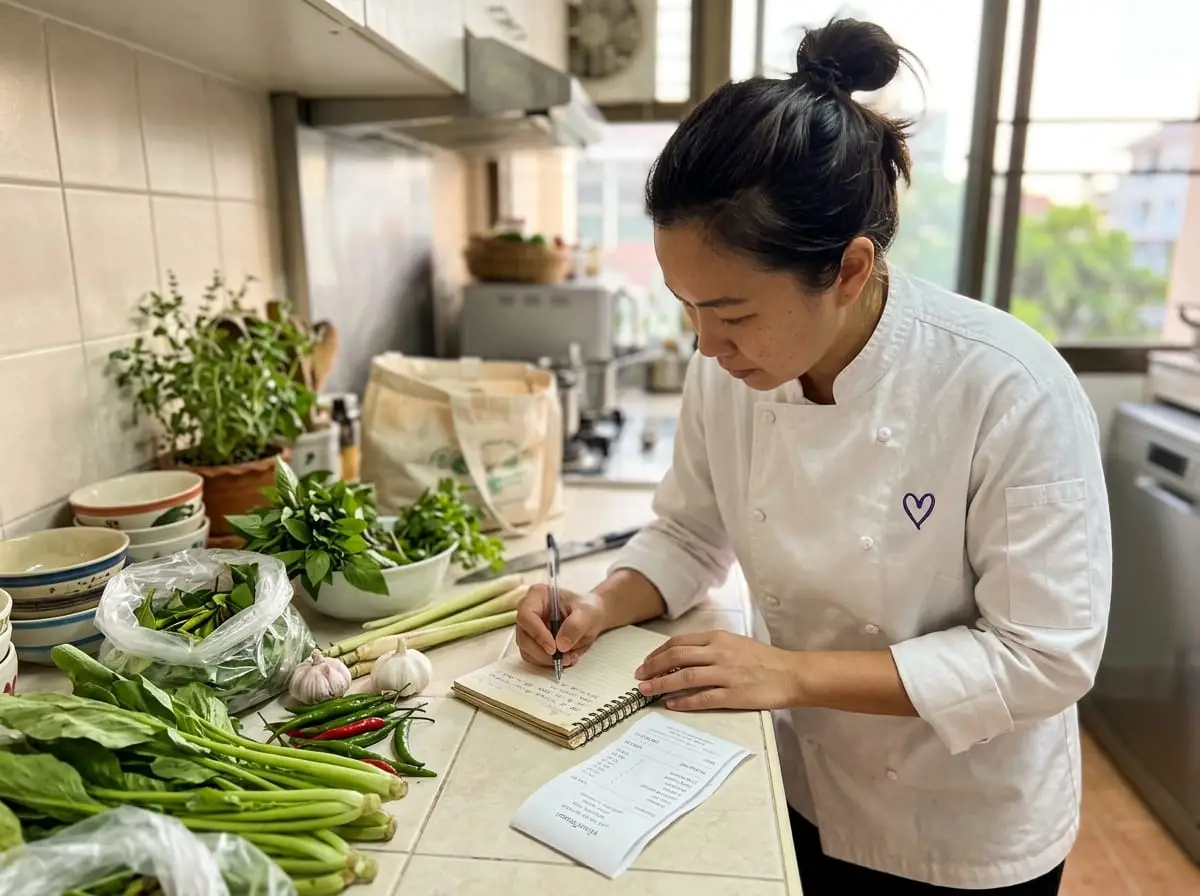
Omakase at home is the dinner people remember. A chef at your kitchen island, slicing fish and handing nigiri across one piece at a time, with no second seating and no one asking you to vacate the table by 9 pm. Hiring a private sushi chef Bangkok-style has become a favourite for milestone birthdays, client dinners and visiting family.
It also asks more of a home kitchen than any other cuisine. Raw fish in a city where the afternoon is 33 °C leaves no room for a broken cold chain, and some guests should not eat raw fish at all. This guide covers how to do it properly, what it costs, and how the same chef can cook everyday Japanese food your children will actually eat.
Omakase at home vs a sushi restaurant
Bangkok has some excellent sushi counters, many run by Japanese chefs, and the best of them charge several thousand baht a head before drinks. They have advantages a home dinner cannot match. They buy whole fish daily, they age and cure it on site, and their chefs have often spent a decade on rice alone.
A home omakase wins in other ways:
- Privacy and pace. No neighbouring tables, no fixed seating time, and the evening runs as long as the conversation does.
- Control. The chef knows in advance that one guest is pregnant, one is allergic to shellfish and two are children. A restaurant counter can adapt; a private menu is built around it.
- Group cost. For six to eight people, a chef's fee plus fish usually comes in well below the same number of restaurant covers, especially once drinks are poured from your own fridge.
- The children's table. Children can eat tamago and teriyaki in the next room while adults sit at the counter.
Be honest about expectations. Most private chefs who make sushi in Bangkok are trained cooks who have worked in Japanese restaurant kitchens, not itamae with twenty years behind the counter. Ask any chef for photographs of their nigiri and where they learned. A chef who has worked a Japanese restaurant line for years makes a very different piece of sushi from one who took a short course, and both are fine as long as you know which you are booking.
When the restaurant is the better choice
For two people, the restaurant usually wins on cost and on fish: a chef's minimum fee spread over two diners is steep, and a counter that buys whole fish can offer a dozen species where a home chef offers five. The same is true if what you want is aged and cured edomae-style fish, which needs days of preparation and specialist storage. Home omakase makes the most sense from six guests upwards, when children or dietary restrictions are involved, or when the occasion matters more than a famous name.
What a Japanese private chef in Bangkok cooks week to week
Sushi nights are the headline, but the bigger value is everyday Japanese home cooking, known as washoku. Its structure, ichiju sansai, means one soup and three dishes: a protein, a vegetable side and a pickle or small salad, served with rice. It is balanced by design.
A Japanese cook working part-time for a family typically rotates:
- Grilled fish. Salmon shioyaki, saba (mackerel) with miso, and gindara (black cod) marinated in sweet white miso.
- Donburi. Oyakodon (chicken and egg on rice), gyudon (thin beef and onion) and katsudon.
- Simmered dishes. Nikujaga (beef and potato), chikuzenni (chicken and root vegetables) and buta no kakuni (braised pork belly) for weekends.
- Sides. Spinach with sesame dressing, cucumber sunomono, kinpira gobo (burdock and carrot), and chawanmushi.
- Soups. Miso soup with tofu and wakame, and clear dashi soups.
- Family favourites. Japanese curry rice, gyoza, karaage and hamburg steak.
Dashi, the stock of kombu seaweed and katsuobushi (dried bonito flakes), is the foundation. A cook who makes it from scratch rather than using granules gives you far more flavour with less salt. ### The Japanese pantry and the grocery bill
Japanese home cooking in Bangkok is easier than it looks, because Japanese-style short-grain rice is grown in northern Thailand and sold in every large supermarket at a fraction of the price of rice imported from Japan. Miso, mirin, kombu, katsuobushi and good soy sauce are imported and cost more than their Thai equivalents, but a family uses them slowly. For a family of four eating Japanese dinners four nights a week, with salmon and mackerel twice and chicken or pork the rest of the time, groceries typically run ฿4,000–7,000 a week. A sushi evening sits outside that budget entirely.
When CareRova matches a Japanese cook to a family, we ask how many nights are really Japanese. Plenty of households want two Japanese dinners, two Thai and one Western, and the right cook for that is a versatile one with strong Japanese technique rather than a specialist who cooks nothing else.
For families who also want Thai dinners, our guide to Thai private chefs and regional menus shows how a cook can alternate the two.
Sushi-grade fish in Bangkok: sourcing, freezing and the cold chain
"Sushi-grade" is a marketing phrase, not a legal standard, which makes the supplier more important than the label. In Bangkok, chefs buy raw-eating fish from three places:
- Japanese supermarket fish counters around Phrom Phong, Thonglor and Ekkamai, which sell cuts packed and labelled for sashimi.
- Importers that supply Japanese restaurants, bringing fish air-freighted from Japan several times a week and chilled salmon from Norway.
- Premium supermarket fish counters for salmon and tuna, with the same caveat: ask whether the cut is sold for raw eating.
Local wet markets are excellent for fish you will cook. They are not where sashimi comes from, and freshwater fish such as tilapia or snakehead should never be eaten raw in Thailand. They can carry liver flukes, a long-standing public health problem documented by the Thai Department of Disease Control.
Questions a chef should ask the supplier
- Was this fish caught wild or farmed, and where?
- Has it been frozen for parasite control, and at what temperature?
- When was it packed, and how has it been kept since?
- Is it sold specifically for raw eating?
The fish itself should smell of the sea and nothing else, with firm flesh that springs back and no dull or brown edges on tuna. A chef who cannot answer those four questions about tonight's fish should cook it rather than slice it.
Freezing and parasites
Marine fish can carry Anisakis, a roundworm larva that causes sharp stomach pain if swallowed alive, and studies indexed on PubMed have traced cases to raw salmon, mackerel and squid. Freezing kills it. The US FDA's standard for fish to be eaten raw is −20 °C or below for seven days, or blast-freezing to −35 °C. A domestic freezer runs at about −18 °C and is not reliable for this, so the chef should buy fish that the supplier has already frozen for parasite control. Farmed salmon and the large tuna species are lower risk, but the rule still applies.
Histamine
Tuna, mackerel, bonito and yellowtail produce histamine when they warm up. Scombroid poisoning causes flushing, a peppery taste, headache and palpitations within an hour, and neither cooking nor refreezing removes the histamine once it has formed. The only defence is temperature: fish should be below 5 °C from the supplier to the chopping board.
The cold chain on the day
The chef collects the fish on the morning of the dinner in an insulated box with ice. At home, it goes into the coldest part of the fridge on a tray of ice, wrapped, below any other food. Your fridge should be at 5 °C or colder; a cheap thermometer settles the question, as the FDA's guide to refrigerator thermometers explains. Fish is cut in small batches immediately before it is served, not sliced in the afternoon and left on a platter.
Raw-fish safety: who should not eat sashimi (pregnancy, under-fives, elderly)
The CDC's food safety guidance names the groups most likely to become seriously ill from food poisoning: pregnant women, children under five, adults over 65, and people whose immune systems are weakened by illness or treatment. Those are the guests the chef should plan a separate track for.
Pregnancy
The NHS's pregnancy advice is more relaxed about sushi than many people expect: raw fish is acceptable if it has been frozen first. Raw shellfish is not, because of the risk of food poisoning. Cold-smoked and cured fish such as smoked salmon and gravlax should be cooked, because of listeria. High-mercury fish, including swordfish and marlin, should be avoided, and tuna limited. Many hosts simply ask the chef for a fully cooked menu for a pregnant guest; it is easier than parsing each piece.
Children under five
Small children have less stomach acid and less reserve when they become dehydrated. Skip raw fish and raw shellfish entirely and give them tamago, cooked prawn nigiri, inari (sweet tofu pockets), cucumber maki and teriyaki chicken. Sushi rice is also a choking risk when it is packed tight, so the chef should make smaller, looser pieces for little hands.
Older guests and anyone unwell
Older relatives and anyone on chemotherapy, steroids or immune-suppressing medicine should get the same cooked track. People with liver disease, diabetes or low stomach acid from long-term medication are at higher risk from Vibrio bacteria in raw shellfish.
Raw shellfish and viruses
Raw oysters and clams are the riskiest items on any Japanese menu. They can carry norovirus and hepatitis A, and the CDC's norovirus page is blunt about how easily an outbreak spreads from one contaminated batch. The WHO's hepatitis A fact sheet names shellfish from polluted water as a known route. For a home dinner, oysters are an opt-in course for healthy adults, not part of the default menu.
What to serve instead
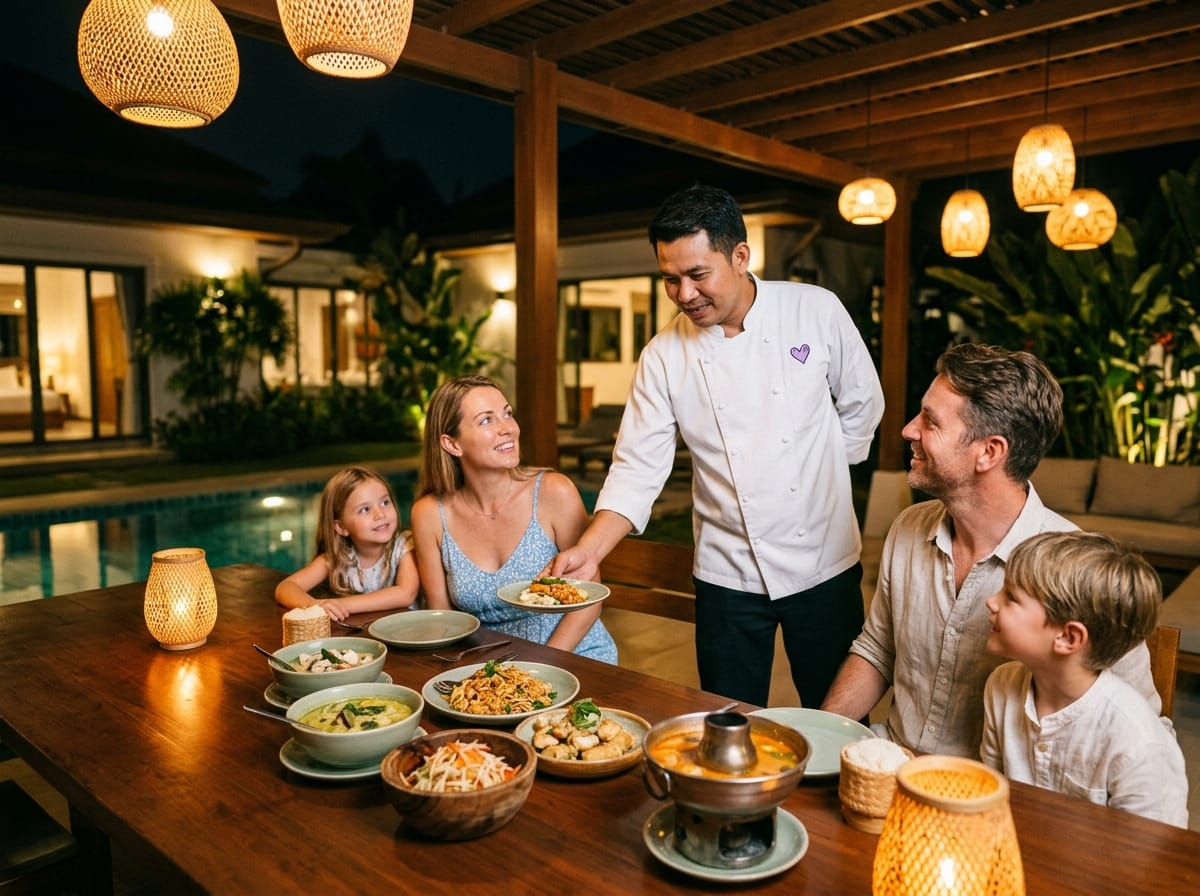
A good chef can build a beautiful cooked track: aburi (blow-torched) salmon and scallop, unagi, boiled prawn, tamago, seared wagyu nigiri, vegetable maki and a miso-glazed fish course. Nobody at the table feels left out.
A dinner for eight: timeline, menu and cost
Eight is the classic number for an omakase dinner: enough for a lively table, few enough for one chef to serve nigiri piece by piece.
The menu
| Course | Adults | Cooked track (pregnant, children, older guests) |
|---|---|---|
| Starter | Edamame, spinach goma-ae, cucumber sunomono | Same |
| Steamed | Chawanmushi with prawn and shiitake | Same, prawn fully cooked |
| Sashimi | Akami tuna, salmon, hamachi, scallop | Seared salmon tataki, cooked prawn |
| Nigiri (8 pieces) | Salmon, hamachi, akami, chutoro, scallop, tamago, unagi, seared wagyu | Aburi salmon, tamago, unagi, cooked prawn, seared wagyu, inari |
| Hot course | Gindara saikyo-yaki (miso black cod) | Same |
| Roll | Negitoro hand roll | Cucumber and avocado roll |
| Soup | Red miso soup with clams (cooked) | Same |
| Dessert | Matcha ice cream, seasonal fruit | Same |
The timeline
| When | What happens |
|---|---|
| Two weeks before | Guest list, ages and dietary survey sent to the chef |
| Five days before | Fish order confirmed with the supplier; menu signed off |
| Morning of the dinner | Chef collects fish in an iced cool box; fridge cleared for a fish tray |
| 3:00 pm | Chef arrives, checks fridge temperature, sets up boards and knives |
| 4:30 pm | Sushi rice cooked and seasoned; dashi and soup base made |
| 6:00 pm | Cooked dishes prepared; black cod marinated since the day before |
| 7:00 pm | Guests arrive; starters and chawanmushi |
| 7:45 pm | Sashimi, then nigiri served one piece at a time |
| 9:00 pm | Hot course, hand rolls, soup, dessert |
| 10:00 pm | Leftover raw fish discarded; kitchen cleaned; cooked leftovers chilled |
What it costs
CareRova's guide rate for an in-home chef dinner is ฿5,900 for up to six guests. A dinner for eight is quoted on request, depending on the menu and whether the chef needs an assistant to keep pace. Fish and ingredients are bought at cost and are the bigger number. For eight, a menu built on salmon, hamachi and lean tuna typically needs ฿8,000–12,000 of fish and seafood; adding otoro, uni and wagyu can take it to ฿15,000–25,000. Your chef will price the shopping list before you approve it.
Villa and hotel guests can book the same dinner through StayCare for hosts, where an in-villa chef dinner for up to six is ฿5,900, a chef day ฿6,900 and a chef week ฿29,900. Our dinner party hosting guide covers serving staff, drinks and guest planning for larger groups.
Everyday Japanese family meals that children eat
Most children who refuse "Japanese food" mean sashimi. Washoku home cooking is a different thing: mild, sweet-savoury, built on rice and eggs, and very good at getting vegetables eaten.
| Dish | Why children eat it | Health note |
|---|---|---|
| Oyakodon | Soft chicken and egg over rice, gently sweet | Ask for half the usual mirin and sugar |
| Salmon shioyaki | Crisp skin, flaky flesh, no sauce | Oily fish for omega-3; check bones carefully |
| Tamagoyaki | Sweet rolled omelette, finger food | Egg allergen; cook fully for under-fives |
| Onigiri | Rice balls with salmon or tuna mayo | Cool before wrapping for a lunchbox |
| Japanese curry rice | Mild, thick, sweet | Packet roux is high in salt and fat; a chef can make roux from scratch |
| Miso soup | Warm, savoury, tofu cubes | Miso is salty; keep portions small |
| Gyoza | Dumplings children can help fold | Pan-fry rather than deep-fry |
| Nikujaga | Beef and potato stew, soft textures | Good batch dish; cool within two hours |
Salt and seaweed
The Japanese diet is rich in fish and vegetables but high in sodium from soy sauce, miso and pickles. A cook can use reduced-salt soy sauce, make dashi properly so less seasoning is needed, and leave soy sauce off the children's plates. Harvard's Nutrition Source is a sensible reference for both the omega-3 benefits of oily fish and the case for cutting salt. One seaweed to skip: the UK Food Standards Agency has advised against eating hijiki because of its inorganic arsenic content. Wakame, kombu and nori are fine in normal amounts.
Bento for school
A Japanese cook makes excellent school lunches, but a bento must survive a Bangkok morning. Rice should be cooled before the lid goes on, the box needs an ice pack, and nothing raw goes in. Tamagoyaki, karaage, edamame, cherry tomatoes and onigiri all travel well. The American Academy of Pediatrics' family nutrition pages are a useful reality check on portion sizes for different ages.
Kitchen set-up and hygiene for a sushi service at home
A sushi evening concentrates every food-hygiene risk into a few hours: raw protein, bare hands, room-temperature rice and a warm room full of guests. The kitchen has to be set up for it.
Boards, knives and cloths
- One board only for raw fish, scrubbed and sanitised before the session and never used for anything cooked or ready to eat. Many chefs bring their own.
- Knives cleaned between species, especially between fish and shellfish, to protect guests with a shellfish allergy.
- Fresh cloths. The damp cloth a sushi chef wipes the knife and board with is essential, and also a breeding ground if reused. Use several clean cloths and swap them through the evening.
- Hand vinegar water (tezu) refreshed often, because it collects fish scales and rice.
Hands and health
Nigiri is traditionally made with bare hands, which is acceptable only with scrupulous handwashing: on arrival, after handling raw fish, after touching a phone or bin, and before shaping rice. Nails short, no rings or watch. Any cut is covered with a blue waterproof plaster and a glove. A chef who has had vomiting or diarrhoea must not work until 48 hours after the symptoms stop, the exclusion rule set out in the UK Food Standards Agency's Safer Food, Better Business pack. Norovirus passes easily from a handler's hands to raw food that is never cooked.
Rice holding
Seasoning sushi rice with vinegar makes it more acidic, which slows bacterial growth enough for it to be held at body temperature through a service. It is not a licence to keep it all day. Four hours from cooking is a sensible limit, after which leftover rice is cooled quickly and refrigerated or thrown away. Plain cooked rice left warm is a classic source of Bacillus cereus.
Time out of the fridge
The USDA danger zone guidance gives two hours for perishable food at room temperature, and one hour above 32 °C. For raw fish, treat one hour as the limit regardless of the aircon: a sashimi platter that has sat on the table for an hour is binned, not saved for tomorrow.
Allergens on the counter
Fish, shellfish, soy, wheat (in standard soy sauce), sesame and egg all appear in a typical sushi menu. Gluten-free guests need tamari rather than soy sauce, and crab sticks contain fish, often egg and wheat. FARE's food allergy resources explain cross-contact clearly; the short version is a separate board, clean knife and fresh gloves for any allergy-safe pieces, made first.
Booking and briefing your chef
A sushi dinner needs more lead time than most chef bookings, because the fish has to be ordered. Give at least five days, ideally two weeks.
Send your chef, or us, the following:
- Date, time and the number of adults and children
- Every guest's restrictions, including pregnancy, shellfish or fish allergy, gluten intolerance, and anyone who does not eat raw food
- Your budget for fish, so the chef can propose a menu that fits rather than guessing
- The space: a kitchen island or counter where the chef can face guests, fridge space for a tray of ice, and whether there is a separate area for children
- Drinks: sake, beer, tea, and who is serving them
- Any everyday cooking you might want afterwards, such as weekly Japanese family meals
Every chef CareRova places holds food-hygiene certification, has passed a police background check and has had references phoned, and long-term placements start with a paid trial meal in your kitchen. Weeknight Japanese cooking is booked on the standard chef rates on the pricing page: ฿900 an hour with a four-hour minimum, ฿4,900 a day, ฿19,900 a month part-time or ฿34,900 full-time. For how those formats compare, read our guide to what a private chef costs in Bangkok.
Read more about the private chef service, then send your date and guest list on WhatsApp to +66 97 120 3054 or through the contact form. We will come back with a shortlist of chefs within 48 hours.
Frequently asked questions
How much does a private sushi chef cost in Bangkok?
CareRova's guide rate for an in-home chef dinner is ฿5,900 for up to six guests, plus ingredients at cost. Fish for a sushi dinner is the big variable: salmon, yellowtail and lean tuna are moderate, while otoro, sea urchin and wagyu push the grocery bill up sharply. Groups above six are quoted on request.
Is it safe to eat sushi at home?
Yes, if the fish is bought for raw consumption from a reputable supplier, kept on ice below 5 °C, cut just before serving and eaten promptly. The risks are parasites, histamine from warm fish, and viruses from raw shellfish or an ill food handler.
Can pregnant women eat sushi made by a private chef?
NHS guidance says raw fish is acceptable in pregnancy if it has been frozen first, but raw shellfish should be avoided, and high-mercury fish such as swordfish should be skipped. Many families simply ask the chef for a seared and cooked menu for anyone pregnant.
Where do private chefs buy sushi fish in Bangkok?
From Japanese supermarket fish counters that sell sashimi-grade cuts, and from importers that supply Japanese restaurants with fish flown in from Japan or chilled salmon from Norway. Freshwater fish from local markets should never be eaten raw.
Can a Japanese private chef also cook everyday family meals?
Yes, and many families book that way: a part-time cook for weeknight Japanese meals such as oyakodon, grilled salmon and miso soup, and a sushi evening for guests a few times a year.
Do you need special equipment for sushi at home?
Very little. The chef brings their own knives. You need a fridge with space for a tray of ice, a clean board that is only used for raw fish, a rice cooker or heavy pot, and somewhere for guests to sit close to where the chef is working.
Need someone properly vetted?
Get a written rate for your household in under 60 seconds.
Written by the CareRova team
We're Bangkok's vetted home-care agency — everything we write comes from real nanny, chef, housekeeper and senior-care placements across condos, houses and short-stay villas.
Get our Bangkok family-care guides straight in Google — add CareRova as a preferred source.