
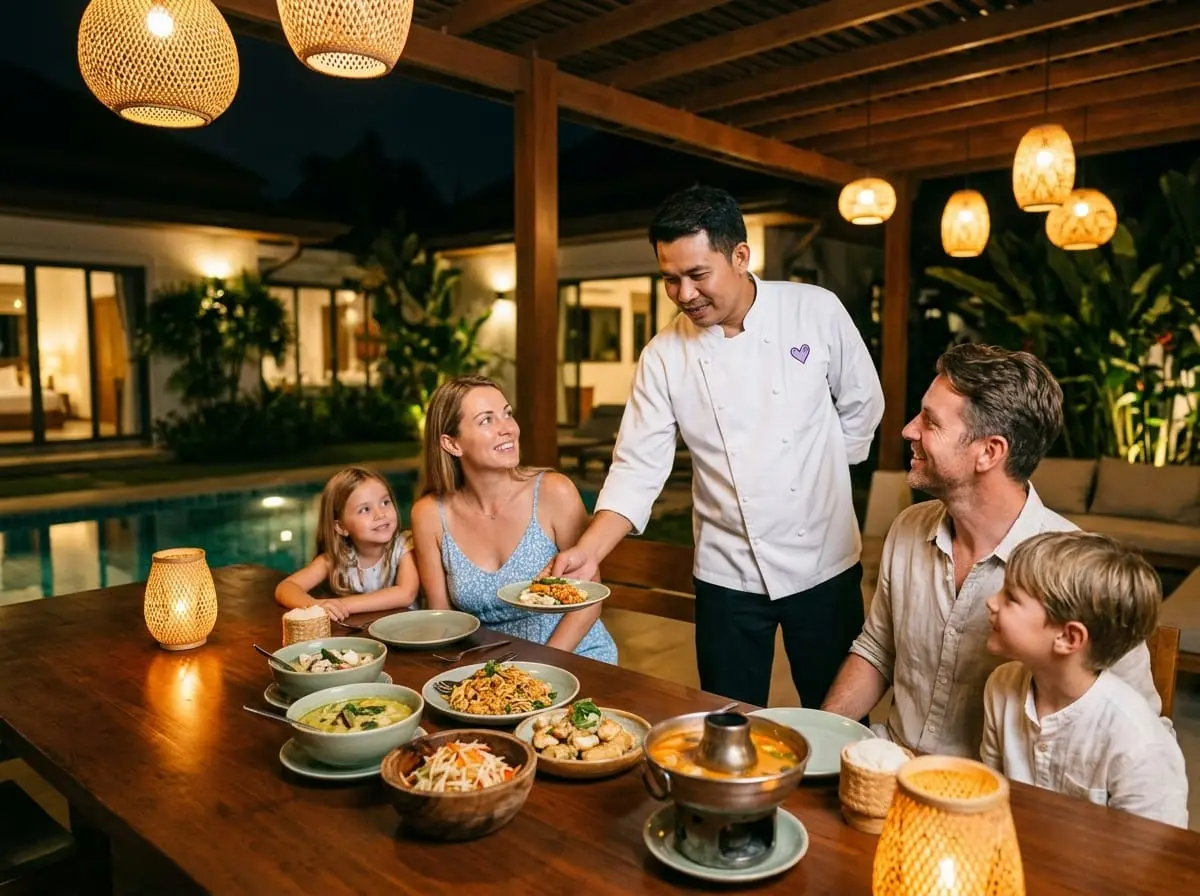
A few years ago, children at a Bangkok wedding were the guests' problem: someone's auntie kept an eye on them, or the parents took turns at the back of the ballroom. Now couples increasingly book a wedding babysitter Bangkok guests can hand their children to at the door, and corporate events and hotel functions do the same. A supervised kids' room means the parents actually come, and stay for the speeches.
Done well, it looks effortless: a bright room off the ballroom, children fed and happy, toddlers asleep by nine, parents collecting them at midnight. Done badly, it is a crowd of over-tired children, a single sitter, and a door that opens onto the pool terrace.
This guide is for couples, wedding planners, event managers and hotel teams. It covers how many sitters you need, how to lay out the room, food and group hygiene, safety and hand-over rules, vetting, a full timeline and costs.
Why weddings and events in Bangkok now book childcare
Destination weddings bring families from abroad with children who are jet-lagged and in an unfamiliar city. Thai weddings often run from a morning ceremony to a long evening reception, and expat couples increasingly hold receptions at hotels and riverside venues where children are welcome but not entertained. Corporate events, from family days to award dinners, have found that offering childcare lifts attendance among staff with young children.
The second driver is safety. Bangkok venues are full of things that are lovely for adults and dangerous for small children: infinity pools, rooftop terraces, river edges, staircases with glass balustrades, open kitchens and service corridors. A dedicated team whose only job is the children removes most of that risk.
The third is simply the length of the night. A reception that starts at 6 pm and ends after midnight is far beyond any under-five's limit. Parents either leave early or the children melt down. A sleep corner and a sitter who knows how to settle a toddler in a strange place solve both.
For families staying in villas or hotels for a wedding week, our guide to holiday nannies and babysitters for visiting families covers daytime care around the main event.
Ratios, ages and the number of sitters you need
Ratios are the first thing to get right, and the most common mistake is to count heads without looking at ages. Twelve children aged eight need far fewer adults than twelve aged two. There is no single legal ratio for event childcare in Thailand, so these are the planning ratios we recommend for an unfamiliar venue at night:
| Age group | Sitters per child | Why |
|---|---|---|
| Under 12 months | 1 sitter per 2 babies (1:1 if both parents want it) | Feeds, nappies and settling to sleep happen on each baby's own clock |
| 1 to 2 years | 1 per 3 | Mobile, put everything in their mouths, no sense of danger |
| 3 to 5 years | 1 per 5 | Need help with toilets and food; prone to wandering |
| 6 to 10 years | 1 per 8 | Can follow rules but need active supervision and something to do |
| 11 and over | 1 per 10, often in a separate space | Want independence; still need a clear boundary |
| Lead sitter | 1 per event, not counted in the ratio | Handles sign-in, parents, problems and breaks |
Working out the team
Start with the guest list. Ask the couple or the event organiser for each child's name, age, any allergies or medical needs, and whether they will stay in the kids' room all evening or go back to a hotel room to sleep. Then apply the ratios by age band and round up. Add one more sitter if there is a pool on site, if the kids' room is far from the ballroom, or if there are more than three babies.
Two other things change the numbers. First, breaks: on a six-hour shift every sitter needs a meal break, and the ratio must hold while they take it, which is one reason the lead is not counted. Second, movement: if children will be walked to the ceremony to see the bride, or to the photographer, you need enough sitters to take a group and leave the room covered.
The kids' room: layout, activities, sleep corner
The best kids' rooms are a hotel meeting room or a private dining room close enough to the main event that parents can drop in, and far enough that the noise does not travel. A room with direct access to a pool terrace or balcony should be refused, or the door locked and staffed.
Three zones
Active zone. Soft floor mats, a few large toys, a dance or music corner, and space for games. Keep it away from the door so children are not running towards the exit.
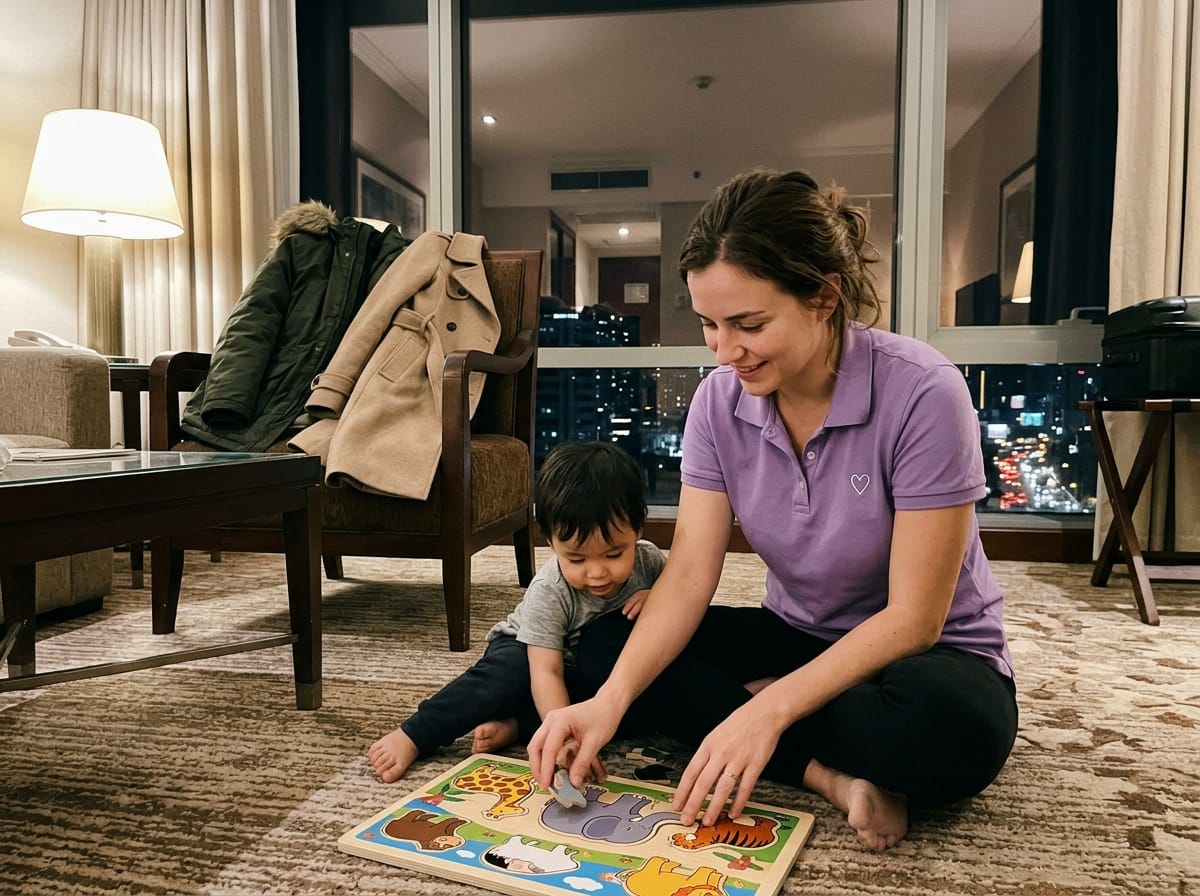
Quiet zone. Low tables for colouring, Lego, puzzles, simple crafts and books. A screen for a film later in the evening is fine; it works best as a deliberate wind-down after dinner, not all night.
Sleep corner. The far end of the room, screened off, with lights dimmed. Travel cots or mattresses on the floor, clean sheets for each child, a white-noise machine and parents' comfort items labelled with the child's name. Safe-sleep rules still apply: babies on their backs in a cot with nothing loose, as the HealthyChildren.org sleep guidance sets out. Babies never sleep on a sofa or a banquette.
What the room needs
- A toilet within sight of the door, ideally used only by the kids' room, plus a changing station with nappies, wipes and a lined bin.
- A handwashing point or sanitiser station at the door and next to the food table.
- Drinking water within reach of the sitters (not the children) and plenty of cups labelled with names.
- Aircon at a comfortable level, with blankets for the sleep corner; Bangkok function rooms are often set very cold.
- A list on the wall of every child with their wristband number, allergies and parent's phone number.
- A first-aid kit, a torch and the venue's emergency procedures, which the lead sitter has read.
Activities by the hour
Children cope with a long night far better when it has a shape. A typical plan: free play while everyone arrives, a structured craft linked to the wedding (decorating cards for the couple works every time), dinner, a game or a short dance session to burn off energy, a film or story time, then the sleep corner. Older children may want to watch the first dance or cake cutting; plan that as a walked group with a head count.
Food, allergies and group hygiene
Food is where most problems at children's events start, and Bangkok heat makes it worse. Children eat earlier than adults, so their food should be a separate order from the kitchen, served at about 6:30 pm, not taken from the adult buffet two hours later.
Food safety
Cooked food left between 5 °C and 60 °C grows bacteria quickly. The USDA's guidance on the danger zone is to discard perishable food left out for more than two hours, or more than one hour when the temperature is above about 32 °C, which describes most outdoor Bangkok venues. Hot food should arrive hot, cold food cold, and nothing should sit on a table in a warm room for the whole evening.
A simple children's menu works best: plain rice, noodles or pasta, grilled chicken, steamed vegetables, fruit and a small dessert. For under-fives, cut grapes and cherry tomatoes lengthways, avoid whole nuts and popcorn, and sit children down to eat. If a professional cook is running a separate children's menu for the event, our guide to allergy-safe children's party menus shows how to plan it.
Allergies
The UK Food Standards Agency's food allergy guidance lists the 14 major allergens that kitchens must be able to identify. Ask the venue kitchen for an allergen list for every children's dish, in writing.
Then put a system around it:
- Parents list allergies on the sign-in form and hand over any medication, such as an adrenaline auto-injector, in a bag labelled with the child's name.
- Allergic children wear a red wristband alongside their numbered one.
- One named sitter is responsible for each allergic child at mealtimes and checks every item before it reaches the plate.
- Allergic children are served first, from food plated separately, and seated where sharing is less likely.
- No food comes in from the main reception, including wedding cake, until a sitter has checked it with the parent.
FARE (Food Allergy Research and Education) has clear material on recognising anaphylaxis and using auto-injectors, and the lead sitter should have read it.
Group hygiene
Twenty children sharing toys in a closed room is ideal for passing on bugs. Hand, foot and mouth disease is common in Bangkok nurseries and spreads through saliva, nose secretions and blister fluid, according to the CDC's HFMD page. Simple rules cut the risk:
- Every child washes hands on arrival, before eating and after the toilet. The CDC's clean-hands guidance recommends at least 20 seconds with soap; sitters can sing a song to time it.
- Ask parents in the invitation not to bring a child who has a fever, vomiting, diarrhoea or a blistery rash. A sick child stays with their parents.
- Use toys that can be wiped down, and set aside any toy that has been in a mouth.
- Labelled cups only, never shared.
- Sitters change nappies on a wiped mat, wash hands after each change, and bag nappies straight into a lidded bin.
Safety: pools, stairs, exits and hand-over rules
Water
Drowning is fast and silent, and Bangkok wedding venues often have pools, ponds or a riverside lawn. Safe Kids Worldwide recommends a designated adult "water watcher" whose only job is to watch children near water. At an event, the rule should be stricter: no child goes near water during the event at all. If the kids' room or garden is near a pool, a sitter is posted at the access point and the gate stays closed.
Venue walk-through
The lead sitter should walk the venue on the day, before the children arrive, and note:
- every door out of the kids' room and where it leads
- the nearest fire exit and the assembly point
- stairs, escalators and glass balustrades on the route to the ballroom
- balconies and terraces, and whether their doors can be locked
- service corridors and kitchen doors that children could wander through
- the nearest toilet and the route to it
Furniture is checked too: unstable display stands, candles, flower arrangements on low tables, and cables for the sound system.
Sign-in and hand-over
Every child is signed in on arrival by a parent, with a photo taken on the event phone, a numbered wristband, the parent's phone number, and the names of up to two adults who may collect the child. The child is handed back only to one of those adults, who shows the matching number. No exceptions for "her auntie is coming to get her" or an older sibling, however friendly.
Head counts happen every 30 minutes, at every move (to the toilet, to the ceremony, to the sleep corner), and at every shift change. If a count comes up short, the room door is shut, one sitter checks the toilets and corridor, and the lead alerts venue security straight away.
First aid and emergencies
All sitters should hold child first aid and CPR; the American Red Cross child and baby CPR guide is a good refresher before the night, and our guide to first aid and CPR for nannies covers choking and allergic reactions in more depth. The lead knows the venue's first-aid point, the nearest hospital with a 24-hour emergency department, such as Bumrungrad International Hospital for central Bangkok venues, and that the ambulance number is 1669.
For outdoor or riverside venues in the rainy season, mosquitoes are a real problem; the CDC's dengue guidance recommends repellent for children over two months, applied by an adult. Ask parents to apply it before drop-off, or get consent on the sign-in form.
Vetting a team of sitters for one night
One sitter for a family is a personal choice. Five sitters for 20 other people's children is a professional responsibility, and couples and planners should ask hard questions of whoever provides them.
Ask for:
- The names of each sitter before the event, and confirmation that each has passed a police background check and an ID and work-eligibility check.
- Confirmation that each holds a current child first-aid and CPR certificate.
- Experience with groups, not just with one family's children.
- A named lead sitter who has run event childcare before, and their phone number for the day.
- Visible ID badges or lanyards worn all night.
- A no-photos rule: sitters do not photograph the children or post anything about the event on social media.
- No alcohol for sitters, including the champagne toast, and phones away except the event phone.
Every sitter CareRova provides has a police background check, ID and work-eligibility check, at least two phoned references and child first aid and CPR. For a team, send us the venue, ages and allergies in advance so the lead can be briefed before the night. Our babysitter service page explains how individual sitters are vetted.
The briefing
Vetting tells you who the sitters are; the briefing decides how they work together. An hour before sign-in, the lead should take the team through the children's list, assign each sitter to named children rather than "the toddlers", walk the exits, and agree the signals: who calls the lead, who calls venue security, who calls parents. Each sitter should know which children have allergies and where the medication bag is without having to look.
Agree the small things too. Sitters do not discipline other people's children beyond redirecting them; a child who is inconsolable for more than ten minutes means the parent is fetched; nobody gives medicine without a parent's signed consent on the sign-in form. With a CareRova team, tell us afterwards about anything that did not go to plan, so it is fixed before your next event.
Timeline for a 6 pm wedding with 20 children
This example is a hotel reception in Sukhumvit: ceremony and cocktails at 6 pm, dinner at 7:30 pm, first dance at 9:30 pm, party until midnight. The children are four babies under one, five toddlers, seven aged three to five and four aged six to ten. Using the ratios above, that is two sitters for the babies, two for the toddlers, two for the three-to-fives, one for the older children and a lead: eight people in total.
| Time | What happens | Who |
|---|---|---|
| 3:30 pm | Team arrives, venue walk-through, room set-up, allergy list reviewed | Lead and all sitters |
| 4:30 pm | Briefing: ratios, sitter-child assignments, exits, hand-over rules | Lead |
| 5:15 pm | Sign-in opens; photos, wristbands, medication bags labelled | Lead plus two sitters at the door |
| 6:00 pm | Ceremony; free play and craft in the kids' room | All sitters |
| 6:30 pm | Children's dinner served, allergic children first | Named sitters for allergic children |
| 7:15 pm | Babies fed and changed, moved to the sleep corner | Baby sitters |
| 7:30 pm | Adult dinner begins; games for older children | Remaining sitters |
| 8:00 pm | Toddlers to the sleep corner; quiet zone and film for others | Toddler sitters |
| 9:30 pm | Older children walked to see the first dance, then back | One sitter per eight children, head count out and back |
| 10:00 pm | Three-to-fives settled; staggered sitter breaks | Lead manages breaks |
| 11:00 pm | Early collections begin; each checked against the sign-in sheet | Lead |
| 12:00 am | Final collections; room cleared, lost property listed | Lead and one sitter |
The lead sends the couple or planner a short message at agreed points (all signed in, dinner done, little ones asleep) so nobody leaves the party to check.
For children staying in hotel rooms
Some parents prefer to put young children to bed in their room. A sitter can be booked to stay in the room from bedtime until the parents return, which can be combined with the kids' room for older siblings. For hotel guests, our StayCare evening sitter is ฿1,900 for four hours.
Costs and how planners, hotels and couples book
CareRova's guide rate for a babysitter is ฿450 an hour with a 4-hour minimum. Event teams are quoted on request, because the price depends on the number and ages of the children, the hours, travel to the venue and whether the team supplies toys, cots and craft materials.
| Option | Guide price | Best for |
|---|---|---|
| Single sitter, event or reception | ฿450 an hour, 4-hour minimum | One or two families at a small event |
| StayCare evening sitter in a hotel room | ฿1,900 for 4 hours | Hotel or villa guests with sleeping children |
| Holiday nanny for the wedding week | ฿2,900 a day or ฿15,900 for six days | Visiting families who need daytime care too |
| Team of four sitters, six hours | About ฿10,800 in sitter hours | A kids' room for 15 to 20 older children |
| Full event team with lead, supplies and set-up | Quoted on request | Large weddings, corporate family days, hotel functions |
Who books, and how
Couples usually book childcare as part of the wedding and include it in the invitation, so parents can plan. Ask guests to RSVP with children's ages and allergies.
Planners book on the couple's behalf and need a single contact for the team. Give us the venue, timings, children's list and the room you have been allocated.
Hotels and venues that want CareRova to provide childcare for wedding or event clients regularly can set up an arrangement with us; see our hosts page for villas and hotels and our commercial page for corporate and venue partnerships.
What to send us
To get a quote, send the date and venue, start and finish times, the number of children with ages, any allergies or medical needs, whether some children will sleep in hotel rooms, and the kids' room you have (or need help choosing). We send a shortlist within 48 hours and a team plan for larger events. WhatsApp or call +66 97 120 3054, email support@carerova.com, or use the contact form.
Frequently asked questions
How many babysitters do I need for a wedding in Bangkok?
It depends on ages. As a planning guide, allow one sitter per two babies, one per three toddlers, one per five children aged three to five and one per eight school-age children, plus one lead sitter who floats. For 20 children that ranges from three sitters for a group of older children to seven for a group with several babies and toddlers, plus a lead.
How much does a wedding babysitter cost in Bangkok?
CareRova's guide rate is ฿450 per sitter per hour with a 4-hour minimum. Teams for weddings, corporate events and hotel functions are quoted on request, depending on hours, numbers, ages and whether supplies or meals are needed.
Can babysitters look after children in a hotel room during a wedding?
Yes. Many families prefer a sitter in their own room once young children are asleep. For hotel guests, CareRova's StayCare evening sitter is ฿1,900 for four hours, and a room-based sitter can be combined with a supervised kids' room for older children.
How do event babysitters handle children's allergies?
Parents list allergies at sign-in, allergic children wear a coloured wristband, and one named sitter is responsible for checking every item that child eats. Children's food comes from a separate, labelled kitchen order, and sitters know where each child's medication, such as an adrenaline auto-injector, is kept.
How far in advance should we book childcare for a Bangkok wedding?
For a team of sitters, three to four weeks gives time to collect ages and allergies, visit or plan the room and brief the team. Single sitters can often be found faster; CareRova sends a shortlist within 48 hours.
Are event babysitters vetted?
Through CareRova, every sitter has a police background check, ID and work-eligibility check, at least two phoned references and child first aid and CPR. Ask any provider for the names of the sitters before the event and make sure each wears a visible ID badge on the night.
Need someone properly vetted?
Get a written rate for your household in under 60 seconds.
Written by the CareRova team
We're Bangkok's vetted home-care agency — everything we write comes from real nanny, chef, housekeeper and senior-care placements across condos, houses and short-stay villas.
Get our Bangkok family-care guides straight in Google — add CareRova as a preferred source.